
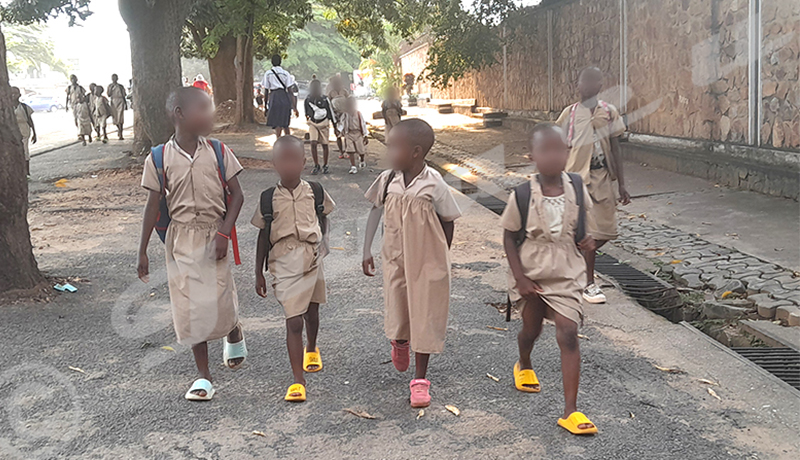
Burundi: Gratuité Scolaire Faces Parent Contribution Demands
Summary
- Despite Burundi's policy of free fundamental education, parents are still being asked for financial contributions in some schools.
- Labor union members are advocating for strict adherence to the free education measure.
- Unions also propose that any parental contributions should be regulated, negotiated with parents, and managed transparently.
Policy and Practice Diverge
Despite this established principle, parents in various educational institutions across the country continue to report demands for financial contributions.
In Burundi, the official policy of free fundamental education, known as `gratuité scolaire`, faces significant challenges in its practical implementation. Despite this established principle, parents in various educational institutions across the country continue to report demands for financial contributions. This discrepancy between the stated policy and the reality on the ground creates an ongoing burden for families and raises questions about equitable access to schooling.
These persistent financial demands from parents, despite the `Burundi gratuité scolaire` initiative, highlight a critical gap in the education system. While the government aims to provide education without cost, certain schools are still soliciting funds, which can act as a barrier for many households. The continued existence of these contributions parents are asked to make underscores the complexities of fully realizing the free education mandate.
Calls for Adherence and Transparency
In response to these ongoing challenges, representatives from various labor unions have voiced strong appeals for the full implementation and respect of the foundational education policy. They emphasize the importance of upholding the principle of free fundamental education to ensure that all children have unhindered access to schooling, irrespective of their family's economic situation. Their advocacy underscores a broader desire for the policy's intended benefits to reach every student.
Beyond simply enforcing the existing measure, union members are also advocating for a more structured and transparent approach to any financial requirements. They propose that any necessary contributions should be formally regulated, negotiated directly with parents to ensure their consent and understanding, and subsequently managed with complete transparency. This dual call for adherence to the free education policy and for accountability in financial dealings aims to address both the spirit and the practicalities of educational funding.
Implications for Educational Equity
The divergence between the policy of free fundamental education and the continued demands for financial contributions from parents carries significant implications for educational equity in Burundi. When schools solicit funds, even informally, it can inadvertently create barriers to access, particularly for the most vulnerable families who may struggle to meet these additional costs. This undermines the very purpose of `gratuité scolaire`, which is designed to remove financial obstacles to education.
The union's push for regulated, negotiated, and transparent contributions reflects a desire to safeguard the integrity of the education system and protect families from arbitrary financial burdens. Ensuring that any parental contributions are clearly defined, agreed upon, and openly managed is crucial for building trust and ensuring that the principle of free education is not eroded by unofficial practices. This approach seeks to balance the potential needs of schools with the fundamental right to accessible education for all Burundian children.
Source
Source: Original reporting via {source}
How does this affect you?
Get an AI analysis of this article grounded in your jurisdictions, practice areas, and any policy documents you've uploaded to Wansom.
Finish Reading the Full Story and the Expert Analysis.
Wansom is AI and can make mistakes.