
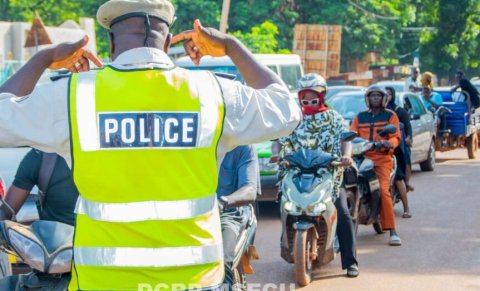
Burkina Faso: Minister Sana Addresses Laabal Card Misuse by Road Agents
Summary
- On October 29, 2026, Burkina Faso's Minister of Security, Mahamadou Sana, issued a communiqué.
- The communiqué addressed the reported misuse of the "Laabal" card by road control agents.
- Citizen testimonies indicate agents use the card as leverage for extortion or corruption against infringing drivers.
- The Laabal card was originally instituted to avoid unspecified societal issues.
- Minister Sana reminded the public of the card's intended purpose, contrasting it with its current abuse.
Official Acknowledgment of Misconduct
The minister's statement highlighted that certain agents, specifically those tasked with conducting road checks, are reportedly exploiting the Laabal card.
On October 29, 2026, the Minister of Security, Mahamadou Sana, released an official statement addressing concerning reports regarding the Burkina Faso Laabal card misuse. The communiqué explicitly acknowledged that the ministry had received and reviewed numerous accounts detailing the improper application of this specific identification. These reports, originating from citizen testimonies, paint a picture of systemic issues within road control operations across the nation.
The minister's statement highlighted that certain agents, specifically those tasked with conducting road checks, are reportedly exploiting the Laabal card. Instead of its intended purpose, these agents are allegedly employing the carte Laabal détournement Burkina as a coercive tool. This pressure is primarily directed at motorists who have committed traffic infractions, leveraging their vulnerable position for illicit gains. The core issue revolves around the card being used as a means to facilitate racket contrôle routier Burkina or outright corruption agents routiers Burkina.
Subversion of a Key Initiative
The Laabal card was originally introduced as a measure designed to circumvent specific problems within the societal framework, though the precise nature of these issues was not detailed in the minister's communication. Minister Mahamadou Sana's communiqué served as a crucial reminder of this foundational purpose, implicitly contrasting it with the current reported abuses. The initiative was intended to streamline interactions or ensure fairness, yet it has become a focal point for illicit activities.
The current revelations concerning corruption agents routiers Burkina represent a significant deviation from the card's initial objectives. What was conceived as a solution now appears to be contributing to the problem, as agents are reportedly using it to extort money or favors from the public. This subversion of an official instrument underscores the challenges faced in maintaining integrity within public services, particularly where direct interaction with citizens provides opportunities for Burkina road control corruption.
Implications for Public Trust and Governance
The public acknowledgment by the Minister of Security, Mahamadou Sana, regarding the widespread Burkina Faso Laabal card misuse carries significant implications for public confidence in state institutions. When instruments designed for public benefit are instead used for racket contrôle routier Burkina, it erodes trust between citizens and law enforcement. Such incidents can foster a perception that official procedures are merely avenues for personal gain rather than mechanisms for upholding order and justice.
Addressing this issue is crucial for the government's credibility and its efforts to combat corruption agents routiers Burkina. The minister's decision to publicly address the problem, citing citizen testimonies, indicates a recognition of the severity of the situation and potentially a commitment to remedial action. The ongoing carte Laabal détournement Burkina necessitates a robust response to restore the card's original intent and ensure that road controls serve their legitimate purpose without becoming a source of illicit enrichment.
Practical Implications
Lawyers and compliance officers advising clients with operations or personnel in Burkina Faso should be aware of the reported misuse of the 'Laabal' card by road control agents. This development highlights a specific corruption risk that warrants inclusion in compliance training and risk assessments for personnel interacting with local authorities during road checks.
Source
How does this affect you?
Get an AI analysis of this article grounded in your jurisdictions, practice areas, and any policy documents you've uploaded to Wansom.
Finish Reading the Full Story and the Expert Analysis.
Wansom is AI and can make mistakes.