
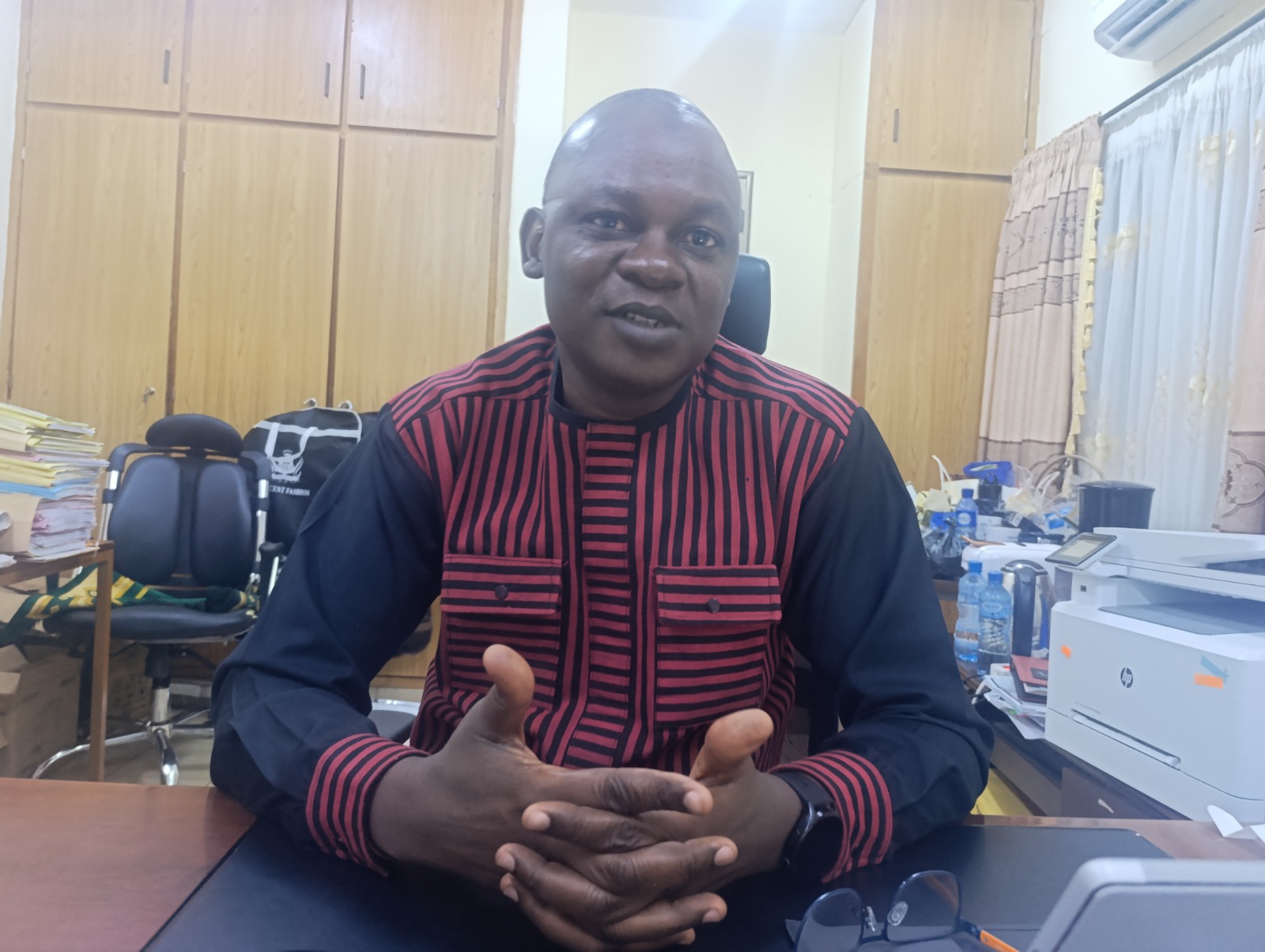
Burkina Faso DGI: No New Tax Increases From Revised Finance Law
Summary
- Idrissa Ouédraogo, Director of Legislation and Litigation at Burkina Faso's DGI, confirmed no new taxes or tax increases.
- The clarification pertains to the fiscal implications of the revised finance law (Loi de finances rectificative).
- This revised finance law was officially adopted by deputies on September 23, 2026.
- Ouédraogo stated there are no new levies or any form of tax escalation introduced by the law.
Official Clarification on Burkina Faso's Fiscal Policy
Idrissa Ouédraogo, who serves as the Director of Legislation and Litigation at the DGI, explicitly communicated that the recently adopted revised finance law does not introduce any new tax burdens on citizens or businesses.
The General Directorate of Taxes (DGI) in Burkina Faso has issued a definitive statement regarding the nation's updated fiscal framework, aiming to provide clarity amidst recent legislative changes. Idrissa Ouédraogo, who serves as the Director of Legislation and Litigation at the DGI, explicitly communicated that the recently adopted revised finance law does not introduce any new tax burdens on citizens or businesses. This announcement directly addresses concerns about potential increases or the imposition of novel levies within the country's tax system.
Ouédraogo's remarks, made during an interview, sought to reassure the public and economic actors. He emphasized that the legislative adjustments are not designed to expand the scope of taxation or to elevate existing rates. This clarification from a senior official at the Direction Générale des Impôts Burkina Faso is crucial for maintaining economic stability and ensuring tax law certainty for all stakeholders operating within the nation's borders. The DGI's proactive communication aims to dispel any misunderstandings that might arise from the implementation of the new financial legislation.
Understanding the Revised Finance Law
The fiscal implications clarified by Idrissa Ouédraogo stem from the Loi de finances rectificative, or revised finance law, which was formally adopted by deputies on September 23, 2026. This legislative act typically involves adjustments to the national budget and financial regulations, often in response to evolving economic conditions or unforeseen fiscal requirements. However, the DGI's interpretation underscores that, despite its rectifying nature, this particular law does not entail an expansion of the tax base or an upward revision of current tax obligations.
This Burkina Faso Loi de finances rectificative represents a significant legislative event, yet the DGI's Director of Legislation and Litigation has made it clear that its passage does not translate into a heavier financial load for taxpayers. The focus, according to Ouédraogo, is not on increasing revenue through new or higher taxes, but rather on other aspects of fiscal management that the revised law addresses. This perspective is vital for understanding the current Burkina Faso fiscal policy update and its immediate impact on the populace.
No New Tax Increases Confirmed
Idrissa Ouédraogo, a key figure within the General Directorate of Taxes, unequivocally stated that the revised finance law contains no provisions for new taxes, new levies, or any form of tax increase. This direct assertion from the Director of Legislation and Litigation serves as a critical Burkina Faso DGI no new tax increases confirmation, aiming to prevent speculation and provide a clear operational framework for taxpayers. His statement is a direct response to the fiscal implications of the law, ensuring that the public understands the government's stance on taxation.
The official's declaration provides a strong sense of Burkina Faso tax law certainty, which is essential for business planning and individual financial management. By explicitly ruling out any form of tax escalation, the DGI aims to foster a predictable economic environment. This Idrissa Ouédraogo tax clarification is a pivotal piece of information for anyone concerned about the direction of fiscal policy in Burkina Faso following the recent legislative amendments.
Source
Source: Original reporting via Sidwaya
How does this affect you?
Get an AI analysis of this article grounded in your jurisdictions, practice areas, and any policy documents you've uploaded to Wansom.
Finish Reading the Full Story and the Expert Analysis.
Get the latest legal & regulatory intelligence in Burkina Faso
Wansom is AI and can make mistakes.