
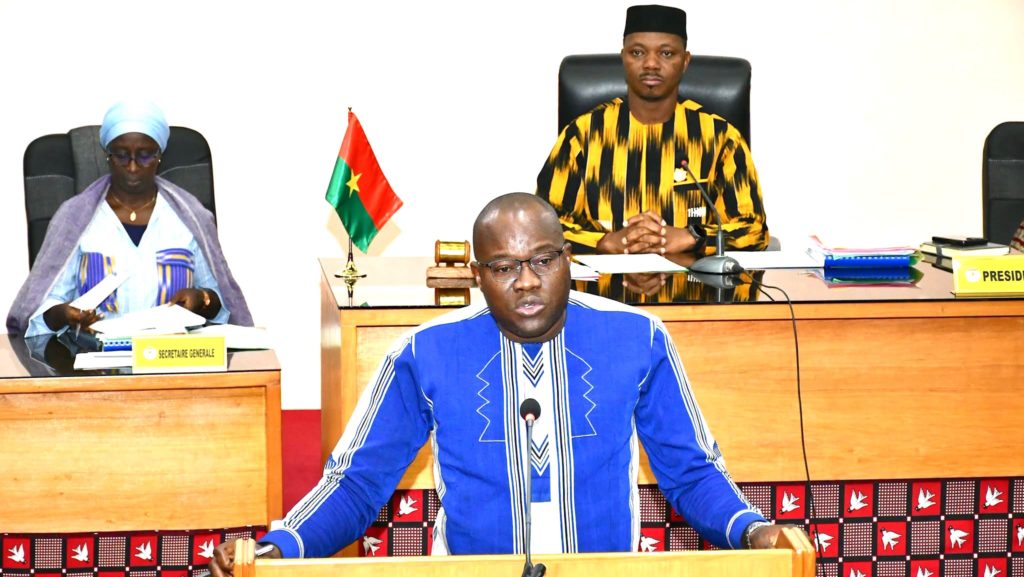
Burkina Faso: Loi Finances Rectificative 2026 Adopted, Boosting Revenue
Summary
- Burkina Faso's Assemblée législative du peuple adopted a rectifying finance law for the 2026 state budget on September 23, 2026.
- This legislative action resulted in an increase of 301 billion FCFA in additional state revenues.
- The budget revision was prompted by a favorable evolution in public revenue mobilization, assessed as of June 30, 2026.
- The additional funds offer the government greater flexibility in managing expenditures and potentially reducing borrowing.
- Legal and compliance professionals should review the law for new fiscal measures or shifts in government spending priorities.
Legislative Approval for Burkina Faso's 2026 Budget Adjustment
For legal and compliance professionals, the enactment of this rectifying finance law for Burkina Faso's 2026 budget mandates a meticulous review of its complete legislative text.
On Wednesday, September 23, 2026, the Assemblée législative du peuple (ALP) in Burkina Faso officially adopted a crucial draft law. This legislative act pertains to the rectifying finance law for the execution of the state budget for the 2026 fiscal year, marking a significant mid-cycle adjustment to the nation's financial planning. The approval of this measure by the country's legislative body directly translates into an augmentation of 301 billion FCFA in additional revenues for the state, a substantial increase that will reshape the financial landscape for the remainder of the year.
This formal endorsement by the Assemblée législative du peuple 2026 budget committee underscores the dynamic nature of national fiscal management. It allows the government to adapt its financial projections and spending allocations in response to evolving economic realities. The implementation of a rectifying finance law for Burkina Faso's 2026 budget is a standard, yet critical, mechanism employed by governments worldwide to ensure that budgetary provisions remain aligned with current economic performance and revenue generation capabilities. This particular adjustment reflects a positive development in the nation's financial health.
Underlying Factors Driving the Fiscal Revision
The primary catalyst for this significant budget revision was a notably favorable evolution observed in the mobilization of public revenues. This positive trend in the collection of state funds was comprehensively assessed as of June 30, 2026, revealing a stronger-than-anticipated performance across various governmental revenue streams. Such an upward adjustment to the projected Recettes publiques Burkina Faso 2026 indicates that economic activity, tax compliance, or other revenue-generating initiatives have surpassed the initial forecasts established at the beginning of the fiscal year.
A Loi de finances rectificative Burkina Faso is typically enacted when actual economic indicators or fiscal performance diverge considerably from the assumptions underpinning the initial annual budget. The robust trajectory of public revenue mobilization provided a compelling rationale for the government to propose, and the legislature to subsequently adopt, this updated financial plan. This proactive measure ensures that the Burkina Faso budget de l'État 2026 remains a realistic and effective tool for national governance, reflecting the current fiscal reality and the expanded pool of available resources. It demonstrates a commitment to responsive financial stewardship in the face of changing economic conditions.
Broader Fiscal Implications and Professional Considerations
The infusion of an additional 301 billion FCFA into the national coffers carries profound implications for the overall Burkina Faso budget rectificatif 2026. This enhanced financial capacity offers the potential for the government to strategically allocate funds towards various pressing state priorities. These could encompass bolstering essential public services, initiating or accelerating key development projects, or strengthening the nation's financial reserves to enhance economic resilience. The positive shift in Burkina Faso fiscalité 2026 provides the government with increased flexibility in managing its expenditures and potentially reducing its reliance on external or internal borrowing.
For legal and compliance professionals, the enactment of this rectifying finance law for Burkina Faso's 2026 budget mandates a meticulous review of its complete legislative text. Such laws frequently introduce new fiscal measures, modify existing tax implications, or signal shifts in government spending priorities that could directly influence client operations, investment projects, or contractual obligations within the country. A comprehensive understanding of these legislative changes is indispensable for ensuring regulatory compliance, mitigating potential risks, and formulating strategic business plans within Burkina Faso's evolving economic and legal framework. This proactive analysis is key to navigating the updated fiscal landscape effectively.
Practical Implications
This rectifying finance law for Burkina Faso's 2026 budget indicates changes in state revenue and potentially expenditure priorities. Legal and compliance professionals should scrutinize the full text of the law for new fiscal measures, tax implications, or shifts in government spending that could affect client operations or investment projects.
Source
How does this affect you?
Get an AI analysis of this article grounded in your jurisdictions, practice areas, and any policy documents you've uploaded to Wansom.
Finish Reading the Full Story and the Expert Analysis.
Get the latest legal & regulatory intelligence in Burkina Faso
Wansom is AI and can make mistakes.