
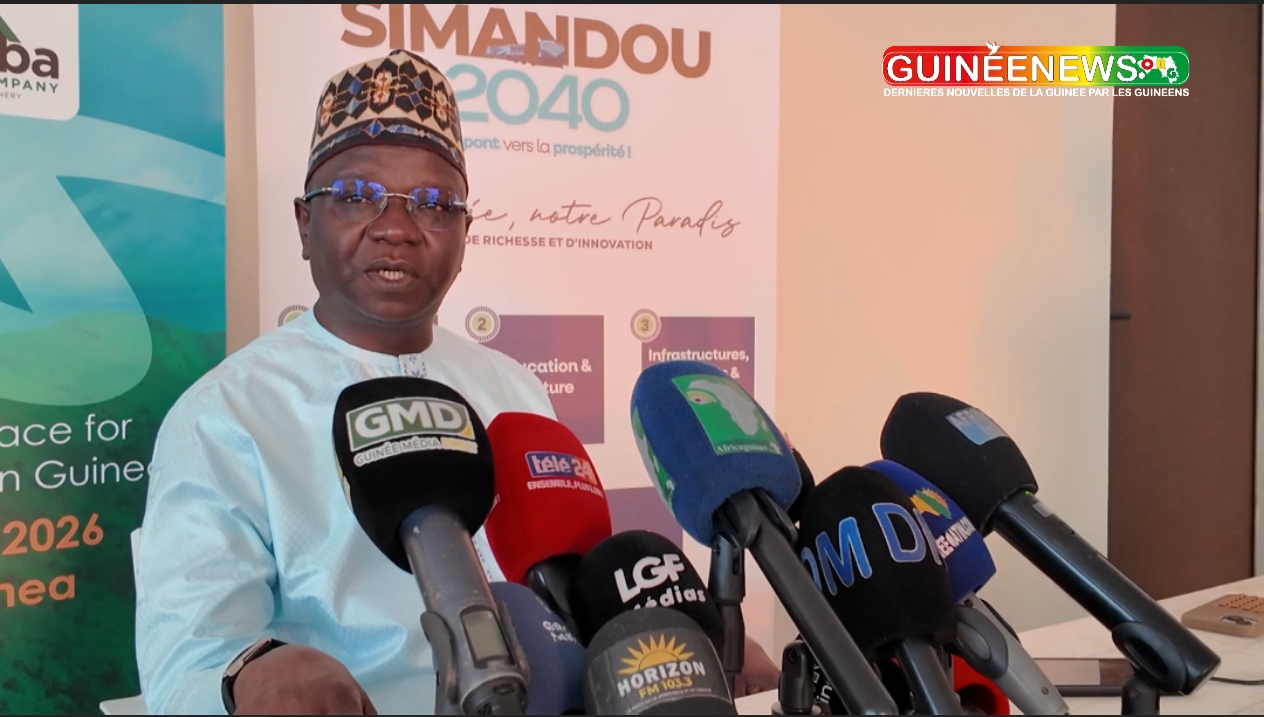
Bouna Sylla RSE Mines Guinée: Minister Criticizes CSR Efficacy
Summary
- Guinea's Minister of Mines and Geology, Bouna Sylla, expressed reservations about current corporate social responsibility (CSR) practices in the country's mining sector.
- His comments were made during an event related to the Simandou project.
- Minister Sylla used an analogy to imply that effective CSR requires structured, externally verifiable efforts, not isolated internal actions.
- The Minister's critique suggests a need for greater transparency and tangible impact from mining companies' social programs.
- These remarks signal a potential for stricter government oversight and new regulatory requirements for CSR in Guinean mining.
Minister's Critical Assessment of CSR
His expressed reservations signal a potential shift in the government's approach to overseeing corporate social responsibility, suggesting that a more rigorous framework for evaluation and enforcement may be on the horizon.
Guinea's Minister of Mines and Geology, Bouna Sylla, recently articulated significant reservations concerning the current state of corporate social responsibility (CSR) within the nation's vital mining sector. Speaking on the periphery of discussions surrounding the massive Simandou project, Minister Sylla employed a striking analogy to convey his perspective on how companies approach their social obligations. His comments underscore a growing scrutiny from the government regarding the efficacy and genuine impact of these programs.
The Minister's statement, "One can pray at home, but one cannot study at home," served as a pointed critique of what he perceives as insufficient or improperly executed CSR initiatives. This analogy suggests that while certain activities can be conducted in isolation, effective social development and community engagement, much like education, necessitate structured, external, and verifiable efforts. The remarks by Ministre Bouna Sylla responsabilité sociétale highlight a desire for more tangible and accountable contributions from mining companies operating across Guinea.
The Nature of the Critique
The essence of Minister Sylla's critique centers on the idea that some CSR practices in the RSE secteur minier guinéen may lack the necessary external validation, transparency, or structured implementation to achieve their intended developmental goals. His reservations imply that a mere internal commitment or superficial engagement is insufficient for the complex social and environmental challenges posed by large-scale mining operations. The "Critiques RSE Bouna Sylla" point towards a need for a more robust and externally-oriented approach to community development and environmental stewardship.
This perspective suggests that companies might be engaging in activities that, while well-intentioned, do not translate into meaningful, measurable, and sustainable benefits for local communities. The Minister's analogy implies that true "study" or development requires a formal, public, and accountable process, rather than a private, unscrutinized one. This distinction is crucial for understanding the government's evolving expectations for corporate behavior in the extractive industries.
Implications for Mining Operations
The Minister's public comments carry significant implications for mining companies currently operating or planning to invest in Guinea. His expressed reservations signal a potential shift in the government's approach to overseeing corporate social responsibility, suggesting that a more rigorous framework for evaluation and enforcement may be on the horizon. Companies engaged in projects like Simandou, which was the backdrop for these remarks, should particularly note the heightened focus on RSE secteur minier guinéen and its broader Simandou RSE implications.
These statements indicate that the Guinean government, under Minister Sylla's leadership, is likely to demand more than just nominal CSR efforts. Instead, there appears to be an expectation for transparent, impactful, and externally verifiable contributions that genuinely uplift local populations and mitigate environmental impacts. This could translate into stricter reporting requirements, more frequent audits, or even new legislative mandates designed to ensure compliance with elevated standards of social responsibility.
Towards a New Regulatory Landscape
Minister Sylla's strong stance on CSR practices foreshadows a potential re-evaluation of the Politique minière Guinée RSE. His analogy serves as a clear indicator that the government is seeking to move beyond mere compliance with basic requirements towards a model of proactive and demonstrably effective social investment. This could lead to the development of new guidelines or amendments to existing mining codes that specifically address the shortcomings he identified.
For legal advisors and mining corporations, monitoring these developments will be paramount. The Minister's remarks suggest that future regulatory changes might emphasize greater accountability, community participation, and independent oversight of CSR projects. Companies that proactively review and strengthen their social responsibility frameworks in line with these evolving expectations will be better positioned to navigate the changing regulatory landscape and maintain their social license to operate in Guinea.
Practical Implications
The Minister's expressed reservations about current CSR practices in the mining sector signal a potential shift towards stricter enforcement or new regulatory requirements. Lawyers advising mining companies in Guinea should monitor official statements and upcoming policy changes to ensure their clients' CSR strategies remain compliant and mitigate future risks.
Source
How does this affect you?
Get an AI analysis of this article grounded in your jurisdictions, practice areas, and any policy documents you've uploaded to Wansom.
Finish Reading the Full Story and the Expert Analysis.
Get the latest legal & regulatory intelligence in Guinea
Wansom is AI and can make mistakes.