
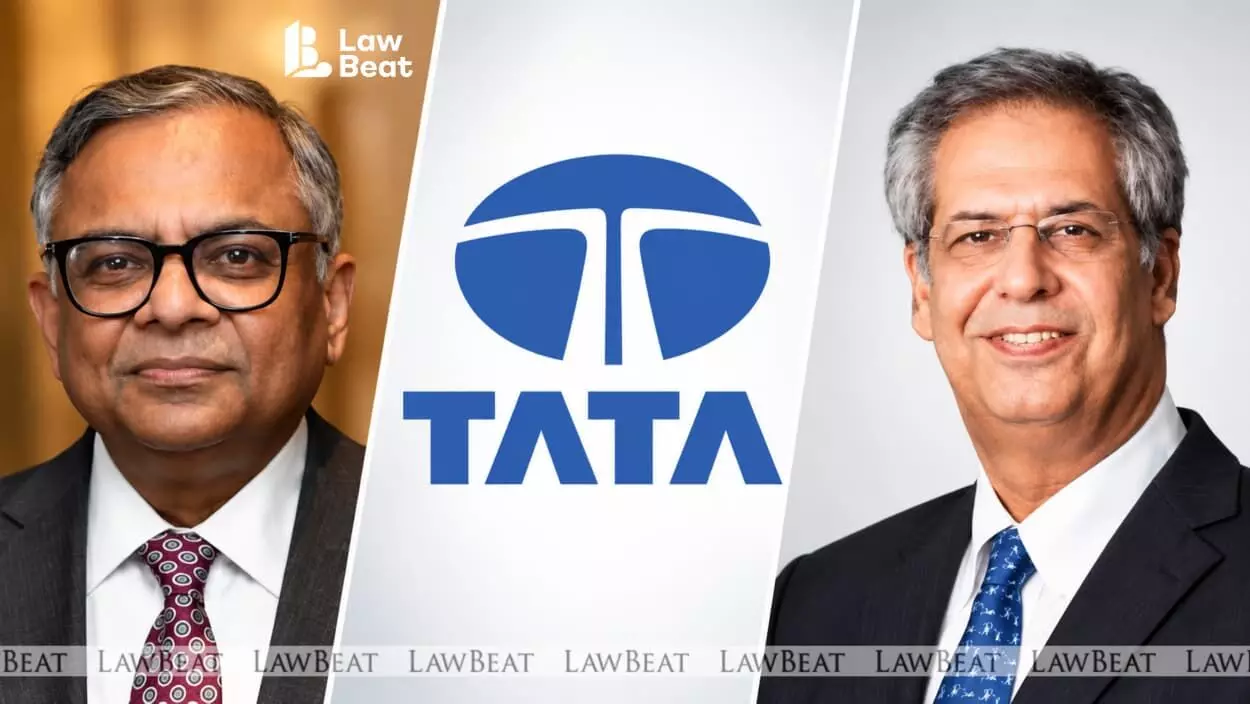
Bombay High Court: Tata Trusts Challenge Chandrasekaran's Reappointment
Home / News updates Tata Trusts vs Tata Sons: Challenge To N Chandrasekaran's Reappointment As Executive Chairman Reaches Bombay High Court X Tata Trusts move Bombay High Court over Chandrasekaran's reappointment. Tata Trusts move Bombay High Court challenging N Chandrasekaran's reappointment as Tata Sons Executive Chairman, alleging violation of Articles 104B and 121 and seeking ₹65 crore in damages. The Tata Trusts have approached the Bombay High Court challenging the reappointment of N Chandrasekaran as Executive Chairman of Tata Sons for a third five-year term, alleging that the resolution approving his reappointment was passed in violation of the company's Articles of Association. The Sir Dorabji Tata Trust (SDTT) and the R.D. Tata Trust (RDTT) have filed separate suits against Tata Sons and six of its directors, seeking to declare the September 17, 2026 board resolution reappointing Chandrasekaran as illegal, invalid and void. The trusts have also sought an injunction restraining Tata Sons from acting upon the resolution. They have collectively claimed damages of ₹65 crore, along with interest at 18% per annum. On Thursday, November 26, the matter was initially mentioned before Justice Arif S Doctor, who recused himself from hearing it. It was subsequently mentioned before Justice Abhay Ahuja, who has scheduled the matter for hearing on November 27. At the centre of the dispute is the interpretation of Articles 104B and 121 of Tata Sons' Articles of Association, which prescribe special voting rights for directors nominated by Tata Trusts. Article 121 requires matters decided by a majority of the board to also receive the affirmative vote of a majority of directors appointed under Article 104B who are present at the meeting. Tata Trusts has two nominee directors on the Tata Sons board, Noel Tata and Venu Srinivasan. At the September 17 board meeting, Noel Tata opposed Chandrasekaran's reappointment, while Srinivasan supported it. Independent director Harish Manwani, who presided over the meeting, exercised his casting vote in favour of Chandrasekaran's reappointment. The resolution was recorded as having been passed by a 4:1 majority, with Chandrasekaran abstaining. The trusts contend that the resolution was invalid because it did not receive the affirmative support required under Article 121. They have argued that the casting vote of the meeting chairman could not override the separate requirement of affirmative support from a majority of trust-nominated directors. In a statement issued on September 20, the trusts had maintained that the resolution was not validly passed and had "no legal effect". The trusts have also sought an order restraining the chairman of the board from exercising a casting vote in circumstances where the two trust-nominated directors disagree. The SDTT has claimed ₹50 crore in damages, while the RDTT has sought ₹15 crore. The suits name Chandrasekaran, executive director and chief financial officer Saurabh Agrawal, independent directors Harish Manwani and Anita George, and nominee directors Noel Tata and Venu Srinivasan as defendants. The legal challenge comes ahead of the November 30 Tata Sons board meeting, at which the proposed listing of the company is expected to be a key agenda item. Tata Trusts collectively hold approximately 66% of Tata Sons, the holding company of the Tata Group. The dispute over the company's listing has added to the differences between Noel Tata and other members of the Tata Sons board. The Reserve Bank of India has reiterated that Tata Sons must comply with the regulatory requirements applicable to upper-layer non-banking financial companies (NBFCs), with listing being the regulatory route indicated for compliance. Noel Tata has favoured restructuring Tata Sons to enable it to remain privately held, rather than proceeding with a public listing. As per media reports , the trusts have expressed apprehension that further important board resolutions could be passed using t
How does this affect you?
Get an AI analysis of this article grounded in your jurisdictions, practice areas, and any policy documents you've uploaded to Wansom.
Finish Reading the Full Story and the Expert Analysis.
Get the latest legal & regulatory intelligence in India
Wansom is AI and can make mistakes.