
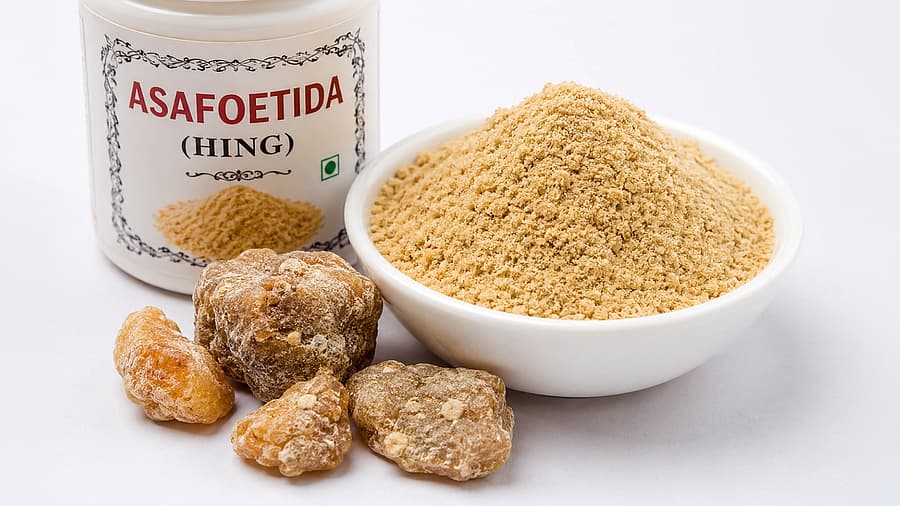
Bombay High Court: Hing Is Spice, Allows Market Fee Levy
Summary
- The Bombay High Court ruled that 'Hing' (asafoetida) is classified as a 'spice' under a 2005 state government notification.
- This decision permits the Nashik Agricultural Produce Market Committee (APMC) to levy market fees on Hing.
- The ruling overturned previous orders from the Maharashtra government and Director of Marketing that had restricted fee collection due to Hing not being explicitly named.
- Justice Amit Borkar's judgment relied on consistent classification of Hing as a spice across various Indian laws, including the Spices Board Act and Customs Tariff Act.
- The court found that explicit naming is not required for a product to fall under a general statutory category like 'spices'.
What Happened
The Bombay High Court has recently affirmed that 'Hing,' commonly known as asafoetida, falls squarely within the definition of 'spices' under a 2005 state government notification.
The Bombay High Court has recently affirmed that 'Hing,' commonly known as asafoetida, falls squarely within the definition of 'spices' under a 2005 state government notification. This pivotal ruling, delivered by Justice Amit Borkar on September 1, allows the Nashik Agricultural Produce Market Committee (APMC) to proceed with levying market fees on the trade of Hing. The decision was rendered in the case of The Nashik Agricultural Produce Market Committee v. NG Thakkar & Sons & Ors., resolving a long-standing dispute over the commodity's classification.
This judgment effectively overturns two prior administrative directives that had previously restricted the Nashik APMC from collecting these fees. Specifically, a September 2014 order issued by the Maharashtra government and an October 2011 order from the Director of Marketing had both concluded that Hing was exempt from market fees because it was not explicitly itemized in the statutory list of regulated agricultural produce. The High Court's pronouncement clarifies that explicit naming is not always a prerequisite for inclusion under a broader category.
Legal Context
The core of the legal challenge revolved around the interpretation of the Maharashtra Agricultural Produce Marketing (Development & Regulation) Act. Under Section 31 of this Act, APMCs are empowered to levy and recover market fees on specified agricultural produce. The dispute arose because Hing was not individually listed, leading to the earlier administrative decisions against the Nashik APMC. However, the High Court focused on the broader classification of 'मसाल्याचे पदार्थ' (spices) as defined in a state notification dated December 8, 2005.
In reaching its conclusion, the Court undertook a comprehensive review of various statutory frameworks to ascertain the consistent legal understanding of asafoetida. It examined provisions within the Spices Board Act, the Customs Tariff Act, and relevant food safety standards. This extensive analysis revealed a uniform treatment of Hing as a spice across different Indian legislative and regulatory instruments. The Court underscored that once asafoetida is recognized as a spice, there is no compelling reason to exclude it from the general category of 'मसाल्याचे पदार्थ' simply because its specific name was not reiterated within the schedule.
Why It Matters
This Bombay High Court ruling holds significant implications for agricultural market committees across Maharashtra and for businesses involved in the trade of spices and other agricultural commodities. By affirming that a general statutory category can encompass items not explicitly named, the judgment provides crucial clarity on the interpretation of such legislative lists. It reinforces the principle that the spirit and intent behind a classification can override a strict, literal interpretation that demands individual enumeration.
For APMCs, particularly the Nashik APMC, the decision validates their authority to collect market fees on Hing, thereby securing a revenue stream that was previously contested. More broadly, it sets a precedent for how other agricultural produce, which might not be explicitly listed but clearly falls under a general descriptive category, should be treated under the Maharashtra Agricultural Produce Marketing Act. This legal clarification is vital for ensuring consistent application of market regulations and for fostering predictability in the agricultural trade sector within the state.
Practical Implications
This ruling clarifies that 'Hing' (asafoetida) is classified as a 'spice' under the Maharashtra Agricultural Produce Marketing (Development & Regulation) Act, making it subject to APMC market fees. Lawyers and compliance officers in the food and agriculture sectors, especially those dealing with spices in Maharashtra, must ensure their clients comply with these market fee levies and understand the precedent set for interpreting general statutory categories.
Source
How does this affect you?
Get an AI analysis of this article grounded in your jurisdictions, practice areas, and any policy documents you've uploaded to Wansom.
Finish Reading the Full Story and the Expert Analysis.
Wansom is AI and can make mistakes.