
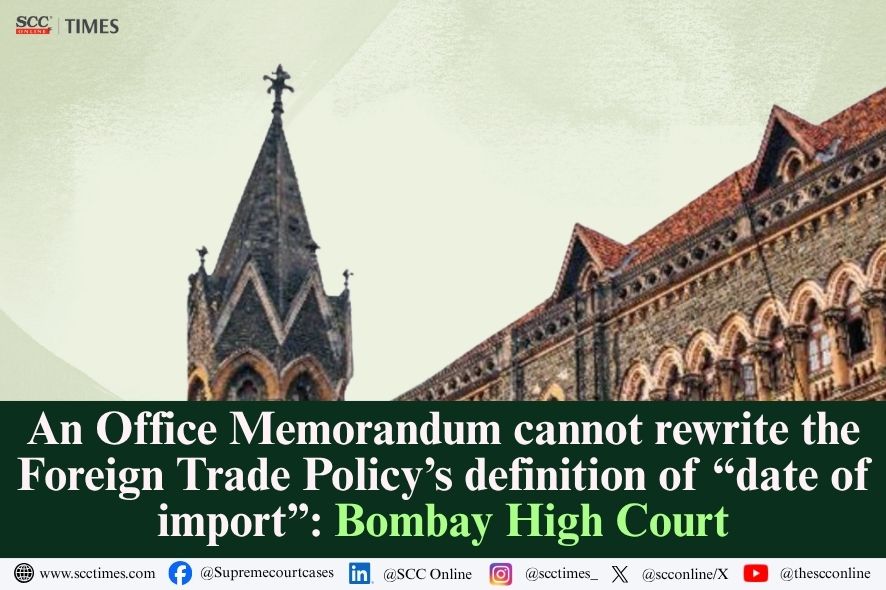
Bombay High Court: New Import Restrictions Apply to Goods Already Shipped
Summary
- A dispute arose over whether new import restrictions applied to studded platinum jewellery.
- The policy for studded platinum jewellery changed from "Free" to "Restricted" via a notification.
- Consignments were dispatched and arrived in India before the notification was published.
- Bills of Entry for these goods were filed only after the new import policy came into effect.
- The Bombay High Court examined the relevant date of import under the Foreign Trade Policy to resolve the conflict.
The Core Dispute
The central question before the court was to ascertain the precise "relevant date of import" as defined under India's Foreign Trade Policy.
A significant legal controversy emerged concerning the application of a revised import policy to specific consignments of studded platinum jewellery. The policy, which governs the entry of goods into India, underwent a critical alteration, reclassifying studded platinum jewellery from an unrestricted category, designated as "Free," to a more controlled status, labeled "Restricted." This change was formally announced through an official notification.
The heart of the dispute lay in the timing of this policy shift relative to the physical movement and formal customs processing of the affected goods. Records indicated that the consignments in question had already been dispatched from their origin and had physically arrived within Indian territory prior to the publication date of the notification introducing the new "Restricted" classification. However, the crucial step of filing the Bills of Entry, which are essential documents for customs clearance, occurred only after the new policy had been officially promulgated. This created a direct conflict regarding which regulatory framework should apply to these particular imports.
Legal Examination of Import Date
In response to this intricate timing dilemma, the Bombay High Court became involved, undertaking a thorough examination of the applicable legal principles. The central question before the court was to ascertain the precise "relevant date of import" as defined under India's Foreign Trade Policy. This determination was paramount, as the chosen date would dictate whether the consignments of studded platinum jewellery were subject to the earlier, more permissive "Free" import regime or the newly imposed, more stringent "Restricted" policy.
The court's inquiry aimed to provide clarity on a situation where the physical arrival of goods precedes a regulatory change, but the administrative formalities for their entry are completed subsequently. The outcome of this examination would establish a precedent for how such transitional scenarios are to be handled, particularly when new import restrictions apply to goods already shipped or physically present in the country but not yet formally cleared through customs. The interpretation of the Foreign Trade Policy's provisions on the date of import was therefore critical to resolving the dispute.
Broader Implications for Trade
The Bombay High Court's deliberation on this matter carries substantial implications for the broader landscape of international trade and regulatory compliance in India. The question of when an import is legally deemed to have occurred is fundamental, especially in an environment where trade policies can evolve. For businesses engaged in importing goods, the uncertainty surrounding the applicability of new rules to shipments already in transit or awaiting clearance can lead to significant operational challenges, unexpected costs, and potential legal liabilities.
Establishing a clear and consistent interpretation of the "relevant date of import" is vital for providing predictability and stability to importers. This case highlights the critical need for regulatory frameworks to address transitional periods effectively, ensuring that policy changes do not unduly penalize or disrupt legitimate trade activities that were initiated under a different set of rules. The court's findings will offer valuable guidance on how to navigate the complexities that arise when new import restrictions apply to goods already shipped, impacting future trade practices and policy implementations.
Source
Source: Original reporting via SCC Times
How does this affect you?
Get an AI analysis of this article grounded in your jurisdictions, practice areas, and any policy documents you've uploaded to Wansom.
Finish Reading the Full Story and the Expert Analysis.
Get the latest legal & regulatory intelligence in India
Wansom is AI and can make mistakes.