
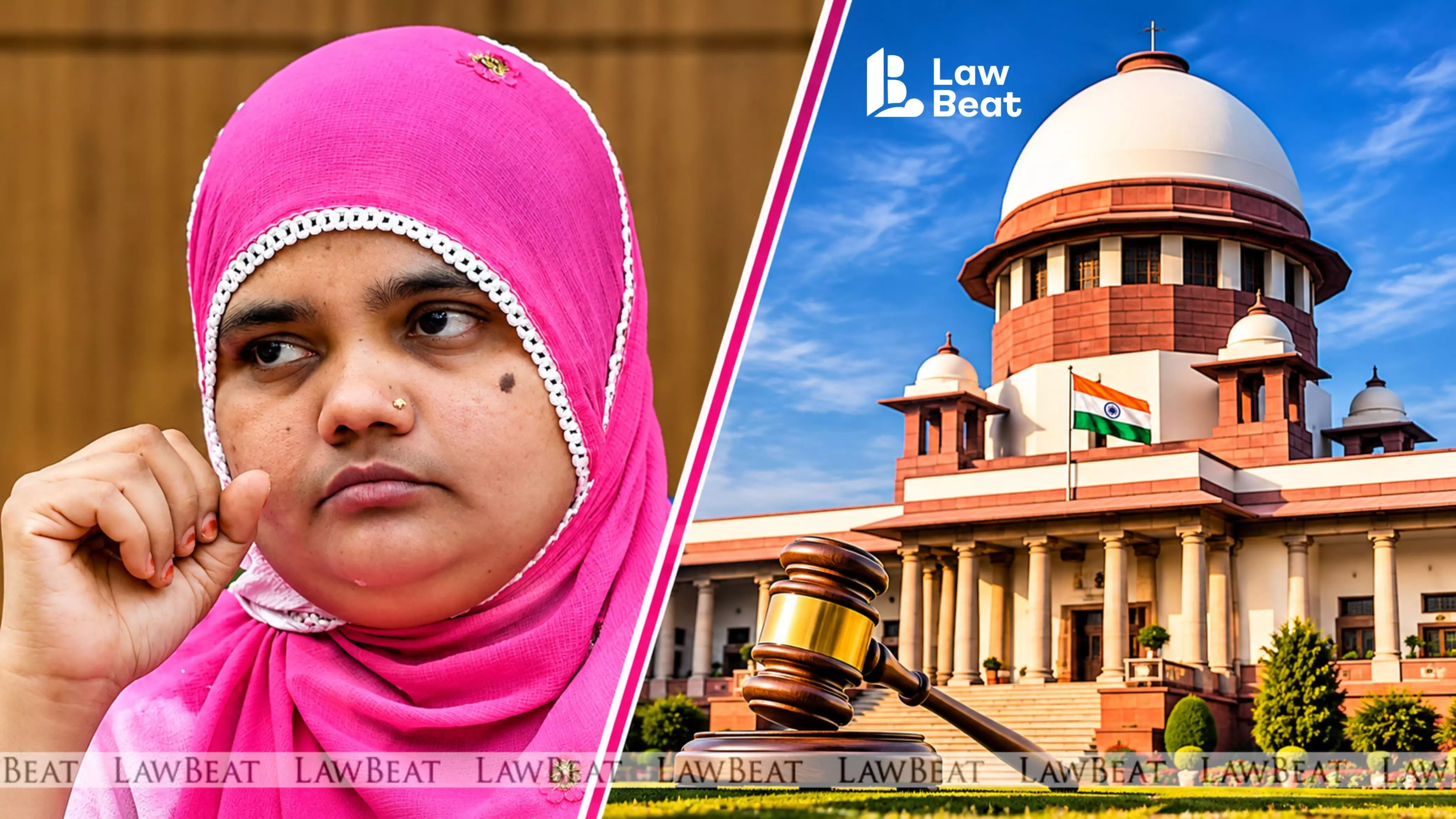
Bilkis Bano Challenges India Supreme Court Bail Suspension
Summary
- Bilkis Bano announced her intention to challenge a Supreme Court order that suspended the sentences and granted bail to two men convicted in her case.
- The Supreme Court passed this order on October 28, 2026, without informing or hearing Bilkis Bano, who learned of it through press reports.
- The two men, Bipinchand Kanaiyalal Joshi and Pradeep Ramanlal Modhiya, were among eleven convicted for the 2002 gang-rape of Bilkis Bano and the murder of 14 of her family members.
- Bilkis Bano, who was 19 at the time of the crimes, expressed profound shock and fear, stating that the order undermined her 24-year fight for justice.
- Her challenge underscores the critical issue of a victim's right to be heard in significant judicial proceedings, particularly concerning bail or sentence suspension.
A Challenge to Justice
Her challenge underscores the critical issue of a victim's right to be heard in significant judicial proceedings, particularly concerning bail or sentence suspension.
Bilkis Bano has declared her intention to contest a recent Supreme Court directive that granted bail and suspended the sentences of two individuals convicted in her harrowing case. Her decision, conveyed through a statement issued by Senior Advocate Shobha Gupta on November 16, 2026, stems from a profound procedural grievance: she was neither informed nor given an opportunity to be heard before the apex court rendered its decision. This lack of notification meant she discovered the significant judicial development through media reports, sparking deep shock and disbelief.
The order, issued by a Bench comprising Justices M M Sundresh and Prasanna B Varale on October 28, 2026, pertained to two of the eleven men found guilty of the brutal gang-rape of Bilkis Bano and the murder of fourteen members of her family in 2002. For Bilkis Bano, who has endured a 24-year struggle for justice, this development represents a significant setback, reigniting fears and undermining her hard-won sense of closure. She articulated her distress, questioning how such a pivotal order could be passed without her involvement or even basic communication.
The Case's Enduring Legacy
The underlying crimes date back to 2002, when Bilkis Bano, then a 19-year-old, suffered unspeakable violence, including gang-rape, and witnessed the murder of her family members. The two individuals whose sentences were recently suspended and who were granted bail by the India Supreme Court are Bipinchand Kanaiyalal Joshi, also known as Lala Doctor, and Pradeep Ramanlal Modhiya. These men were among those convicted by the trial court under severe provisions of the Indian Penal Code, specifically Sections 143, 147, 302 read with 149, 376(2)(e), and 376(2)(g).
Their convictions carried a sentence of rigorous imprisonment for life along with a fine, a judgment that was subsequently upheld by the Bombay High Court. The long and arduous legal journey, marked by numerous courtroom appearances, had, until this recent order, provided Bilkis Bano with a measure of vindication and a restored faith in the judicial system. Her life, rebuilt from the devastation, now faces renewed uncertainty and fear following the Supreme Court's decision to grant bail to these convicts.
Upholding Victim's Rights
The core of Bilkis Bano's challenge centers on the fundamental principle of a victim's right to be heard, especially in critical judicial proceedings like the suspension of sentences or the granting of bail. Her statement poignantly asks, "How could they not even make sure my voice was heard in their courtroom?" This question highlights a crucial procedural oversight that has profound implications for victims across India. The Bilkis Bano gang rape case has long been a symbol of perseverance in the face of extreme injustice, and this latest development underscores the ongoing struggle for comprehensive victim protection within the legal framework.
Her resolve to fight this order is driven by a desire to protect her children from living with similar fears and to honor the memory of her three-year-old daughter, Saleha, who perished in the violence. More broadly, Bilkis Bano asserts that her fight is for all women and survivors, emphasizing that no citizen should have to endure a perpetual battle for justice and equality. This India Supreme Court bail suspension decision, therefore, not only impacts her personally but also raises significant questions about the procedural safeguards for victims in the country's highest courts.
Practical Implications
This case highlights the critical procedural issue of a victim's right to be heard before significant judicial orders, such as bail or sentence suspension, are passed. Lawyers representing victims or defendants should scrutinize whether all affected parties were properly notified and given an opportunity to present their case, as a lack of due process can be grounds for challenging such orders.
Source
How does this affect you?
Get an AI analysis of this article grounded in your jurisdictions, practice areas, and any policy documents you've uploaded to Wansom.
Finish Reading the Full Story and the Expert Analysis.
Get the latest legal & regulatory intelligence in India
Wansom is AI and can make mistakes.