
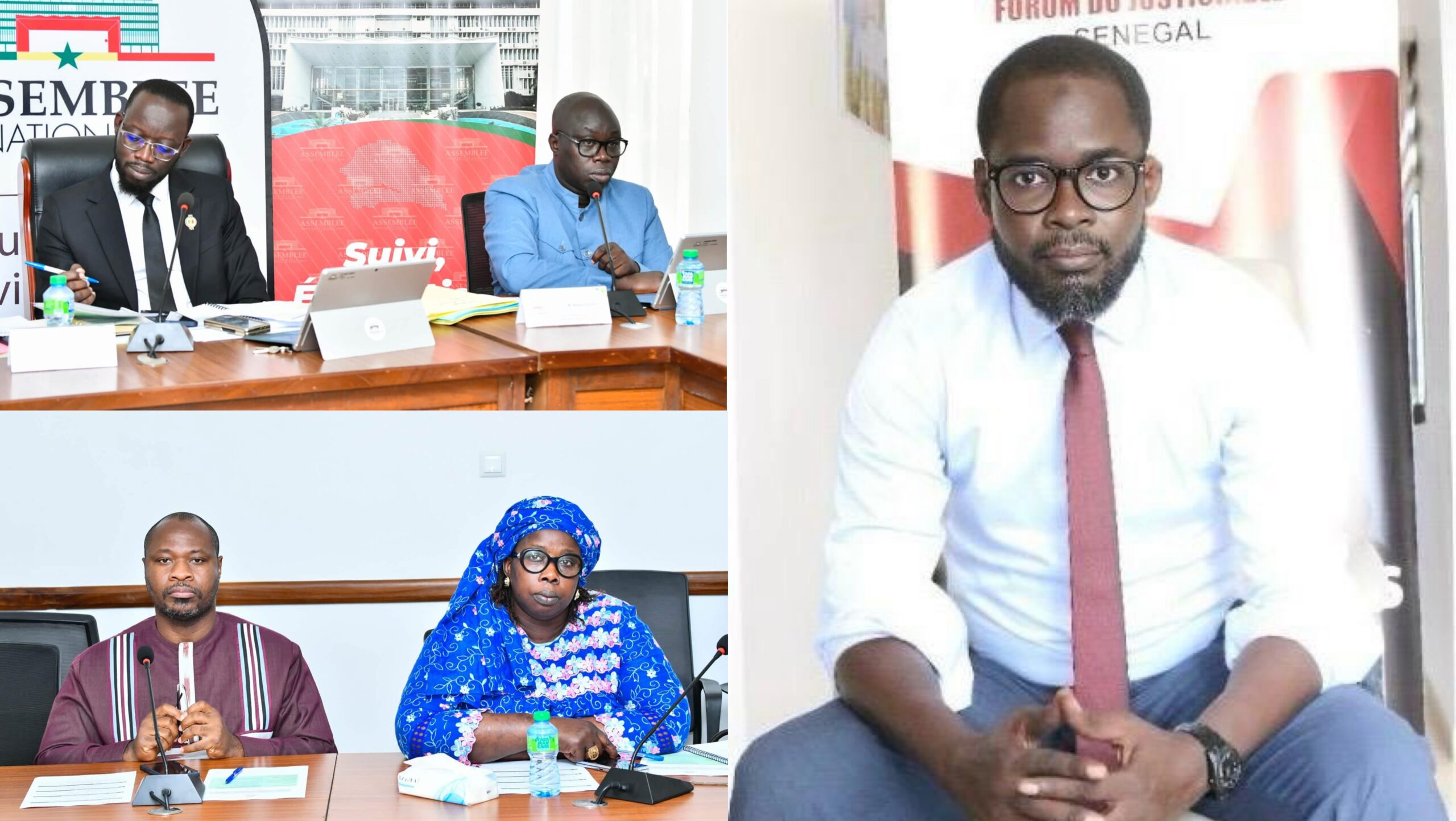
Babacar Ba: Sénégal Commissions Parlementaires Risk Présomption d'Innocence
Summary
- Babacar Ba, president of the Forum du Justiciable, warned about parliamentary inquiry commissions in Senegal.
- He stated that public hearings risk violating the presumption of innocence and fundamental rights.
- Ba emphasized that these commissions should not act as parallel courts or replace the judiciary.
- The widespread media coverage of public hearings on social media exacerbates the risk of popular condemnation.
- He stressed the importance of the right to defense and human dignity within the rule of law.
What Happened
The integrity of the legal process, which demands that guilt be established through a fair trial, is jeopardized when public accusations gain traction through parliamentary forums and social media before judicial proceedings conclude.
Babacar Ba, who presides over the Forum du Justiciable Sénégal, recently issued a significant caution regarding the operations of parliamentary inquiry commissions in Sénégal. He highlighted a critical concern that while these commissions d'enquête parlementaires are vital instruments for oversight, particularly in scrutinizing the management of public funds, their public nature risks undermining fundamental legal principles. His warning centers on the potential for individuals to face public condemnation before any judicial determination of guilt, directly challenging the principle of présomption d'innocence.
Ba's intervention, as reported by Senegal7, underscores that the pursuit of factual truth and transparency, however laudable, cannot justify actions that infringe upon fundamental rights. He emphasized that the essential guarantees of an État de droit extend to protecting the droit à la défense Sénégal and ensuring respect for human dignity. These commissions, in his view, are intended to gather information and enlighten the national assembly, not to usurp the role of the judiciary or to publicly accuse individuals who have not yet benefited from a fair trial process.
Legal Context and Concerns
The core of Babacar Ba's argument rests on the delicate balance between parliamentary oversight and individual liberties within the framework of the État de droit Sénégal. Parliamentary inquiry commissions are recognized as indispensable tools for accountability, designed to investigate and clarify issues related to public administration and financial stewardship. However, their inherent utility does not grant them immunity from adhering to the foundational tenets of justice and due process.
A primary concern articulated by Ba is the potential for auditions publiques parlementaires, which are often widely disseminated, to prematurely expose individuals to popular opprobrium. This exposure, occurring prior to any formal legal judgment, directly contravenes the présomption d'innocence, a cornerstone of modern legal systems. The president of the Forum du Justiciable Sénégal stressed that the right to defense and the broader respect for human dignity are non-negotiable components of a just legal framework, even in the context of robust parliamentary scrutiny.
Why It Matters
The implications of these public parliamentary inquiries extend beyond mere procedural concerns, touching upon the very fabric of justice and public perception. Babacar Ba specifically pointed out the heightened sensitivity of the issue due to the widespread dissemination of public hearings via social media platforms. This extensive media coverage, while potentially fostering transparency, carries the significant risk of transforming a necessary oversight mechanism into what he termed a "parallel court."
Such a transformation can lead to severe reputational damage for individuals, irrespective of their ultimate legal culpability, effectively prejudicing public opinion. The integrity of the legal process, which demands that guilt be established through a fair trial, is jeopardized when public accusations gain traction through parliamentary forums and social media before judicial proceedings conclude. Therefore, ensuring that commissions d'enquête parlementaires uphold the présomption d'innocence and the droit à la défense Sénégal is crucial for maintaining public trust in both parliamentary oversight and the judicial system.
Practical Implications
Lawyers and compliance officers in Senegal should be acutely aware of the potential for reputational damage and due process violations for clients subjected to public parliamentary inquiry commissions. This warning from Babacar Ba underscores the need to advise clients on their fundamental rights, particularly the presumption of innocence and the right to defense, when facing such public scrutiny, and to monitor how these commissions balance transparency with individual liberties.
Source
Source: Original reporting via Senegal7
How does this affect you?
Get an AI analysis of this article grounded in your jurisdictions, practice areas, and any policy documents you've uploaded to Wansom.
Finish Reading the Full Story and the Expert Analysis.
Get the latest legal & regulatory intelligence in Senegal
Wansom is AI and can make mistakes.