
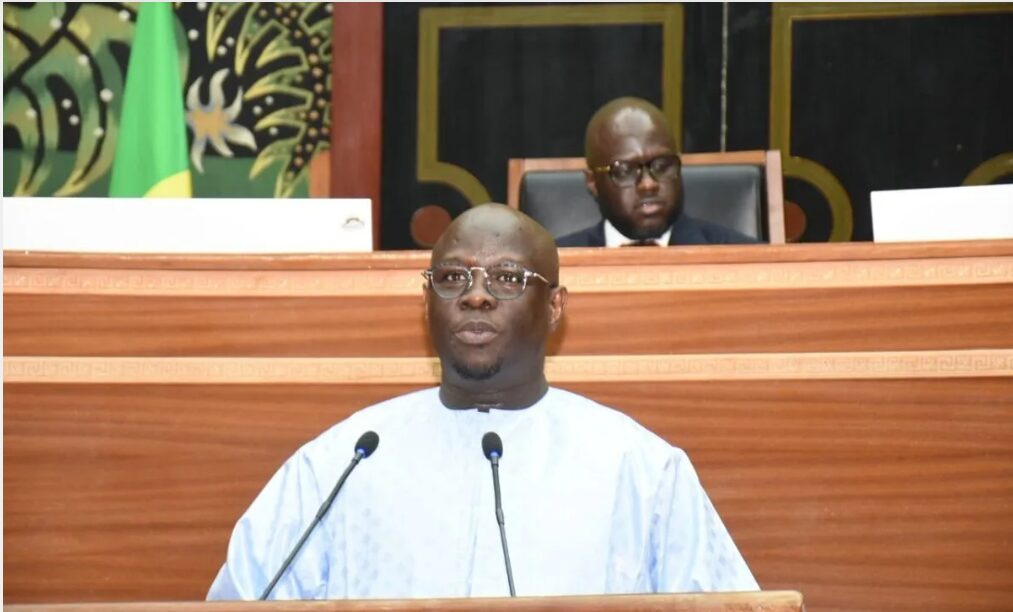
Baba Gaye: Rejet LFR Pastef Révèle Contradictions Majorité
Summary
- The Senegalese National Assembly rejected the Loi de finances rectificative (LFR).
- Citizen Baba Gaye highlighted contradictions within the ruling Pastef parliamentary majority.
- The Pastef majority voted against a financial bill defended by its own government.
- Baba Gaye called on President Bassirou Diomaye Faye and Prime Minister Ahmadou Al Aminou Lo to restore coherence.
- This incident raises concerns about legislative stability and future fiscal policy in Senegal.
Legislative Setback in Senegal
The public display of disagreement within the ruling coalition, particularly over a fundamental financial bill, may raise pertinent questions about the government's capacity to consistently advance and pass its legislative agenda.
The National Assembly in Senegal recently rejected the Loi de finances rectificative (LFR), a significant legislative decision that continues to generate widespread discussion and commentary. This outcome has drawn particular attention from Senegalese citizen Baba Gaye, who, in his public statements, highlighted what he identified as profound contradictions within the ruling Pastef parliamentary majority. The unusual situation involves the legislative arm of the government voting against a financial bill that was actively championed by its own executive branch, signaling an unexpected internal discord.
This legislative defeat for the government underscores a notable divergence between the executive and its parliamentary allies. The LFR, a crucial financial instrument designed to adjust the national budget, failed to secure the necessary support from the Pastef majority in the National Assembly. This development has sparked considerable debate regarding the internal dynamics of Senegal's political landscape and the alignment, or lack thereof, between governmental policy objectives and legislative action. The incident reveals a complex interplay of power and influence within the ruling coalition.
Internal Discord within Pastef
Baba Gaye's critique specifically targeted the Pastef majority's decision to oppose a financial text that had been vigorously defended by its own government. This scenario, where the legislative component of the ruling party actively works against a key initiative from its executive counterpart, exposes a significant internal inconsistency. Gaye's observations bring to light a potential rift or a lack of unified strategic direction within the broader Pastef political structure, emphasizing the "Pastef majorité contradictions LFR."
In light of this perceived lack of cohesion, Gaye issued a direct and public appeal to the nation's highest authorities. He urged President Bassirou Diomaye Faye and Prime Minister Ahmadou Al Aminou Lo to intervene and take decisive measures. His call stressed the critical necessity of re-establishing and diligently maintaining coherence between the executive branch and the deputies in the National Assembly who are ostensibly meant to support its legislative agenda. This plea for greater alignment underscores growing concerns about the effective functioning of government when such internal disagreements become public and directly impact crucial legislative outcomes.
Implications for Governance and Policy
The rejection of the Loi finances rectificative Sénégal carries substantial implications for the nation's legislative stability and the future trajectory of its fiscal policy. Such an outcome could introduce an element of unpredictability into the legislative process, potentially affecting how future budget allocations, financial regulations, and economic reforms are perceived and ultimately implemented. The public display of disagreement within the ruling coalition, particularly over a fundamental financial bill, may raise pertinent questions about the government's capacity to consistently advance and pass its legislative agenda.
Maintaining "Stabilité législative Sénégal" is paramount for fostering a predictable and reliable operating environment for businesses and citizens alike. This incident, where the "Baba Gaye rejet LFR Pastef" narrative unfolds, suggests that internal political dynamics could indeed pose significant hurdles to policy execution. The call for enhanced coherence by Baba Gaye therefore highlights the critical importance of a unified political front for effective governance and the consistent application of the "Politique fiscale Sénégal," which is essential for national development and economic confidence.
Practical Implications
Lawyers and compliance officers should monitor the legislative stability surrounding Senegal's financial laws. The rejection of the Loi de finances rectificative (LFR) signals potential political friction within the ruling majority, which could impact future fiscal policy, budget allocations, and regulatory predictability for businesses operating in the jurisdiction.
Source
How does this affect you?
Get an AI analysis of this article grounded in your jurisdictions, practice areas, and any policy documents you've uploaded to Wansom.
Finish Reading the Full Story and the Expert Analysis.
Get the latest legal & regulatory intelligence in Senegal
Wansom is AI and can make mistakes.