
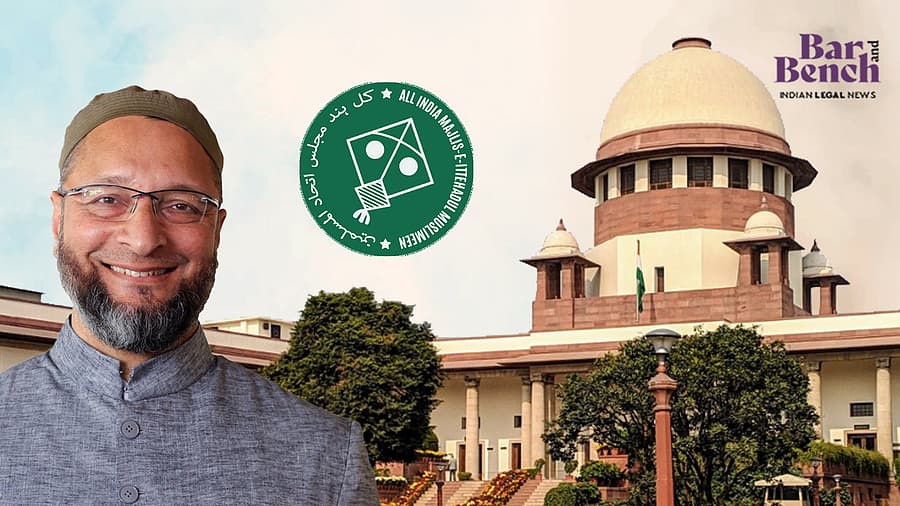
Asaduddin Owaisi: Supreme Court SIR Challenge on Electoral Rolls
Summary
- AIMIM chief Asaduddin Owaisi has filed a petition in the Supreme Court challenging the conduct of the Special Intensive Revision (SIR) of electoral rolls.
- Advocate Nizamuddin Pasha mentioned the case before a bench led by Chief Justice of India Surya Kant, requesting its listing with similar matters.
- Owaisi's challenge specifically targets the manner in which the SIR process is being carried out and the resulting voter deletions.
- He joins other opposition leaders, including Rahul Gandhi and Mallikarjun Kharge, who have also contested the SIR and voter deletions.
- The Supreme Court is expected to hear related cases soon, potentially consolidating these challenges to the electoral roll revision process.
Judicial Challenge Initiated
A ruling from the apex court could establish crucial precedents regarding the procedural safeguards required during electoral roll updates and the rights of citizens to remain on the voter list unless due process is strictly followed.
Asaduddin Owaisi, the prominent leader of the All India Majlis-e-Ittehadul Muslimeen (AIMIM), has formally approached the Supreme Court of India to contest the operational procedures of the Special Intensive Revision (SIR) of electoral rolls. This significant legal move targets the specific manner in which this revision process is being conducted, raising questions about its integrity and adherence to established norms. The challenge underscores a growing concern among political figures regarding the meticulous upkeep and accuracy of voter lists.
The urgent nature of the petition was highlighted when Advocate Nizamuddin Pasha presented the matter before a Supreme Court bench. This bench was led by Chief Justice of India (CJI) Surya Kant, indicating the high-level attention the issue is beginning to receive within the judiciary. Pasha specifically requested that Owaisi's case be listed for hearing alongside other similar matters that are already scheduled to be heard by the apex court in the very near future, specifically on the subsequent day. This request for consolidation suggests a broader pattern of grievances related to the electoral roll revision process.
Broader Political Opposition to SIR
Owaisi's legal action places him among a cohort of opposition leaders who have voiced strong objections to the Special Intensive Revision and the subsequent deletion of voters from the electoral rolls. Notably, prominent figures from the Congress party, including Rahul Gandhi and Mallikarjun Kharge, have also mounted challenges against the SIR process. Their petitions similarly focus on the implications of the revision, particularly concerning the removal of names from voter lists, which can significantly impact democratic participation.
The Special Intensive Revision of electoral rolls is a critical administrative exercise designed to update and purify voter databases. However, the current wave of challenges, including the one brought by Owaisi, Gandhi, and Kharge, suggests that the implementation of this process is under scrutiny. The concerns revolve around the potential for arbitrary or procedurally flawed deletions, which could disenfranchise eligible voters and undermine the fairness of future elections. The collective action by these leaders highlights a shared apprehension regarding the transparency and accountability of the electoral machinery during such revisions.
Implications for Electoral Integrity
The Supreme Court's engagement with these challenges to the Special Intensive Revision of electoral rolls carries substantial weight for the future of electoral integrity in the nation. The petitions, including Asaduddin Owaisi's, seek judicial review of the methods and outcomes of the SIR, particularly where they lead to voter deletions. A ruling from the apex court could establish crucial precedents regarding the procedural safeguards required during electoral roll updates and the rights of citizens to remain on the voter list unless due process is strictly followed.
The outcome of these combined cases, especially the challenge brought by Owaisi and others concerning the Special Intensive Revision electoral rolls, will be closely watched by political parties, legal experts, and civil society organizations. It has the potential to redefine the parameters within which electoral authorities conduct revisions and deletions, ensuring greater transparency and accountability. The court's decision will not only address the immediate grievances but also set a benchmark for protecting voter rights and upholding the democratic process against potential administrative overreach or error.
Practical Implications
Lawyers advising political parties, candidates, or individuals on electoral law and voter rights should closely monitor this Supreme Court challenge to the Special Intensive Revision (SIR) process, as the ruling could establish critical precedents regarding the legality of voter deletions and the procedural requirements for electoral roll updates.
Source
How does this affect you?
Get an AI analysis of this article grounded in your jurisdictions, practice areas, and any policy documents you've uploaded to Wansom.
Finish Reading the Full Story and the Expert Analysis.
Get the latest legal & regulatory intelligence in India
Wansom is AI and can make mistakes.