
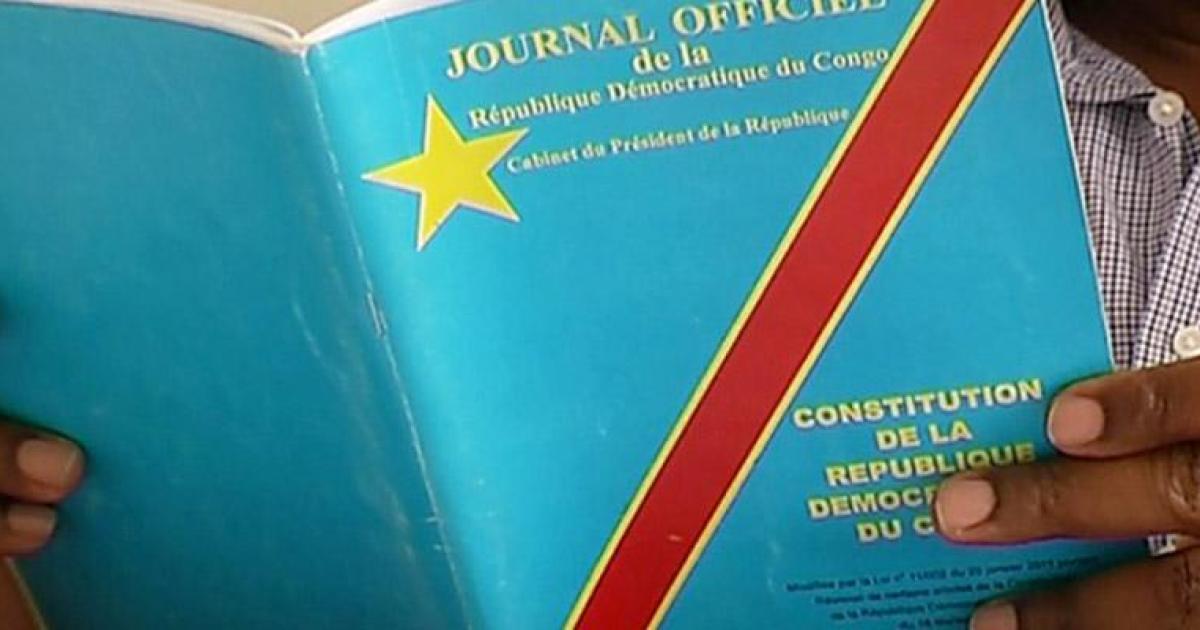
CD Constitutional Court: Article 64 No Blank Check for Rebellion
Summary
- Professor Raoul Ngebas clarified that Article 64 does not authorize rebellion or coup d'état.
- Article 64 allows for temporary transfer of power in exceptional circumstances, but with strict conditions and limitations.
- The professor's thesis provides a comprehensive analysis of Article 64, shedding light on its intended purpose and scope.
What Happened
According to Professor Ngebas, Article 64 is not a blank check for unconstitutional actions, but rather a safeguard against potential crises.
Professor Raoul Ngebas, a constitutional expert and author of a thesis on Article 64 of the Constitution, recently shared his insights during a live event hosted by Stanis Bujakera Tshiamala. The professor clarified that Article 64 does not authorize rebellion or coup d'état, contrary to common misconceptions. Instead, he explained that this constitutional provision has specific implications for the Democratic Republic of Congo's political landscape.
According to Professor Ngebas, Article 64 allows for the temporary transfer of power in exceptional circumstances, but only under strict conditions and with clear limitations. He emphasized that this provision is not a blank check for unconstitutional actions, but rather a safeguard against potential crises.
Legal Context
Article 64 of the Constitution has been subject to various interpretations over the years, leading to confusion among legal professionals and the general public. Professor Ngebas' thesis provides a comprehensive analysis of this constitutional provision, shedding light on its intended purpose and scope. He highlighted that Article 64 is not a new concept in Congolese law, but rather an evolution of existing principles aimed at ensuring stability and continuity in government.
The professor also noted that the Constitution's framers deliberately designed Article 64 to be a temporary measure, meant to address specific situations without undermining the rule of law or constitutional order. He emphasized that this provision is not a substitute for democratic institutions and processes.
Why It Matters
The implications of Professor Ngebas' insights on Article 64 are far-reaching, with significant consequences for lawyers practicing in the Democratic Republic of Congo. As constitutional challenges arise from interpretations of this provision, legal professionals must be prepared to advise clients on the potential risks and opportunities associated with Article 64.
In light of these developments, it is essential for lawyers to stay informed about the latest research and analysis on Article 64, particularly in relation to its constitutional implications. By doing so, they can provide effective guidance to their clients and contribute to a better understanding of this complex provision.
Practical Implications
Lawyers practicing in the Democratic Republic of Congo should watch for potential constitutional challenges arising from interpretations of Article 64, and be prepared to advise clients on the implications of this development.
Source
How does this affect you?
Get an AI analysis of this article grounded in your jurisdictions, practice areas, and any policy documents you've uploaded to Wansom.
Wansom is AI and can make mistakes.