
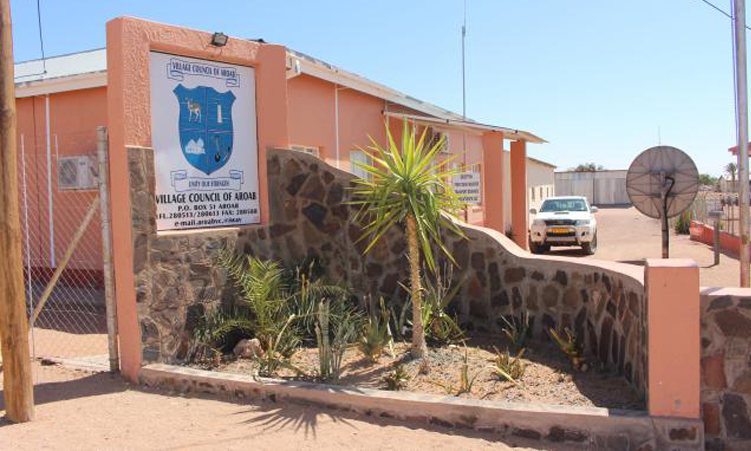
Aroab Village Council: Ineligible Loan Audit Exposes N$14,700 Income Breach
Summary
- The Aroab Village Council granted a loan from the Build Together program to an applicant who was ineligible.
- The applicant's monthly income of N$14,700 significantly exceeded the program's N$3,000 income threshold.
- Auditor General Junias Kandjeke identified this irregularity in the council's audit for the 2023/24 financial year.
- This finding highlights a critical lapse in adherence to the Build Together program's established eligibility criteria.
Audit Uncovers Ineligible Loan at Aroab Village Council
Consequently, the applicant was deemed ineligible for participation in the program, rendering the loan grant a clear deviation from the program's rules.
The Aroab Village Council has come under scrutiny following an audit that revealed the allocation of a loan from the Build Together program to an applicant who did not meet the established eligibility criteria. This significant finding emerged from the audit covering the council's 2023/24 financial year, conducted by Auditor General Junias Kandjeke.
The audit specifically highlighted a disbursement made to an individual whose monthly income far exceeded the program's stipulated threshold. According to the audit's findings, the recipient of the loan was earning a substantial N$14,700 per month at the time of the application. This income level stands in stark contrast to the Build Together program's maximum income threshold, which is set at N$3,000 per month.
Consequently, the applicant was deemed ineligible for participation in the program, rendering the loan grant a clear deviation from the program's rules. This specific Aroab Village Council ineligible loan audit finding underscores a critical lapse in adherence to financial guidelines.
Regulatory Framework and Eligibility
The Build Together program in Namibia is designed to provide financial assistance, typically in the form of loans, to individuals who meet specific socio-economic criteria, primarily focusing on lower-income households. The program's income threshold of N$3,000 per month is a fundamental component of its design, ensuring that resources are directed towards those genuinely in need of support for housing or related initiatives. Adherence to this threshold is paramount for maintaining the integrity and equitable distribution of public funds.
The discrepancy identified by Auditor General Junias Kandjeke regarding the Aroab Village Council's loan allocation directly challenges the core principles of the Build Together program Namibia. An applicant earning N$14,700 monthly earns nearly five times the maximum allowable income, indicating a significant departure from the intended beneficiary profile.
Such deviations raise questions about the screening processes and oversight mechanisms in place at the local council level, highlighting the importance of strict compliance with Junias Kandjeke loan eligibility guidelines.
Implications for Public Funds Compliance
The findings from the Aroab Council audit findings for the 2023/24 financial year carry significant implications for Namibia public funds compliance. The role of the Auditor General, Junias Kandjeke, is to provide independent oversight of government expenditure and ensure accountability. Discovering an ineligible loan within a public assistance program signals potential weaknesses in internal controls and decision-making processes at the Aroab Village Council.
Such irregularities can undermine public confidence in government programs and the responsible management of taxpayer money. The audit serves as a critical mechanism to identify and address instances where established rules, designed to ensure fairness and proper allocation of resources, are not followed. This particular instance contributes to a broader concern regarding Government loan program irregularities and the necessity for rigorous enforcement of eligibility criteria across all public bodies.
Upholding Program Integrity and Accountability
The incident at the Aroab Village Council, as revealed by the audit, extends beyond a single financial transaction; it touches upon the broader integrity of public assistance programs. When loans are granted to ineligible applicants, it not only deprives deserving individuals of crucial support but also erodes the public's trust in the fairness and effectiveness of such initiatives. The Aroab Village Council ineligible loan audit therefore highlights a systemic challenge that requires robust corrective measures.
Ensuring that programs like Build Together operate as intended is vital for social equity and good governance. The findings underscore the continuous need for vigilance and strict adherence to established guidelines by all local authorities. Ultimately, the meticulous work of the Auditor General in identifying such discrepancies is crucial for upholding accountability and ensuring that public funds are utilized transparently and in accordance with their intended purpose, reinforcing the importance of rigorous oversight in Namibia's public sector.
Practical Implications
This audit finding underscores the critical importance for legal and compliance professionals advising public bodies in Namibia to review and enforce strict adherence to eligibility criteria for public assistance programs, mitigating risks of financial irregularities and reputational damage.
Source
How does this affect you?
Get an AI analysis of this article grounded in your jurisdictions, practice areas, and any policy documents you've uploaded to Wansom.
Finish Reading the Full Story and the Expert Analysis.
Get the latest legal & regulatory intelligence in Namibia
Wansom is AI and can make mistakes.