
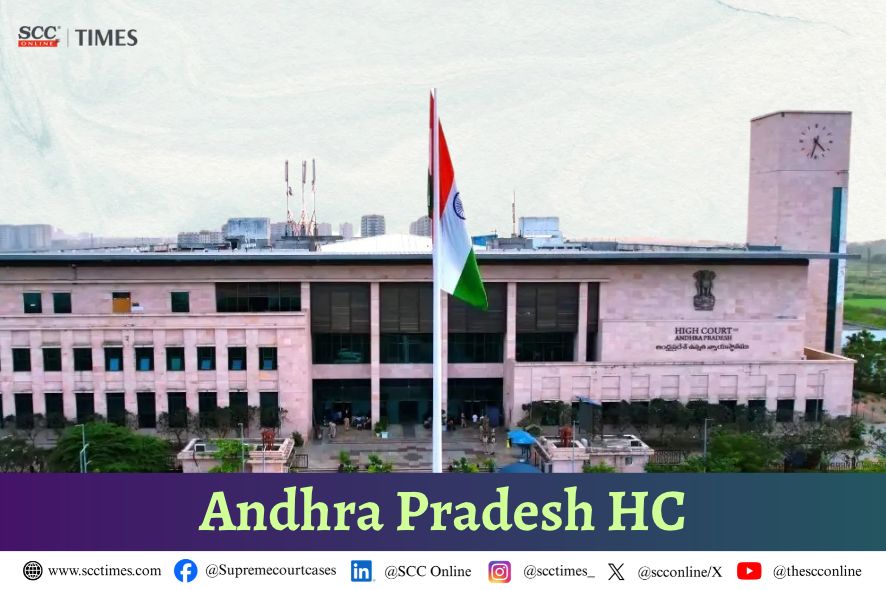
Andhra Pradesh HC: Rejects 1400-Day Delay Condonation, Upholds Eviction
Summary
- The Andhra Pradesh High Court refused to condone a 1400-day delay in a legal proceeding.
- This decision led to the restoration of an ex-parte eviction decree against a tenant.
- The court found the explanation for the delay unsubstantiated, lacking material evidence.
- A mere assertion of earlier application filings was deemed insufficient without proof.
What Happened
Legal practitioners are thus strongly advised to ensure that all applications for condonation of delay are not only logically reasoned but also comprehensively supported by irrefutable documentary proof.
The Andhra Pradesh High Court recently issued a pivotal ruling, firmly rejecting a request to condone a substantial delay spanning 1400 days in a legal matter. This decisive action by the court led directly to the reinstatement of an ex-parte eviction decree that had previously been issued against a tenant. The court's judgment unequivocally emphasized the critical necessity of presenting concrete, verifiable evidence when attempting to justify prolonged procedural delays in judicial proceedings.
The core rationale behind the court's refusal to grant condonation stemmed from the complete absence of any material substantiating the explanation provided for the extensive delay. The party seeking the condonation had merely put forth an assertion that certain applications were filed at an earlier stage, yet failed to produce any corroborating documentation, records, or other forms of proof to support this crucial claim. This unsubstantiated explanation delay court deemed entirely insufficient and unsatisfactory, leading to the restoration of the original eviction order.
Legal Context
Across the Indian judicial system, established principles govern the condonation of delay, with guidance often drawn from the provisions of the Limitation Act. These foundational principles stipulate that any party seeking to have a delay excused by the court must affirmatively demonstrate "sufficient cause" for their period of inaction. Crucially, this requirement goes beyond a simple statement of reasons; the explanation provided must be robustly supported by verifiable facts and tangible evidence, not just mere claims.
The Andhra Pradesh High Court judgment in this instance stands in firm alignment with the broader legal framework that actively discourages any form of laxity or negligence in the timely pursuit of legal remedies. While courts do possess discretionary powers to condone delays, this discretion is never exercised arbitrarily. Instead, it is strictly contingent upon the applicant proving, with material evidence, that they acted with due diligence and that the delay was genuinely attributable to circumstances beyond their reasonable control. The specific details of the 1400 day delay condonation AP case serve as a powerful illustration of the rigorous application of these fundamental limitation period condonation principles, highlighting that significant delays will not be overlooked without compelling and documented justification.
Why It Matters
This recent ruling from the Andhra Pradesh High Court carries profound implications for both litigants navigating the legal system and the legal professionals who represent them. It serves as an unequivocal and stark reminder that procedural diligence, coupled with the meticulous maintenance of comprehensive records, is absolutely paramount in all legal battles, particularly when attempting to challenge or overturn ex-parte orders or seeking to revive cases after considerable periods of inactivity.
The ultimate consequence of this decision—the restoration of the ex-parte eviction decree against the tenant—underscores the severe repercussions that can arise from a failure to provide robust, verifiable evidence to justify any asserted delay. Legal practitioners are thus strongly advised to ensure that all applications for condonation of delay are not only logically reasoned but also comprehensively supported by irrefutable documentary proof. The court's clear message is that unsubstantiated explanations will not suffice to restore an ex-parte eviction decree or otherwise excuse significant procedural lapses. This Andhra Pradesh High Court judgment therefore reinforces the judiciary's unwavering expectation of accountability, evidentiary rigor, and timely action in all submissions made before the court.
Practical Implications
Lawyers must ensure that applications for condonation of delay, particularly for significant periods like 1400 days, are supported by concrete, verifiable evidence. Unsubstantiated explanations will not suffice to restore an ex-parte eviction decree, reinforcing the critical need for timely and well-documented legal action.
Source
How does this affect you?
Get an AI analysis of this article grounded in your jurisdictions, practice areas, and any policy documents you've uploaded to Wansom.
Finish Reading the Full Story and the Expert Analysis.
Get the latest legal & regulatory intelligence in India
Wansom is AI and can make mistakes.