
Ambohimalaza Food Poisoning Trial Madagascar: 11 Accused Deny Guilt
Summary
- The Ambohimalaza food poisoning trial, concerning 35 deaths, has commenced in Antananarivo.
- The incident, presumed to be food poisoning, occurred during a birthday celebration on June 14, 2025.
- Eleven accused individuals appeared before the criminal court, with none admitting responsibility for the tragedy.
- Court debates have raised new questions about investigative methods and the origin of the incriminated substance.
- The trial is taking place at the Anosy court in Antananarivo, Madagascar.
The Ambohimalaza Tragedy Unfolds
The outcome of this trial, particularly how the court addresses the concerns raised about evidence collection and the identification of culpability, could establish important precedents for future food safety and public health incidents across Madagascar.
The judicial process has commenced in the high-profile Ambohimalaza case, which concerns the tragic deaths of 35 individuals. These fatalities are believed to have resulted from food poisoning that occurred during a birthday celebration. The incident, which cast a pall over the community, took place on June 14, 2025, leading to widespread shock and grief.
The gravity of the situation, marked by such a significant loss of life, has brought the proceedings under intense public and legal scrutiny. The trial aims to uncover the precise circumstances leading to this devastating event and to assign accountability for the presumed criminal intoxication alimentaire. The sheer scale of the tragedy underscores the critical importance of a thorough and transparent legal process to ensure justice for the victims and their families.
Courtroom Developments in Antananarivo
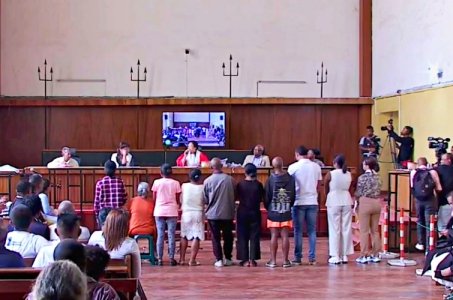
The criminal proceedings for the Ambohimalaza food poisoning trial Madagascar officially began on Wednesday at the Anosy court, situated in the capital city of Antananarivo. This marks a critical phase in the quest for justice following the mass casualty event, drawing considerable attention to the Madagascan judiciary.
Eleven individuals have been formally accused in connection with the incident and appeared before the criminal jurisdiction. During their initial appearances, all eleven defendants uniformly denied any involvement or responsibility for the tragic outcome, asserting their innocence. This collective denial sets the stage for a complex legal battle, as the court seeks to establish the facts surrounding the 35 deaths Ambohimalaza and determine culpability amidst conflicting claims.
Scrutiny on Investigative Methods
As the Affaire Ambohimalaza procès progresses, the courtroom debates have unexpectedly brought to light significant questions regarding the initial investigative methods employed in the case. These interrogations delve into the thoroughness and efficacy of the procedures used to gather evidence following the presumed food poisoning, prompting a re-evaluation of how such critical incidents are handled from the outset.
Further scrutiny has been directed towards identifying the precise origin of the incriminated substance that allegedly caused the widespread intoxication, a key element in establishing the chain of events. The ongoing discussions also touch upon the nature of various relationships pertinent to the case, suggesting a broader scope of inquiry than initially anticipated and potentially complicating the narrative. The focus on investigative methods Madagascar highlights a critical aspect of the judicial review, challenging the foundational evidence presented.
Implications for Justice in Madagascar
The unfolding Ambohimalaza food poisoning trial in Madagascar places a considerable spotlight on the nation's judicial system and its capacity to handle complex mass casualty events. The emerging questions about the investigative processes and the source of the toxic agent underscore the challenges inherent in such cases, particularly when multiple lives are lost and accountability is sought.
The outcome of this trial, particularly how the court addresses the concerns raised about evidence collection and the identification of culpability, could establish important precedents for future food safety and public health incidents across Madagascar. The proceedings are being closely watched for insights into how the judiciary navigates intricate factual disputes and the reliability of initial police work, potentially influencing legal standards for similar liability scenarios in the future. This trial serves as a crucial test for the integrity and robustness of the Madagascan legal framework in addressing public health crises.
Practical Implications
Lawyers should closely follow the Ambohimalaza trial for insights into the Madagascan judiciary's approach to evidence scrutiny and investigative procedures in mass casualty cases, particularly concerning food safety and public health. The emerging questions about investigation methods and the origin of the incriminated substance could set precedents for challenging prosecutorial evidence or defending clients in similar complex liability scenarios.
Source
How does this affect you?
Get an AI analysis of this article grounded in your jurisdictions, practice areas, and any policy documents you've uploaded to Wansom.
Finish Reading the Full Story and the Expert Analysis.
Get the latest legal & regulatory intelligence in Madagascar
Wansom is AI and can make mistakes.