
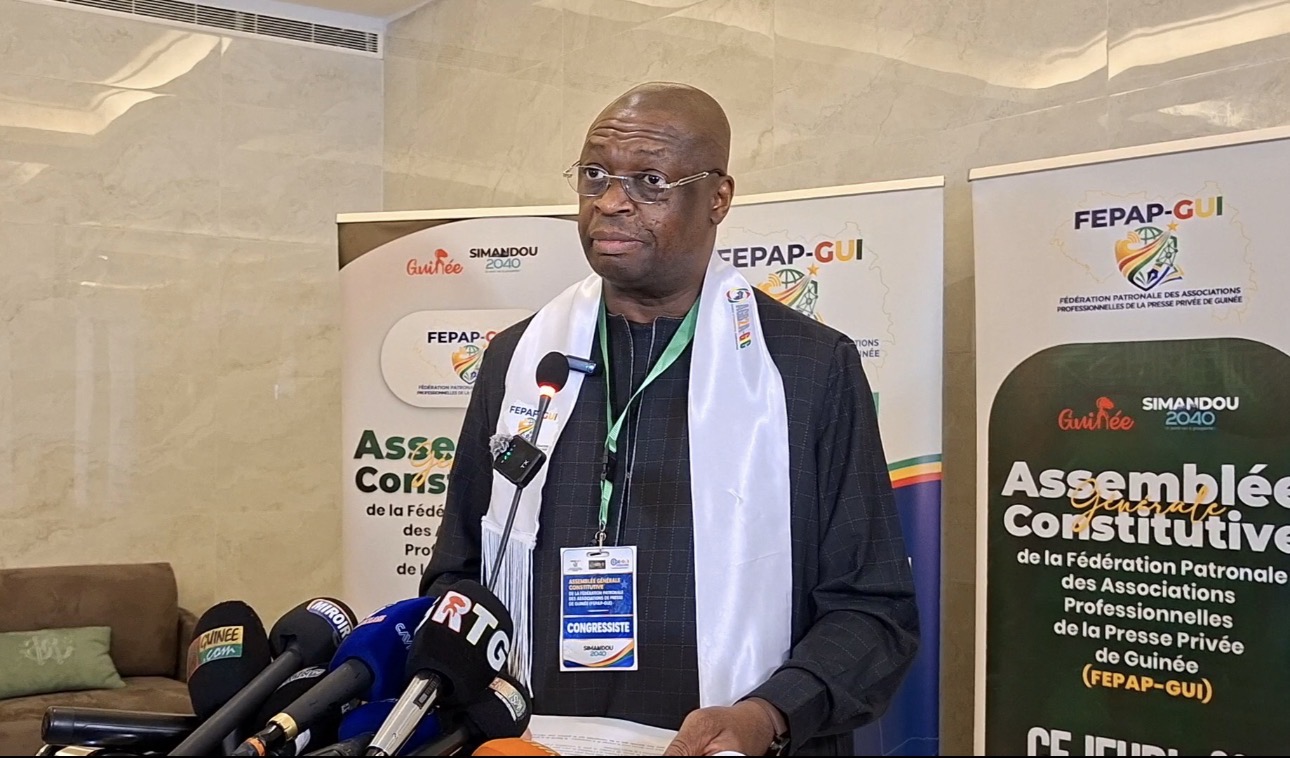
Amadou Tham Camara: FEPAP-GUI Agenda Targets Guinea Press Reforms
Summary
- Amadou Tham Camara has been elected to lead the Fédération Patronale des Associations Professionnelles de Presse de Guinée (FEPAP-GUI).
- During his inauguration, Camara unveiled a comprehensive agenda for his mandate.
- Key priorities include enhancing the economic viability of press enterprises and reforming media taxation.
- The agenda also focuses on optimizing the advertising market and establishing a collective bargaining agreement for the press.
- Technological advancements like digital transformation, artificial intelligence, and content protection are also central to the plan.
Leadership Transition and Strategic Vision
The ambitious Amadou Tham Camara FEPAP-GUI agenda is poised to significantly influence the operational and regulatory environment for media entities in Guinea.
Amadou Tham Camara has officially taken the helm of the Fédération Patronale des Associations Professionnelles de Presse de Guinée (FEPAP-GUI) following his election to the top leadership position. His ascension marks a new chapter for the organization dedicated to representing and advancing the interests of press associations in Guinea.
During his inaugural address, Camara articulated a comprehensive strategic agenda for his tenure, outlining the primary objectives and key areas of focus for the organization. This detailed roadmap was presented as a blueprint for addressing the multifaceted challenges and opportunities facing the Guinean press sector.
This **Amadou Tham Camara FEPAP-GUI agenda** signals a proactive and ambitious approach to fostering a more robust, economically viable, and professionally sound media landscape across the nation.
Core Pillars of the FEPAP-GUI Agenda
The newly unveiled **FEPAP-GUI Amadou Tham Camara** agenda encompasses a broad spectrum of initiatives aimed at bolstering the media landscape in Guinea. A central focus is the economic sustainability of press enterprises, recognizing that financial stability is crucial for independent journalism. This includes examining the existing taxation framework for media organizations, an area ripe for potential reforms in **fiscalité**.
Another significant component involves the advertising market, with plans to optimize its structure and ensure fair practices that benefit media outlets. Furthermore, the agenda prioritizes the establishment or revision of a collective bargaining agreement for the press sector, a move that could standardize employment conditions and worker protections across the industry. This "**Convention collective presse Guinée**" aspect is particularly noteworthy for its potential impact on labor relations.
Beyond economic and labor considerations, the **Amadou Tham Camara FEPAP-GUI agenda** also emphasizes technological advancement and professional development. Initiatives include fostering **Guinée media digital transformation**, exploring the integration of artificial intelligence tools, and enhancing training programs for media professionals. The **Protection des contenus médias Guinée** is also a key concern, addressing issues of intellectual property and unauthorized use in the evolving digital landscape.
Implications for Guinea's Media Sector
The ambitious **Amadou Tham Camara FEPAP-GUI agenda** is poised to significantly influence the operational and regulatory environment for media entities in Guinea. The proposed reforms concerning taxation and the advertising market could reshape revenue streams and business models for press enterprises, potentially leading to a more equitable and sustainable financial footing. These changes will require close monitoring by all stakeholders, including legal professionals advising media organizations.
The focus on a "**Convention collective presse Guinée**" underscores a commitment to improving working conditions and professional standards, which could have far-reaching effects on employment practices and talent retention within the industry. Similarly, the emphasis on "**Guinée media digital transformation**" and content protection reflects an acknowledgment of the evolving challenges and opportunities presented by the digital age, urging media houses to adapt and innovate while safeguarding their intellectual assets.
Overall, the initiatives outlined by Amadou Tham Camara for FEPAP-GUI represent a concerted effort to modernize, professionalize, and secure the future of the press in Guinea. These strategic priorities, ranging from fiscal adjustments to technological integration, are designed to create a more robust and resilient media ecosystem capable of navigating contemporary challenges.
Practical Implications
Lawyers advising media entities or businesses engaging with the press sector in Guinea should monitor the progress of FEPAP-GUI's announced initiatives, particularly regarding potential reforms in media taxation, advertising regulations, and collective bargaining agreements. These areas could introduce new compliance requirements or operational considerations for their clients.
Source
How does this affect you?
Get an AI analysis of this article grounded in your jurisdictions, practice areas, and any policy documents you've uploaded to Wansom.
Finish Reading the Full Story and the Expert Analysis.
Get the latest legal & regulatory intelligence in Guinea
Wansom is AI and can make mistakes.