
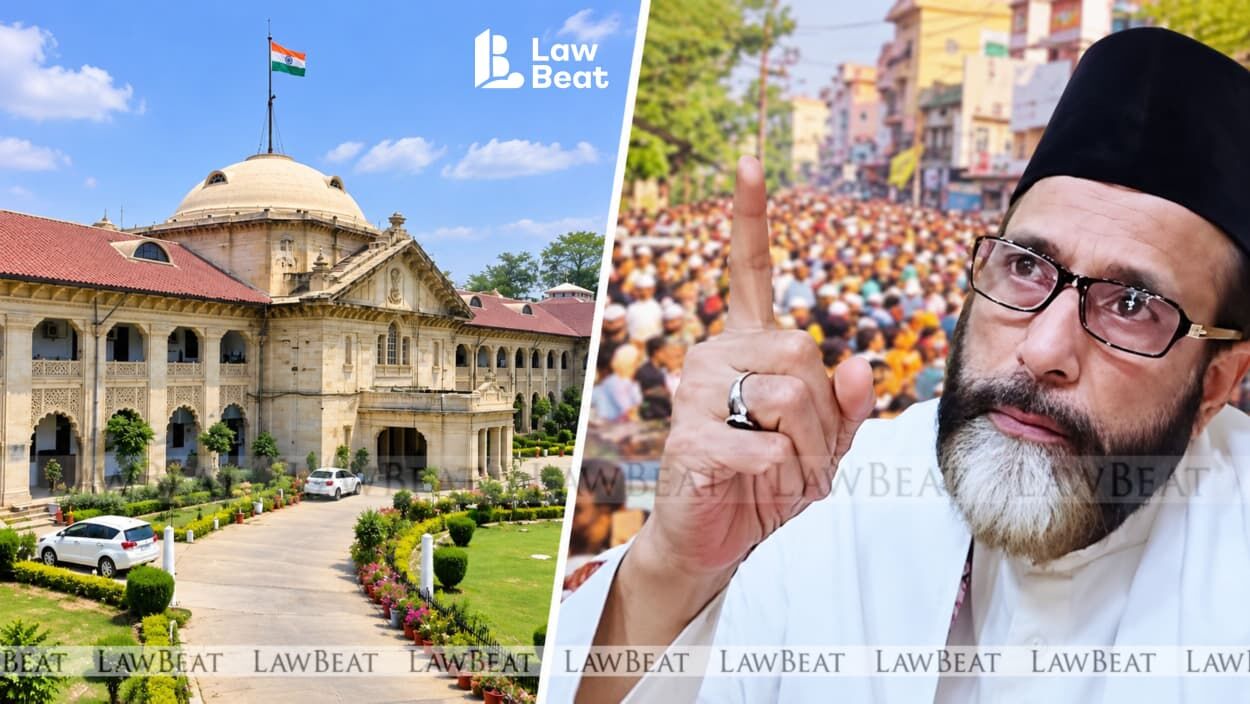
Allahabad High Court: Tauqeer Raza Bail Rejected Over 'Sar Tan Se Juda' Slogan
Summary
- The Allahabad High Court rejected Maulana Tauqeer Raza Khan's bail plea in connection with the September 2025 Bareilly violence case.
- The court ruled that the slogan "Sar Tan Se Juda" cannot be equated with religious chants, as it represents a challenge to legal authority and incitement to armed rebellion.
- Maulana Tauqeer Raza Khan is accused of being the "key conspirator" who called for an unauthorized public assembly, despite being confined at a co-accused's house during the violence.
- The incident involved approximately 200-250 people marching despite a Section 163 BNSS prohibitory order, leading to attacks on police personnel and public property damage.
- The State alleged Raza thanked and applauded participants after the incident, while his defense claimed he was under house arrest and did not incite violence.
Court Rejects Bail in Bareilly Violence Case
The court explicitly stated that this particular chant stands apart from common religious exclamations such as 'Nara-e-Takbir', 'Allahu Akbar', 'Jo Bole So Nihal Sat Sri Akal', 'Jai Shri Ram', or 'Har Har Mahadev'.
The Allahabad High Court has denied bail to Maulana Tauqeer Raza Khan, identified as a central figure in the September 2025 Bareilly violence case. This significant ruling stems from the court's assessment of a specific slogan, "Gustakh-e-Nabi Ke Ek Hi Saja, Sar Tan Se Juda," which it determined could not be equated with traditional religious expressions. The court's decision underscores a critical distinction between slogans of faith and those perceived as direct challenges to legal authority and public order.
Maulana Tauqeer Raza Khan, who the court described as the "key conspirator" behind the unrest, sought relief in connection with the incidents that unfolded in Bareilly. The violence involved attacks on law enforcement personnel, significant damage to public property, and the public chanting of the controversial "Sar Tan Se Juda" slogan during an unauthorized gathering. The court's rejection of his bail application highlights the gravity with which such alleged incitement to violence slogans India are being viewed within the judicial system.
Judicial Scrutiny of Provocative Slogans
Justice Ashutosh Srivastava, presiding over the bench, articulated a clear judicial stance on the nature of the "Sar Tan Se Juda" slogan ruling. The court explicitly stated that this particular chant stands apart from common religious exclamations such as 'Nara-e-Takbir', 'Allahu Akbar', 'Jo Bole So Nihal Sat Sri Akal', 'Jai Shri Ram', or 'Har Har Mahadev'. While these latter phrases are understood to convey reverence for deities or spiritual leaders, the court found the "Sar Tan Se Juda" slogan to be fundamentally different.
According to the Allahabad High Court's analysis, the slogan "Gustakh-e-Nabi Ke Ek Hi Saja, Sar Tan Se Juda" constitutes "nothing but a challenge to the authority of law." Furthermore, the court concluded that its utterance serves to incite individuals towards an "armed rebellion." This interpretation forms a crucial aspect of the Allahabad HC Tauqeer Raza bail rejection, setting a precedent for how specific provocative slogans are evaluated in the context of public disorder and incitement.
Allegations Against the Accused
The State presented Maulana Tauqeer Raza Khan as the "kingpin and mastermind" behind the Bareilly riots, outlining his alleged role despite his physical absence from the immediate scene of the violence. Prosecutors contended that Raza had actively called upon members of the Muslim community to gather at the Islamia Inter College grounds following Friday prayers. The stated purpose of this assembly was to protest government actions and to submit a memorandum to the President of India through the Bareilly District Magistrate. Crucially, this call for a large public assembly was made without obtaining the necessary permission from local administrative authorities.
While Raza was reportedly confined to the residence of co-accused Farhat Ali during the actual outbreak of violence, the State emphasized his alleged instigating role. They further highlighted a video purportedly recorded after the incident, in which Raza is seen expressing gratitude to the large number of people who responded to his call and applauding their actions. In his defense, Raza's legal counsel argued that he neither mobilized nor participated in the violence, nor did he make any statements or appeals that would incite violence or disrupt public peace. His lawyers also asserted that he was under house arrest around 10 am on September 26, thereby precluding his presence at the incident site.
The Unfolding of the Bareilly Violence
The events of September 26, 2025, in Bareilly unfolded against a backdrop of a prohibitory order issued under Section 163 of the BNSS, which replaced the former Section 144 of the CrPC. This order explicitly forbade the assembly of five or more individuals in a public space. Despite this directive, an estimated 200 to 250 people proceeded to march towards the Islamia Inter College grounds.
When law enforcement personnel attempted to intervene and maintain order, they were allegedly met with resistance. The crowd is accused of raising provocative slogans, pelting stones and petrol bombs, and even firing at police officers. This confrontation resulted in police personnel being manhandled and sustaining injuries. The ensuing unrest led to widespread rioting and significant destruction of public property. Evidence collected from the scene included stones, bricks, broken police barricades, fired and live cartridges, a country-made pistol, knives, sticks, rods, and glass bottles, painting a clear picture of the intensity of the confrontation in the Bareilly violence case bail proceedings.
Practical Implications
Lawyers advising on public assembly, hate speech, or incitement to violence in India should note this ruling's clear distinction between religious slogans and those deemed a 'challenge to the authority of law.' This precedent clarifies the judicial stance on specific provocative slogans, impacting future bail applications and the assessment of culpability for alleged instigators in public disorder cases.
Source
How does this affect you?
Get an AI analysis of this article grounded in your jurisdictions, practice areas, and any policy documents you've uploaded to Wansom.
Finish Reading the Full Story and the Expert Analysis.
Wansom is AI and can make mistakes.