
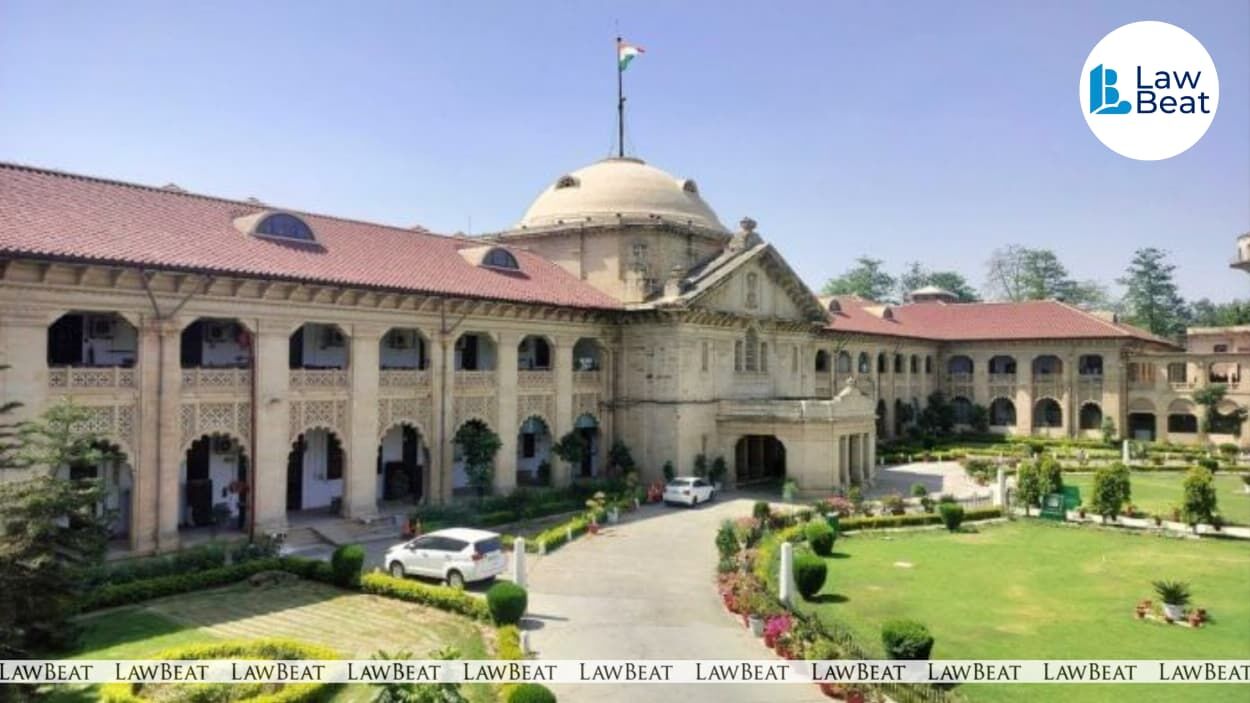
Allahabad High Court: Saharanpur Azan Loudspeaker Conditions Set for Ayesha Mosque
Summary
- The Allahabad High Court has allowed five daily Azan at Saharanpur's Ayesha Mosque, conditional on adherence to noise pollution rules and prior judicial directives.
- This ruling stems from a petition by Shanawaz Khan and others, seeking permission for Azan and loudspeaker use, which the State had objected to based on usage manner.
- The court's decision relies heavily on its 2020 Afzal Ansari judgment, which held that Azan via loudspeakers is not an integral part of Islam warranting Article 25 protection.
- Key conditions from the 2020 judgment include prohibiting sound amplification between 10 pm and 6 am and requiring proper permission for loudspeaker use.
- Petitioners must submit a notarised affidavit undertaking strict compliance with the Noise Pollution Rules, 2000, and the Afzal Ansari directions, failing which authorities can take action.
Allahabad High Court Sets Conditions for Azan Loudspeaker Use
The permission is contingent upon the mosque management's full compliance with the Noise Pollution (Regulation and Control) Rules, 2000, and the High Court's own directives established in a significant 2020 judgment concerning loudspeakers.
The Allahabad High Court has issued a directive permitting the five daily Azan at Ayesha Mosque in Saharanpur, Uttar Pradesh, provided specific conditions related to loudspeaker usage are strictly met. This ruling, delivered by a bench comprising Justices Ajit Kumar and Garima Prashad on October 1, 2026, instructs the Saharanpur district administration and local police not to interfere with the religious practice. The permission is contingent upon the mosque management's full compliance with the Noise Pollution (Regulation and Control) Rules, 2000, and the High Court's own directives established in a significant 2020 judgment concerning loudspeakers.
The case, titled Shanawaz Khan and 5 Others v. State of U.P. and 4 Others, originated from a petition filed by Shanawaz Khan and five co-petitioners. They sought judicial intervention to allow the performance of Azan five times daily, including the use of loudspeakers, at Ayesha Mosque, situated at Plot No. 47 in Village Pathed, under the Gagalhedi police station area of Saharanpur district. This decision underscores the Allahabad High Court's consistent stance on balancing religious freedom with public order and environmental regulations.
Petitioners' Plea and State's Stance
The petitioners, represented by their counsel, brought their case before the Allahabad High Court under Article 226 of the Constitution. They argued that despite existing judicial pronouncements that permitted loudspeaker use for Azan under specific conditions, local authorities were actively preventing its use at their mosque. Their primary objective was to secure a court order compelling the district administration and police to allow both the five daily Azan and the associated use of loudspeakers.
In response, the State clarified its position to the court, asserting that it was not obstructing the performance of Azan itself. Instead, the State's objection was solely directed at the manner in which loudspeakers were being employed for the call to prayer. This distinction highlighted the core of the dispute: not the act of Azan, but the regulatory compliance surrounding its amplification. The petitioners, in turn, assured the court that they had no intention of violating any applicable rules or previous judicial directives, pledging strict adherence to the prescribed methods for loudspeaker use during Azan.
Legal Precedent from the Afzal Ansari Judgment
Central to the Allahabad High Court's recent decision are the principles laid down in its 2020 ruling, Afzal Ansari & 2 Others v. State of U.P. & 2 Others. In that landmark judgment, the court affirmed that while Azan constitutes an essential and integral component of Islam, its recitation through loudspeakers or other sound-amplifying devices does not hold the same status as an integral part of the religion. Consequently, the use of such devices for Azan does not automatically warrant protection under Article 25 of the Indian Constitution, which guarantees freedom of conscience and free profession, practice, and propagation of religion.
The 2020 judgment further clarified that the rights enshrined in Article 25 are not absolute but are subject to considerations of public order, morality, health, and other constitutional provisions. Crucially, it stipulated that sound-amplifying devices are prohibited between the hours of 10 pm and 6 am. The court also declared that any use of these devices without proper permission would be deemed illegal. However, it simultaneously acknowledged that Azan could legitimately be recited from mosque minarets using the human voice, without the need for electronic amplification.
Court Mandates Undertaking for Compliance
To ensure adherence to its directives, the Allahabad High Court disposed of the petition with a specific, non-negotiable condition. The petitioners are required to submit a formal application accompanied by a notarised affidavit. This affidavit, signed by all petitioners, must contain an explicit undertaking to strictly observe both the Noise Pollution (Regulation and Control) Rules, 2000, and all directions previously issued in the Afzal Ansari judgment. This measure places the onus of compliance directly on the mosque management.
Once this application and the notarised affidavit are duly filed, the court has unequivocally stated that the police and district administration are prohibited from interfering with the petitioners' right to perform Azan five times daily at Ayesha Mosque. Conversely, the court also made it clear that the authorities bear the responsibility of ensuring that the petitioners uphold their undertaking. Should the petitioners fail to abide by these conditions, the police and district administration retain the full authority to initiate appropriate legal action, thereby maintaining a crucial check on the conditional permission granted.
Practical Implications
This ruling provides clear guidance for religious institutions and local authorities in Uttar Pradesh regarding the permissible use of loudspeakers for Azan, emphasizing strict adherence to the Noise Pollution Rules, 2000, and the conditions set out in the Afzal Ansari judgment. Lawyers should advise clients on the necessity of submitting formal undertakings and complying with noise limits to avoid legal challenges or administrative action.
Source
How does this affect you?
Get an AI analysis of this article grounded in your jurisdictions, practice areas, and any policy documents you've uploaded to Wansom.
Finish Reading the Full Story and the Expert Analysis.
Get the latest legal & regulatory intelligence in India
Wansom is AI and can make mistakes.