
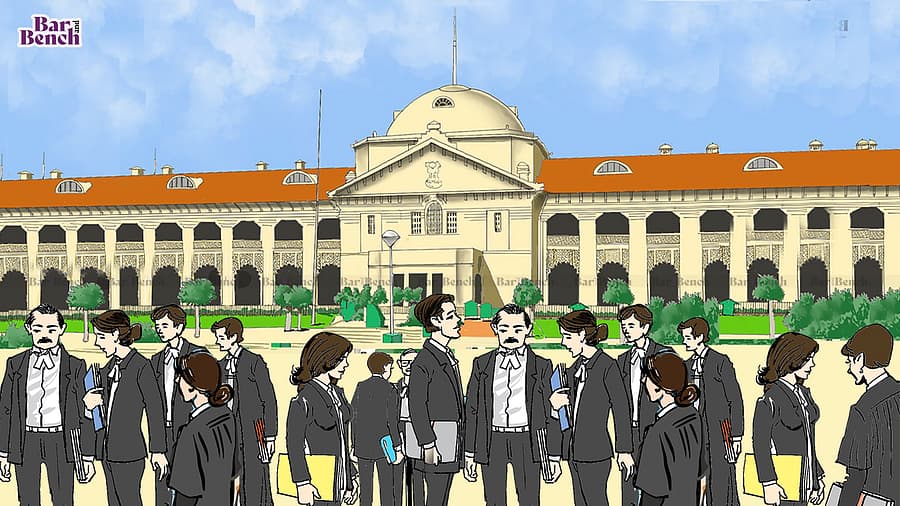
Allahabad High Court: Lawyers Protest Gate Locking, Impeding Proceedings
Summary
- Lawyers at the Allahabad High Court locked a court gate from the outside on Thursday, preventing entry for other legal professionals.
- The protest stemmed from an incident where Justice Ajay Bhanot allegedly mistreated a lawyer who objected to a police officer's seating.
- Justice Arun Kumar Singh Deshwal issued an order, noting the obstruction and citing Supreme Court rulings that stopping advocates from entering court constitutes contempt.
- Justice Deshwal expressed surprise at the unauthorized protest and requested the Bar Association to address the issue to maintain court dignity.
- The Bar Association alleged Justice Bhanot threatened to jail the lawyer and ridiculed another during the initial incident.
Escalating Protests at Allahabad High Court
The incident serves as a stark reminder for lawyers participating in protests in India that their actions, particularly those that impede access to courtrooms or disrupt judicial processes, carry the potential for serious repercussions, including charges of contempt of court.
Lawyers at the Allahabad High Court engaged in continued protest activities on a recent Thursday, culminating in the locking of a court gate from the exterior, effectively preventing access for other legal professionals. This action marked an escalation in their ongoing demonstration, which was initiated in response to an alleged instance of mistreatment involving a lawyer by Justice Ajay Bhanot earlier in the week. The protest highlights a significant point of contention between a segment of the legal fraternity and the judiciary.
The genesis of this dispute traces back to an incident within Justice Bhanot's courtroom. During proceedings, a lawyer raised an objection to a Superintendent of Police (SP) occupying a seat typically reserved for legal counsel. The lawyer had requested the SP to relocate further back in the courtroom. According to the Bar Association, a separate chair was being provided in Justice Bhanot's courtroom specifically for police officers and other high-ranking officials, suggesting a deviation from standard seating arrangements.
In response to the lawyer's objection, Justice Bhanot reportedly compelled the lawyer to issue an apology to the Superintendent of Police. Furthermore, the bar body has alleged that the judge threatened to imprison the lawyer and also subjected another individual to ridicule. These actions by Justice Bhanot served as the catalyst for the subsequent Allahabad High Court lawyer protest, leading to the disruptive measures observed on Thursday.
Judicial Intervention and Contempt Warnings
In light of the disruptive protest, Justice Arun Kumar Singh Deshwal issued an order on the same day, directly addressing the actions of the protesting lawyers. His order specifically noted that these lawyers had physically barred others from entering his courtroom by locking the gate from the outside, effectively impeding judicial proceedings. This direct observation underscored the severity of the impediment to judicial proceedings.
Justice Deshwal's order further emphasized that preventing an advocate from accessing the court constitutes contempt of court, referencing established precedents set by the Supreme Court in numerous cases. This legal context serves as a crucial reminder of the boundaries within which protests by legal professionals must operate. The judge expressed his surprise that, without any official directive from the Bar Association Allahabad High Court, certain individuals identifying as advocates were obstructing other counsel from entering the court without apparent justification. While acknowledging that the majority of advocates practicing at the Allahabad High Court are known for their sincerity and professional conduct, Justice Deshwal's remarks highlighted the exceptional nature of the current situation.
Upholding Court Dignity and Bar Responsibility
To address the escalating situation and restore order, Justice Deshwal formally requested the newly-elected body of the Bar Association to intervene. His appeal underscored the critical importance of maintaining the dignity of both the bar and the bench, suggesting that the current actions of the protesting lawyers were undermining this fundamental principle. This request places a direct responsibility on the Bar Association Allahabad High Court to regulate the conduct of its members.
The incident serves as a stark reminder for lawyers participating in protests in India that their actions, particularly those that impede access to courtrooms or disrupt judicial processes, carry the potential for serious repercussions, including charges of contempt of court. The judiciary's firm stance, as articulated by Justice Deshwal, reinforces the necessity of upholding court decorum and ensuring the uninterrupted administration of justice. The Bar Association's role in mediating such disputes and ensuring adherence to professional standards is paramount in preventing similar occurrences and preserving the integrity of the legal system.
Practical Implications
Lawyers participating in protests must be aware of the potential for contempt of court charges if their actions, such as preventing access to courtrooms, impede the administration of justice. This incident highlights the judiciary's stance on maintaining court decorum and the Bar Association's responsibility in regulating its members' conduct during disputes.
Source
How does this affect you?
Get an AI analysis of this article grounded in your jurisdictions, practice areas, and any policy documents you've uploaded to Wansom.
Finish Reading the Full Story and the Expert Analysis.
Wansom is AI and can make mistakes.