
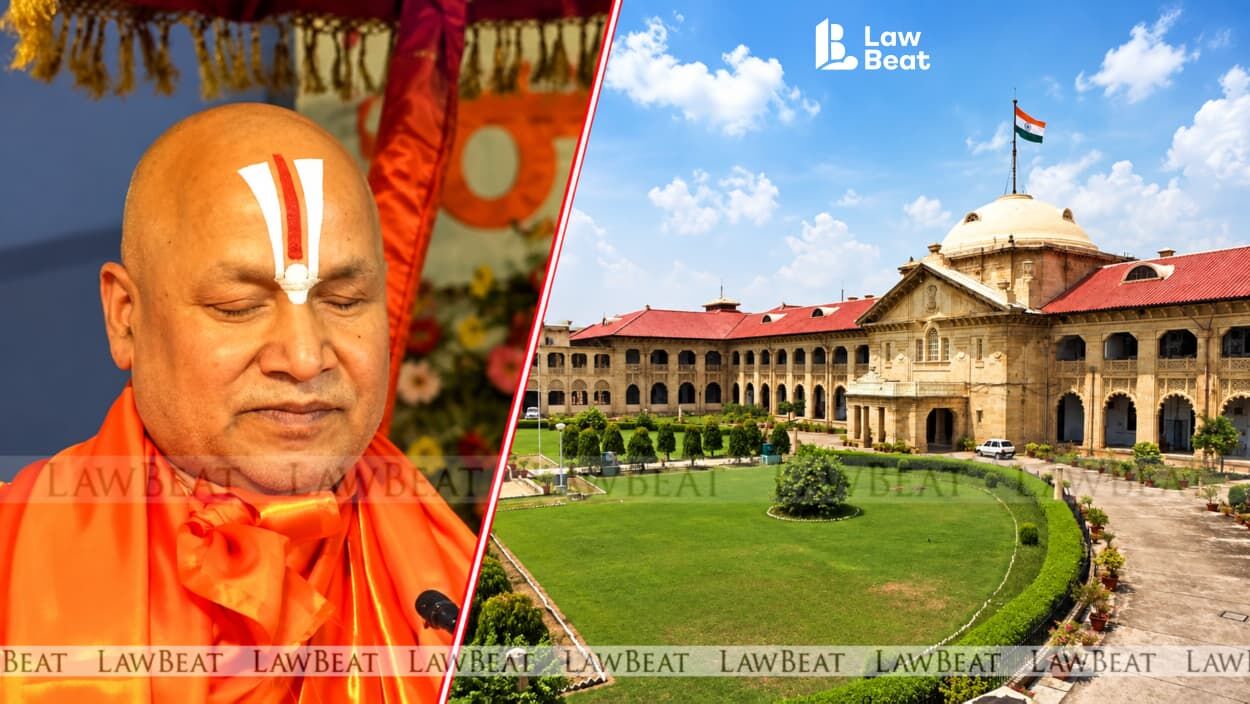
Allahabad High Court: Declines Rambhadracharya FIR Over 175(3) BNSS Remedy
Summary
- The Allahabad High Court dismissed a plea seeking an FIR against Jagadguru Rambhadracharya for alleged derogatory remarks.
- The court ruled that the petitioner failed to first exhaust the primary statutory remedy before a Magistrate under Section 175(3) BNSS.
- This Magistrate remedy, formerly Section 156(3) CrPC, is considered the "primary and preferred" avenue for FIR registration.
- The High Court's discretionary writ jurisdiction under Article 226 is not typically exercised when effective alternative remedies are available.
What Happened
The bench, comprising Justices Chandra Dhari Singh and Tarun Saxena, underscored that the remedy before a Magistrate under Section 175(3) of the Bharatiya Nagarik Suraksha Sanhita (BNSS) — which replaced the erstwhile Section 156(3) of the CrPC — is not merely an alternative but constitutes the “primary and preferred remedy” when police fail to register an FIR or conduct an adequate investigation.
The Allahabad High Court recently declined to order the registration of a First Information Report (FIR) against Jagadguru Rambhadracharya, who faced allegations of making derogatory remarks. The court dismissed a plea filed by Advocate Ramesh Upadhyay, who sought the FIR over statements purportedly made against the Upadhyay community and revered religious figures, including Shankaracharyas. The High Court's decision hinged on the petitioner's failure to first utilize the statutory remedy available before a Magistrate.
Advocate Upadhyay contended that videos circulating on social media platforms, including YouTube, contained statements by Rambhadracharya that caused him "mental agony, humiliation and insult." He claimed these remarks insulted his community, their ancestors, and hurt religious sentiments. The petitioner informed the court that he became aware of these statements on October 1, 2025, while in Chamber No. 46 of the Advocate Building at the Collectorate in Varanasi, when others showed him the video.
Following this, on October 8, 2025, the advocate sent a complaint to the Commissioner of Police, Varanasi, requesting the registration of an FIR under relevant penal provisions. He asserted that the complaint detailed a cognizable offense, obligating the police to register an FIR in accordance with the Supreme Court's ruling in *Lalita Kumari v. State of Uttar Pradesh*. However, the State disputed this claim, with the Additional Government Advocate informing the court that the petitioner had not approached the relevant police station. Furthermore, the State noted that the October 8 letter, while addressed to the Police Commissioner and copied to the Uttar Pradesh Chief Minister, lacked any postal or police record confirming its receipt by an official.
Legal Context
The bench, comprising Justices Chandra Dhari Singh and Tarun Saxena, underscored that the remedy before a Magistrate under Section 175(3) of the Bharatiya Nagarik Suraksha Sanhita (BNSS) — which replaced the erstwhile Section 156(3) of the CrPC — is not merely an alternative but constitutes the “primary and preferred remedy” when police fail to register an FIR or conduct an adequate investigation. The Allahabad High Court agreed with the State's argument that the petitioner should have pursued this avenue before invoking the High Court's writ jurisdiction.
While Article 226 grants High Courts broad powers, these are discretionary and typically not exercised when an effective alternative remedy is readily available. The court specifically referenced the Supreme Court's judgment in *Sakiri Vasu v. State of Uttar Pradesh*, which mandates that individuals aggrieved by the non-registration of an FIR should first approach the Magistrate under Section 175(3) BNSS. A Magistrate possesses the authority to direct the registration of an FIR, order a proper investigation, and even monitor its progress.
The ruling further cited the Supreme Court's recent decision in *Sujal Vishwas Attavar v. State of Maharashtra*, reinforcing the principle that the extraordinary jurisdiction under Article 226 should not be utilized to compel FIR registration if statutory remedies under the BNSS have not been exhausted. This emphasizes a crucial procedural step for those seeking criminal complaints.
Why It Matters
This decision by the Allahabad High Court serves as a significant reminder of the established procedural hierarchy for initiating criminal proceedings in India, particularly concerning the registration of an FIR. It reinforces the principle that individuals must exhaust primary statutory remedies before a Magistrate under Section 175(3) BNSS before directly petitioning the High Court for intervention. The ruling clarifies that the Magistrate remedy is not a mere option but a fundamental first step.
For legal practitioners, this judgment highlights the imperative of advising clients on the correct sequence of legal recourse. Directly approaching the Allahabad High Court for a writ to compel FIR registration without first seeking a Magistrate's order under Section 175(3) BNSS is likely to result in dismissal. The court's emphasis on the "primary and preferred" nature of the Magistrate's jurisdiction ensures that the High Court's extraordinary powers are reserved for cases where statutory mechanisms have been fully explored and found wanting.
Practical Implications
This ruling reinforces the procedural requirement for seeking FIR registration in India, reminding lawyers to exhaust the primary remedy before a Magistrate under Section 175(3) BNSS (formerly CrPC 156(3)) before approaching the High Court for writ jurisdiction. Practitioners should advise clients on the correct sequence of legal recourse for criminal complaints.
Source
How does this affect you?
Get an AI analysis of this article grounded in your jurisdictions, practice areas, and any policy documents you've uploaded to Wansom.
Finish Reading the Full Story and the Expert Analysis.
Wansom is AI and can make mistakes.