
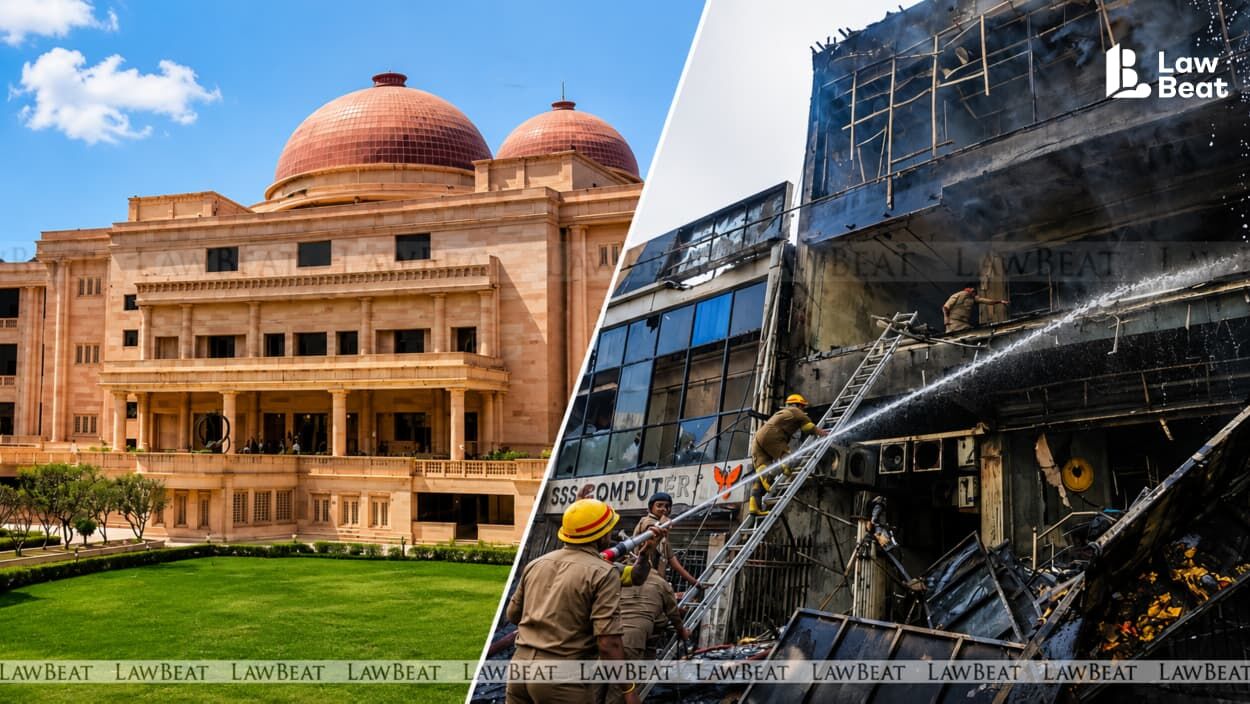
Allahabad HC: Aliganj Demolition Appeal Must Use Statutory Remedies
Summary
- The Allahabad High Court dismissed a plea challenging the demolition of an Aliganj building where 15 people died in a fire.
- The court ruled that the owner, Birendra Prasad Shukla, must first pursue statutory appellate remedies under the Uttar Pradesh Urban Planning and Development Act, 1973.
- The dispute involved allegations of unauthorized commercial use of a residential building and procedural irregularities in the Section 27 demolition process.
- The High Court declined to adjudicate disputed facts, directing them to be examined in a statutory appeal.
- The owner has been granted one week to file an appeal against the Lucknow Development Authority's demolition order and the associated cost recovery.
High Court Dismisses Aliganj Demolition Challenge
This judgment serves as a significant reminder of the strict adherence required for procedural compliance when dealing with urban planning regulations and enforcement actions by bodies like the Lucknow Development Authority.
The Allahabad High Court, sitting in its Lucknow Bench, recently declined to intervene in a petition challenging the demolition of a building in Aliganj, where a devastating fire in June tragically claimed 15 lives. The court's decision, issued on August 24 by a division bench comprising Justice Rajan Roy and Justice Manjive Shukla, mandates that the building's co-owner, Birendra Prasad Shukla, must first pursue the established statutory appellate remedies available under the Uttar Pradesh Urban Planning and Development Act, 1973.
Shukla's petition sought to overturn a demolition order issued on July 10, the subsequent demolition of the structure on July 25, and a demand for ₹26.14 lakh to cover the demolition costs. The Lucknow Development Authority (LDA) had initiated action against the property following the fatal fire on June 22, 2026, which raised significant questions regarding the building's approved residential map versus its alleged commercial use. The court, while dismissing the writ petition, granted Shukla a one-week window to file an appeal against the LDA's demolition order.
Disputed Claims Over Demolition Procedure
Central to the legal challenge was whether the demolition adhered to the procedural requirements outlined in Section 27 of the 1973 Act. Shukla's counsel contended that the building possessed a sanctioned map for residential purposes and alleged that the mandatory 15-day period, during which an owner could undertake self-demolition, was not observed. According to the petitioner, the July 10 demolition order was served on July 13, yet the building was razed just 12 days later, on July 25.
Furthermore, Shukla claimed his statutory right to appeal was obstructed because he was initially denied a certified copy of the demolition order. He asserted that an attempt to file an appeal was met with an LDA clerk insisting on this certified copy, which was only provided after he approached the High Court. Conversely, the LDA disputed these allegations, stating that a notice under Section 27(1) was issued on June 23, objections were filed by the petitioner on July 8, and the demolition order was passed on July 10. The authority maintained that the order was pasted on the premises and a true copy served on July 13, and that it waited the requisite 15 days from the date of pasting the order before proceeding with the demolition. The LDA also argued that while the building was originally approved for residential use, a commercial structure had been erected, and commercial activities were being conducted from the premises, leading to the tragic fire.
Court's Rationale: Exhaustion of Statutory Remedies
The High Court deliberately refrained from adjudicating the competing factual claims presented by both parties. Instead, it determined that these disputed questions of fact were more appropriately examined within the framework of an appeal filed under Section 27(2) of the Uttar Pradesh Urban Planning and Development Act, 1973. The bench underscored that it would have been preferable for the statutory appeal to have been lodged prior to the actual demolition of the structure.
Crucially, the court did not make a determination on whether any lapses on the part of the Lucknow Development Authority had prevented the petitioner from filing a timely appeal. The ruling reinforces the principle that parties challenging demolition orders in Uttar Pradesh must exhaust the statutory appellate remedies available to them before seeking direct intervention from the High Court, particularly concerning the Section 27 demolition procedure.
Implications for Urban Planning Compliance
This judgment serves as a significant reminder of the strict adherence required for procedural compliance when dealing with urban planning regulations and enforcement actions by bodies like the Lucknow Development Authority. The court's observations highlighted serious concerns regarding the alleged construction of a commercial building under a residential map and its subsequent commercial use, which reportedly contributed to the tragic loss of 15 lives during the fire on June 22, 2026. The bench noted that it could have entertained the petition further, but the petitioner's counsel could not adequately explain these discrepancies.
The opportunity for Birendra Prasad Shukla to pursue an Allahabad HC Aliganj demolition appeal through the prescribed statutory channels under the Uttar Pradesh Urban Planning and Development Act, 1973, remains open. This case underscores the severe consequences of unauthorized commercial use of residential buildings in India and the importance of following established legal processes for challenging administrative actions.
Practical Implications
This ruling reinforces that parties challenging demolition orders in Uttar Pradesh must exhaust statutory appellate remedies under the UP Urban Planning and Development Act, 1973, before seeking High Court intervention. It serves as a reminder for lawyers to advise clients on strict adherence to procedural requirements for appeals, especially concerning Section 27, and highlights the severe consequences of unauthorized commercial use of residential properties.
Source
Source: Original reporting via LiveLaw
How does this affect you?
Get an AI analysis of this article grounded in your jurisdictions, practice areas, and any policy documents you've uploaded to Wansom.
Finish Reading the Full Story and the Expert Analysis.
Wansom is AI and can make mistakes.