
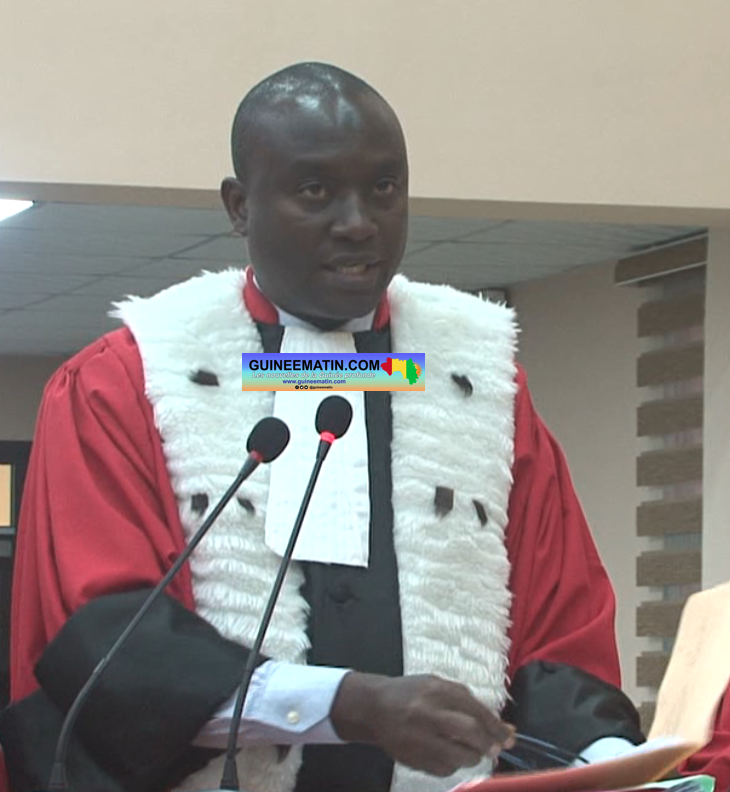
Algassimou Diallo: Cour Suprême Guinée Récusation Demandée
Summary
- Former prosecutor Algassimou Diallo's trial continued before the Supreme Court of Guinea on October 15, 2026.
- Diallo faces charges including provocation to discrimination, incitement to hatred or violence, and criminal association.
- Immediately upon the hearing's opening, the defense team moved to recuse specific members of the Chambre Réunie.
- This recusal motion represents a direct challenge to the judicial panel's composition or perceived impartiality.
- The case holds significant procedural implications for future challenges to judicial impartiality in Guinean litigation.
Judicial Proceedings Resume for Former Prosecutor
Lawyers should closely observe the procedural implications of the defense's recusal motion in this high-profile Supreme Court case, as it may inform strategies for challenging judicial composition or impartiality in future Guinean litigation.
The Supreme Court of Guinea convened on Thursday, October 15, 2026, to continue the trial of Algassimou Diallo, a former public prosecutor. Mr. Diallo is currently facing serious allegations, including charges of provocation to discrimination, incitement to hatred or violence based on discrimination, and participation in a criminal association. This high-profile case has drawn significant attention, given the defendant's previous position within the judiciary.
Immediately following the official opening of the session, the legal team representing Algassimou Diallo initiated a critical procedural maneuver. The defense formally moved for the recusal of specific members of the Chambre Réunie, the specialized chamber of the Supreme Court designated to hear the case. This action signals a direct challenge to the composition or perceived impartiality of the judicial panel presiding over the Affaire Algassimou Diallo.
The Basis of the Charges and Recusal Motion
Algassimou Diallo stands accused of offenses that strike at the core of social cohesion and public order. The charges of "provocation to discrimination, hatred, or violence for discrimination" are particularly grave, implying actions designed to incite animosity or conflict within society. Coupled with the accusation of "criminal association," these charges suggest a deliberate and organized effort to undermine legal principles and public safety. The procès provocation discrimination is a significant aspect of this case.
The defense's decision to seek the récusation membres Chambre Réunie is a fundamental procedural right aimed at ensuring a fair trial. A motion for recusal typically arises when there are concerns about a judge's impartiality, a conflict of interest, or any other factor that might compromise their ability to render an unbiased judgment. In the context of the Cour Suprême Guinée, such a motion can have profound implications for the progression of the trial and the perceived integrity of the judicial process. The défense Algassimou Diallo is clearly asserting its right to challenge the court's composition.
Implications for Guinean Jurisprudence
The procedural challenge mounted by the défense Algassimou Diallo at the Cour Suprême carries significant weight for Guinean legal practice. The motion for récusation of certain members of the Chambre Réunie highlights the importance of judicial independence and the right to an impartial tribunal, even in cases involving former judicial officials. The outcome of this specific motion could set a precedent or at least provide valuable insights into how the Supreme Court addresses challenges to its own composition and the perceived neutrality of its judges.
For legal practitioners in Guinea, this development underscores the strategic importance of procedural mechanisms available to litigants. Lawyers should closely observe the procedural implications of the defense's recusal motion in this high-profile Supreme Court case, as it may inform strategies for challenging judicial composition or impartiality in future Guinean litigation. The Affaire Algassimou Diallo thus transcends the immediate fate of the defendant, offering a crucial lesson in the dynamics of judicial accountability and procedural fairness within the Guinean legal system.
Practical Implications
Lawyers should observe the procedural implications of the defense's recusal motion in this high-profile Supreme Court case, as it may inform strategies for challenging judicial composition or impartiality in future Guinean litigation.
Source
How does this affect you?
Get an AI analysis of this article grounded in your jurisdictions, practice areas, and any policy documents you've uploaded to Wansom.
Finish Reading the Full Story and the Expert Analysis.
Get the latest legal & regulatory intelligence in Guinea
Wansom is AI and can make mistakes.