
الاتحاد الأفريقي: يرحب حوار السودان الجديد لتعزيز الاستقرار
Summary
- The African Union Commission welcomed a new Sudanese dialogue initiative on Monday, August 31, 2026, which aims to prepare for internal discussions under an independent committee.
- This initiative, backed by government guarantees, has drawn anger from the Declaration of Principles forces, who reject dialogue with government-allied factions.
- The AU views the initiative as supporting its May 2023 roadmap for conflict resolution and the ongoing efforts of the Quintet Mechanism, which includes the UN, EU, IGAD, and Arab League.
- Despite diplomatic consultations, the Quintet Mechanism has not yet achieved consensus among Sudanese forces due to key obstacles.
- Major political divisions persist, with the "Sumoud Alliance" rejecting the Islamic Movement's participation, while the "Democratic Bloc" insists on providing opportunities for engagement.
Recent Developments in Sudanese Dialogue
The inability of these various forces to reach a common understanding on the terms and participants of dialogue remains a critical barrier, prolonging the period of political uncertainty and making the achievement of lasting stability a complex and arduous task for the nation.
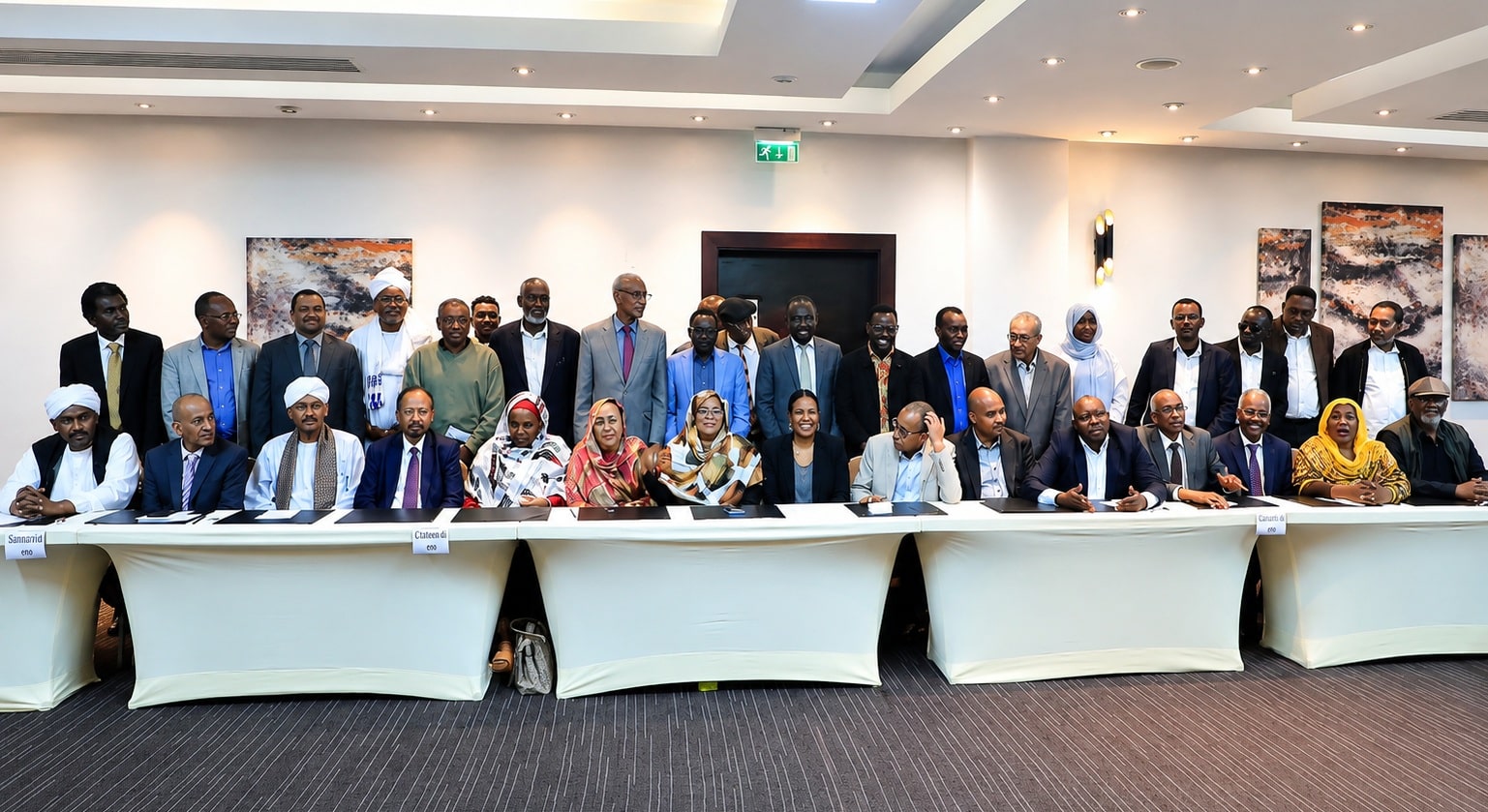
On Monday, August 31, 2026, the African Union Commission officially welcomed the launch of a new Sudanese dialogue initiative. This endorsement follows an announcement made the preceding Sunday by a preparatory committee based in Khartoum. The committee's stated purpose is to commence consultations aimed at cultivating a conducive environment and facilitating meetings among various political and civil forces within Sudan. This crucial step is intended to pave the way for formulating a comprehensive vision to initiate dialogue across the nation, an effort notably supported by governmental guarantees and immunities. The AU Commission's statement explicitly expressed its approval for the convening of this specific initiative, designed to prepare for Sudanese-Sudanese dialogue inside the country, under the guidance of an independent committee composed of Sudanese elders. This welcome from the الاتحاد الأفريقي يرحب حوار السودان comes at a critical juncture for the nation's future.
However, the introduction of this مبادرة الحوار السوداني has not been met with universal acclaim. Forces associated with the Declaration of Principles have voiced significant anger, reaffirming their prior refusal to engage with any dialogue calls promoted by the Sudanese government and its allied factions. These انتقادات سياسية حوار السودان highlight the deep-seated divisions that continue to challenge efforts toward national reconciliation. The government's backing of the initiative, while providing a framework for discussion, simultaneously fuels skepticism among opposition groups who question the impartiality and inclusivity of the proposed talks. The path to a unified national conversation remains fraught with political complexities and historical grievances that require careful navigation.
Underlying Diplomatic Frameworks
The African Union Commission views this latest initiative as a vital component in strengthening the existing خارطة طريق الاتحاد الأفريقي السودان and advancing the work of the الآلية الخماسية السودان. This perspective frames the current efforts as part of a broader, cohesive strategy envisioned to be spearheaded by Sudanese stakeholders themselves. The African Union originally unveiled its comprehensive roadmap for resolving the conflict in Sudan on May 27, 2023. This foundational document outlined several critical objectives, including an immediate cessation of hostilities, a robust humanitarian response, the protection of civilians and essential infrastructure, and the launch of an inclusive political process designed to bring lasting peace.
Following the establishment of this roadmap, the African Union took a leading role in forming the Quintet Mechanism. This collaborative body comprises the AU itself, alongside the United Nations, the European Union, the Intergovernmental Authority on Development (IGAD), and the Arab League. The Quintet Mechanism was specifically tasked with facilitating a political process within Sudan. To this end, it has conducted extensive consultations with various Sudanese forces. Despite these concerted diplomatic endeavors, the Quintet Mechanism has, to date, been unable to forge a consensus among the disparate factions, underscoring the persistent challenges in achieving a unified approach to the nation's future.
Political Obstacles to Consensus and Stability
The ongoing efforts to foster dialogue in Sudan continue to confront significant political obstacles, which directly impact the prospects for الاستقرار السياسي السوداني. A central impediment arises from the firm stance taken by the "Sumoud Alliance" and other political groups. These entities unequivocally reject any involvement of the Islamic Movement or its affiliated organizations in any proposed dialogue process. This position reflects a deep distrust and a fundamental disagreement over the legitimate participants in Sudan's political future. The exclusion of certain groups, while demanded by some, complicates the goal of an inclusive national conversation.
Conversely, the "Democratic Bloc" has articulated a position emphasizing the necessity of providing an opportunity for engagement. While the full details of their insistence are not entirely clear from current reports, their stance suggests a different approach to inclusivity, potentially advocating for broader participation. These divergent views among key political actors highlight the profound divisions that have consistently hampered progress toward a comprehensive political settlement. The inability of these various forces to reach a common understanding on the terms and participants of dialogue remains a critical barrier, prolonging the period of political uncertainty and making the achievement of lasting stability a complex and arduous task for the nation.
Practical Implications
Lawyers and compliance officers should monitor the progress of this Sudanese dialogue initiative, as its outcome will directly influence the country's political stability and future legal and regulatory environment, impacting business operations and risk assessments.
Source
How does this affect you?
Get an AI analysis of this article grounded in your jurisdictions, practice areas, and any policy documents you've uploaded to Wansom.
Finish Reading the Full Story and the Expert Analysis.
Wansom is AI and can make mistakes.