
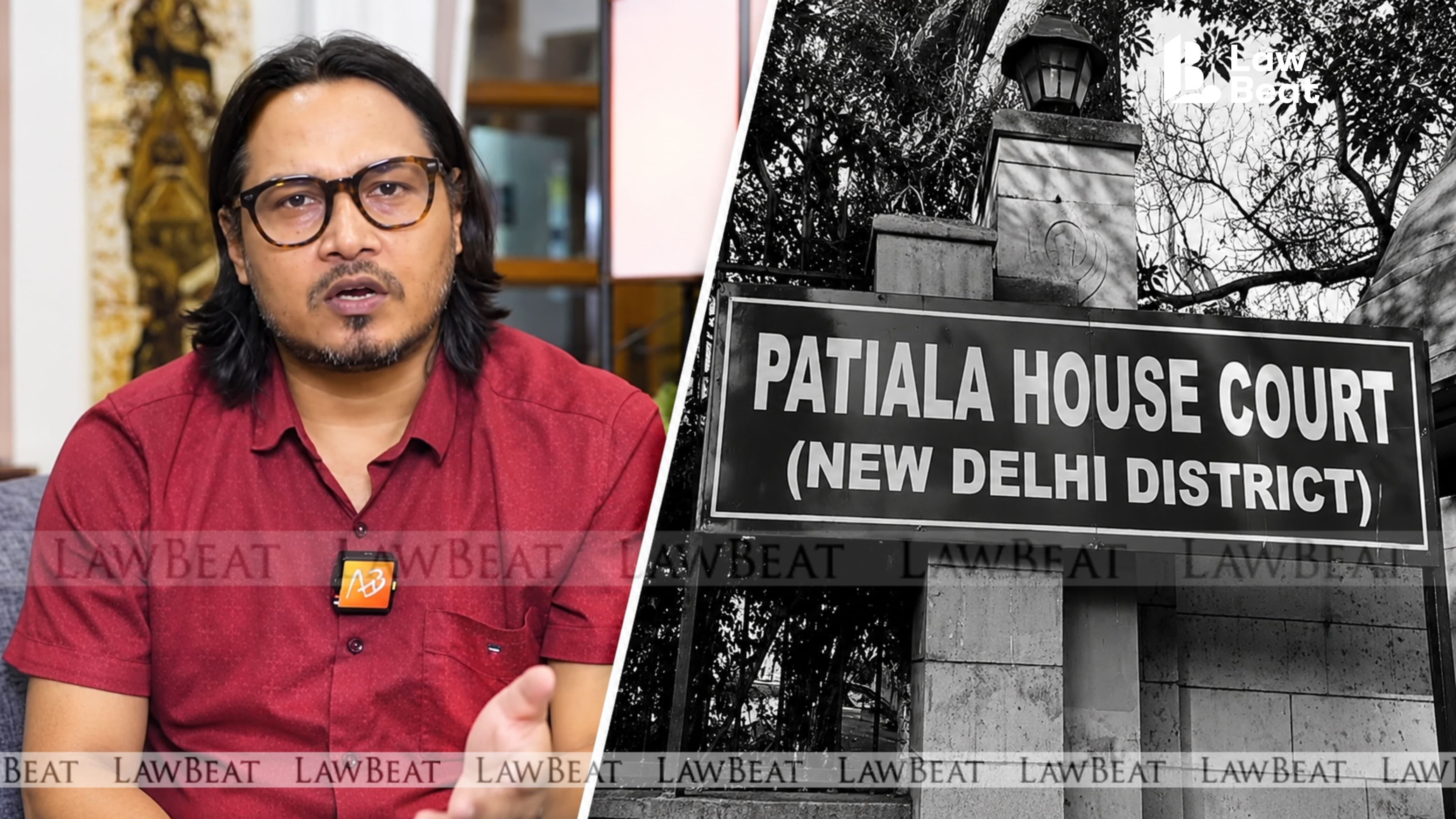
Delhi Court Denies Ajeet Bharti Anticipatory Bail: SC/ST Act Bar
Summary
- A Delhi court denied anticipatory bail to YouTuber Ajeet Bharti over remarks concerning MP Chandra Shekhar Azad.
- The court found Bharti's comments prima facie constituted an offense under the SC/ST Act, triggering the Section 18 bar on pre-arrest bail.
- The FIR, filed by a political outfit's president, cited Bharti's online episode on X and YouTube as the "place of occurrence."
- Bharti's defense argued no "public view" insult and cited *Hitesh Verma v. State of Uttarakhand*, but the arguments were not accepted.
- The ruling emphasizes the strict application of the SC/ST Act to online casteist remarks, making anticipatory bail difficult to obtain.
What Happened
This ruling highlights the strict interpretation and application of Section 18 of the SC/ST Act, making anticipatory bail challenging for alleged online casteist remarks in India.
A Delhi court has denied anticipatory bail to YouTuber Ajeet Bharti, ruling that his public remarks concerning Member of Parliament Chandra Shekhar Azad prima facie constitute an offense under the Scheduled Castes and the Scheduled Tribes (Prevention of Atrocities) Act, 1989. This finding triggers a statutory bar against pre-arrest bail under Section 18 of the Act, making it challenging for individuals accused of online casteist remarks in India to secure such relief.
The Additional Sessions Judge, Saurabh Partap Singh Laler, issued the order on September 7, 2026, in response to Bail Application No. 2114 of 2026. The case stems from FIR No. 0030/2026, filed on August 23, 2026, at Police Station North Avenue. The complaint, lodged by the Delhi State President of a registered political organization, identifies the "place of occurrence" as social media. It alleges that on August 22, 2026, at approximately 22:11 hrs, Bharti published an episode on his verified X account (@ajeetbharti) and YouTube channel, which had garnered around 23,100 views by the time of the complaint.
The episode was accused of containing statements that were "casteist, derogatory and humiliating" towards the Scheduled Caste community, MP Chandra Shekhar Azad, and Dr. B.R. Ambedkar. Additionally, the remarks were described as "sexually degrading and intimidatory." The FIR invoked multiple sections of the SC/ST Act, specifically 3(2)(va), 3(1)(r), 3(1)(s), 3(1)(u), 3(1)(v), and 3(1)(w), alongside Section 67 of the Information Technology Act, 2000, and Sections 196(1)(c) and 351(3) of the Bharatiya Nyaya Sanhita, 2023.
Legal Context and Court's Rationale
The court's decision hinges on the interpretation of Bharti's comments, which arose during his response to a user's suggestion that he arrange his sister's marriage to MP Azad, implying this would end reservation. Bharti's reply, as transcribed and submitted by his own counsel, included statements questioning the comparison, noting his sister was already married, and asserting that marriage required more than just being a 'Chamar' and an MP. He further stated that the MP would first need to "make himself worthy" to marry a woman from a 'Savarna' (upper-caste) family. The court also noted additional remarks of an "explicitly sexual character" concerning the user's sister and mother, which it deemed unnecessary to reproduce.
Bharti's legal counsel, Advocate Jai Anant Dehadrai, argued that no offense under Section 3(1)(r) or (s) of the SC/ST Act was evident, primarily because the complainant was not personally present, insulted, or intimidated. The defense contended that no identified member of the Scheduled Caste/Scheduled Tribe community was shown to have been insulted "within public view," citing the precedent set in *Hitesh Verma v. State of Uttarakhand*. Furthermore, the lawyer posited that the impugned passage constituted a "rhetorical hypothetical" addressed to the commentator, rather than a statement about any real, identified woman. It was also argued that the SC/ST Act Section 18 bar on anticipatory bail should be confined strictly to offenses "under this Act."
However, the court ultimately found that the remarks, on their face, met the criteria for an offense under the Scheduled Castes and the Scheduled Tribes (Prevention of Atrocities) Act, thereby activating the stringent provisions of Section 18, which prohibits the grant of anticipatory bail. This ruling underscores the broad scope of the Act's application, particularly in the digital realm where content can reach a wide audience and be deemed to be in "public view."
Why It Matters
This ruling highlights the strict interpretation and application of Section 18 of the SC/ST Act, making anticipatory bail challenging for alleged online casteist remarks in India. The court's decision to deny Ajeet Bharti anticipatory bail reinforces the legal system's stance on protecting vulnerable communities from derogatory and humiliating content, even when disseminated through social media platforms. The identification of social media as the "place of occurrence" for such offenses broadens the Act's reach, signaling that online spaces are not exempt from its provisions.
The case serves as a significant precedent for content creators and social media users, emphasizing the potential legal ramifications of their online expressions. It suggests that remarks made in response to user comments, even if framed as rhetorical, can be subject to rigorous scrutiny under the SC/ST Act if they are perceived as casteist or discriminatory. The court's acknowledgment of the "explicitly sexual character" of some remarks further complicates the defense, indicating that multiple layers of offensive content can contribute to a prima facie case.
Ultimately, this judgment underscores the challenges faced by individuals accused under the SC/ST Act, particularly concerning the Section 18 bar, which severely restricts access to pre-arrest bail. It signals a robust legal environment where online content, once published, can quickly lead to serious legal consequences, irrespective of the author's intent or the immediate context of the remarks within a broader conversation.
Practical Implications
This ruling highlights the strict interpretation and application of Section 18 of the SC/ST Act, making anticipatory bail challenging for alleged online casteist remarks. Lawyers must advise clients on the broad scope of 'public view' and the severe consequences of social media content that could be deemed offensive under the Act.
Source
How does this affect you?
Get an AI analysis of this article grounded in your jurisdictions, practice areas, and any policy documents you've uploaded to Wansom.
Finish Reading the Full Story and the Expert Analysis.
Wansom is AI and can make mistakes.