
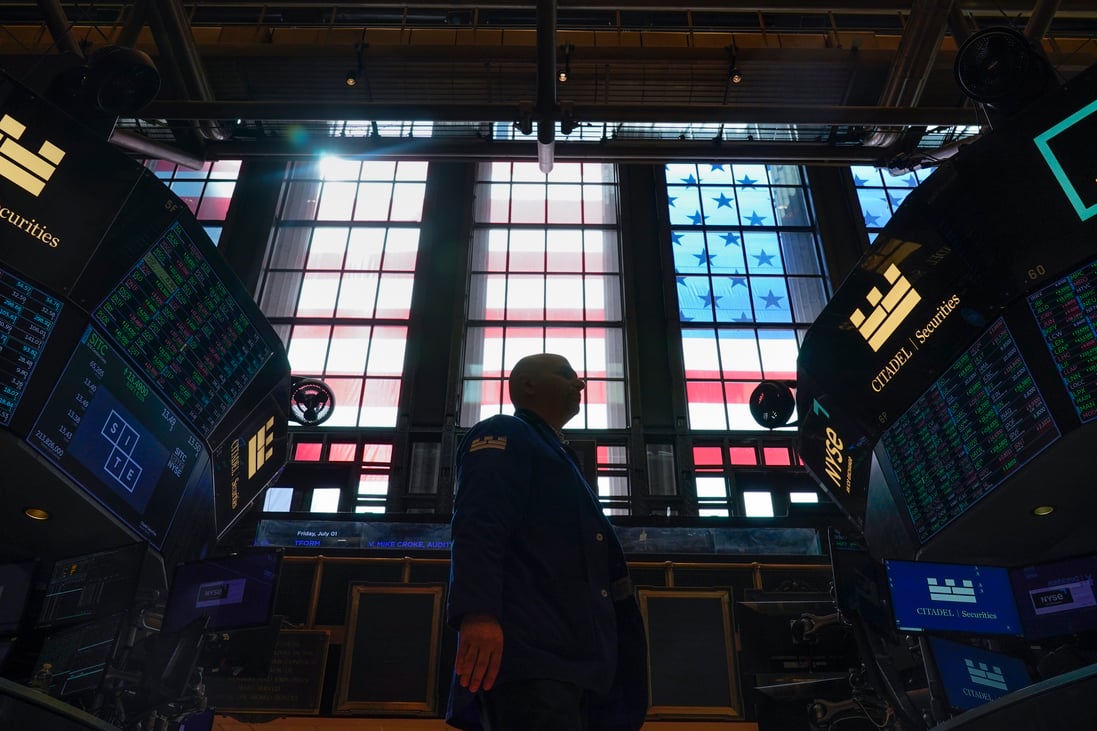
US Market: AI Bubble Burst Triggers Major Tech Market Tumble
Summary
- Major U.S. stock indices experienced significant declines this week, with the Nasdaq erasing all its year-to-date gains.
- The Dow Jones Industrial Average dropped 4,199 points, and the S&P 500 fell 651 points, both nearing market correction territory.
- Despite strong earnings from Nvidia and a new IPO from Anthropic, investor concerns about an artificial intelligence bubble contributed to the tech stock sell-off.
- Mixed economic signals emerged, with consumer sentiment improving and retail sales showing resilience in some sectors, while manufacturing activity slowed.
- Analysts suggest the market downturn in tech stocks and the S&P 500 may continue, depending on underlying drivers.
Market Turmoil Amid AI Bubble Fears
The recent market volatility has intensified long-standing concerns among investors and economists regarding the potential for an 'AI bubble' to burst, triggering a broader market correction.
Concerns surrounding the rapid growth and valuation of artificial intelligence companies culminated this week in a significant tech stock market plunge, leading to a broad market decline. By Friday's close, the Dow Jones Industrial Average had shed 4,199 points, while the S&P 500 experienced a 651-point drop, bringing both indices to the brink of official market correction territory. The Nasdaq Composite also suffered substantial losses, falling 2,519 points and effectively erasing all its gains for the current year within a matter of days.
This widespread sell-off occurred despite some positive individual company news within the AI sector. Nvidia, a key player in AI hardware, reported third-quarter revenues that surpassed expectations by $6 billion, marking an increase of over 100% compared to the previous year and more than double its revenue from the same period in 2025. This strong performance came even after the recent departure of former CEO Jensen Huang, with interim CEO Colette Kress affirming the company's
Mixed Economic Signals
Beyond the volatility in the stock market, broader economic data presented a complex picture this week. The University of Michigan's monthly consumer sentiment survey indicated a slight improvement over October, reaching a level comparable to November 2025. All components of the survey's index showed an increase, with short-term expected business conditions rising by 13% over the past month, and projections for gas prices over the next year falling to their lowest point since February.
Retail sales figures for October showed a 0.2% increase, which was less than September's 0.8% rise, yet experts suggested this indicated continued consumer spending. The decline from September was largely attributed to reduced spending at gasoline stations, following a drop in oil prices. Excluding auto and gasoline purchases, retail sales actually increased by 0.5% last month. Other sectors demonstrated strength, with online spending seeing a 12% annualized increase, restaurant spending up 7% annually, and health and personal care stores reporting a 1.5% monthly gain in sales. However, the Empire State Manufacturing Survey presented a contrasting view, dropping 18 points to 7.8, significantly below the anticipated drop to 16, though its employment measure expanded at the fastest rate in over four years.
Analyst Outlook and Investor Concerns
Market analysts are cautioning that the recent market tumble, particularly in tech stocks and the S&P 500, may not be over. James Reilly, a senior markets economist at Capital Economics, noted in an investor brief that further declines could materialize, with the exact trajectory depending on the underlying causes of the current downturn. The recent market volatility has intensified long-standing concerns among investors and economists regarding the potential for an 'AI bubble' to burst, triggering a broader market correction.
Indeed, a growing number of respondents in the consumer sentiment survey explicitly mentioned fears of an AI bubble and its potential impact on labor markets. Despite these anxieties, some experts maintain an optimistic long-term view. Chris Zacarelli, Chief Investment Officer at Northlight Asset Management, expressed confidence that if consumer spending and economic growth persist, corporate profits will continue to expand, allowing markets to eventually stabilize and resume an upward trend.
Practical Implications
Lawyers should advise clients, particularly those in investment or corporate finance, on the heightened risk of securities litigation and regulatory scrutiny related to AI company valuations and disclosures, given the current market volatility and investor concerns about an 'AI bubble'. Compliance officers should review portfolio exposure to AI-related tech stocks and ensure robust disclosure practices.
Source
How does this affect you?
Get an AI analysis of this article grounded in your jurisdictions, practice areas, and any policy documents you've uploaded to Wansom.
Finish Reading the Full Story and the Expert Analysis.
Get the latest legal & regulatory intelligence in United States
Wansom is AI and can make mistakes.