
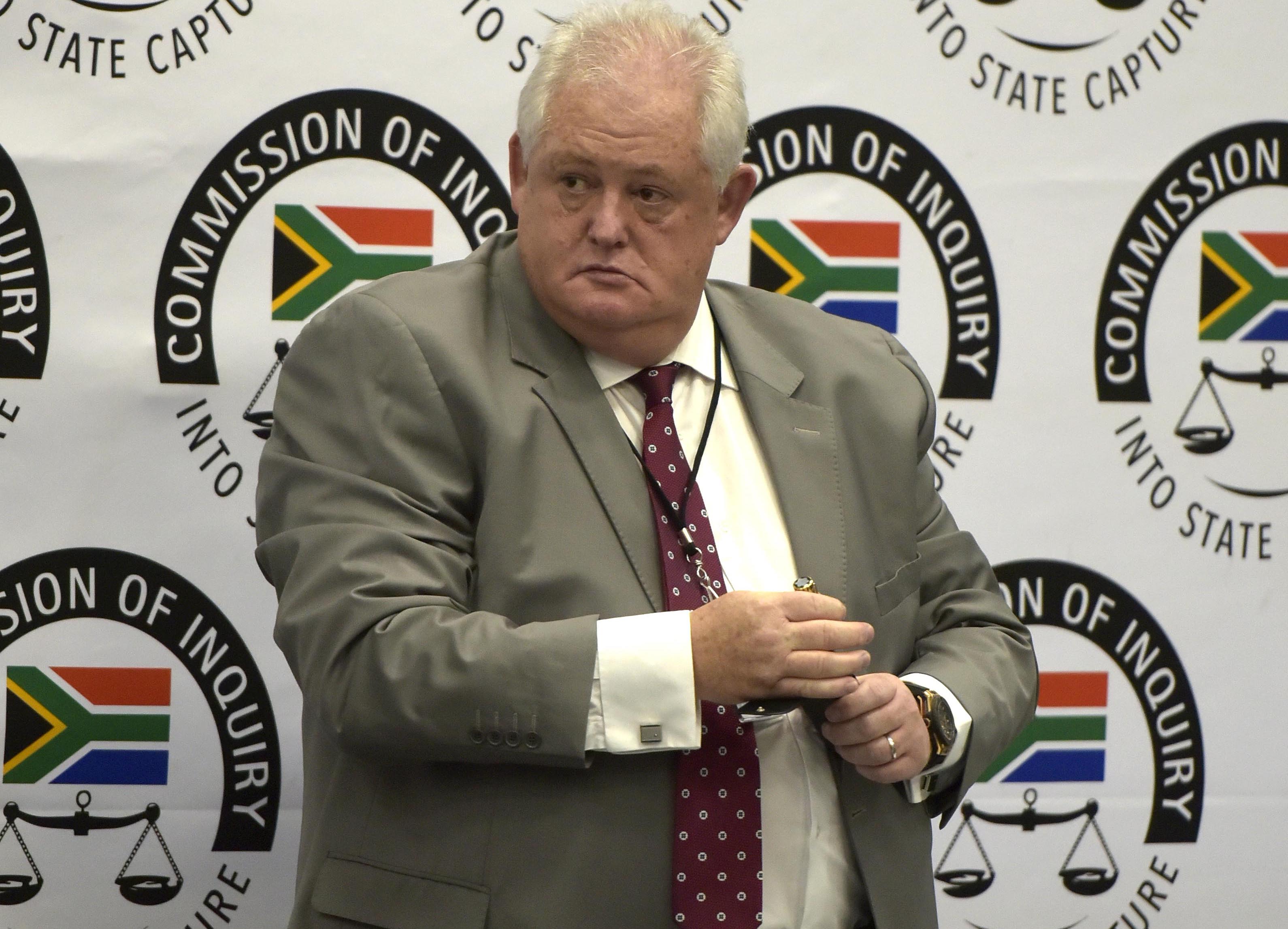
Pretoria High Court: Agrizzi Appeals R1.66bn Bosasa Confiscation Order
Summary
- Angelo Agrizzi is appealing a R1.66 billion confiscation order issued by the Pretoria High Court.
- The court rejected limiting the order to Agrizzi's declared R26.7 million in assets due to findings of incomplete disclosure.
- Agrizzi contends the R1.66 billion represents Bosasa's corrupt government contracts, not personal funds he received.
- The National Prosecuting Authority justifies the order by stating Agrizzi's participation in Bosasa's corruption warrants attributing the proceeds to him.
- Despite his role as a Zondo Commission whistleblower, Agrizzi feels he is being made a scapegoat by the state.
The Confiscation Order and Agrizzi's Challenge
The court, however, explicitly rejected any limitation of the order to this lesser sum, primarily due to its findings of Agrizzi's incomplete asset disclosure.
The Pretoria High Court has issued a significant confiscation order against Angelo Agrizzi, the former chief operating officer of Bosasa and a key whistleblower in the Zondo Commission of Inquiry into State Capture. The judgment mandates Agrizzi to pay the state R1.66 billion, along with accrued interest and the costs incurred by the state's legal counsel. Agrizzi, who represented himself during the proceedings, has announced his intention to seek leave to appeal this ruling.
Agrizzi's primary contention against the R1.66 billion confiscation order is that the sum represents the total value of government contracts secured by Bosasa, rather than any funds he personally received. While he acknowledges and does not dispute his prior conviction, having pleaded guilty and provided extensive evidence to the Zondo Commission, his appeal focuses squarely on the quantum of the financial penalty. He maintains that the substantial amount ordered by the court does not reflect his individual financial benefit from the corrupt activities.
Judicial Findings on Asset Disclosure
Central to the Pretoria High Court's confiscation judgment, delivered by Judge Mokhina Mosopa, were findings of significant non-disclosure on Agrizzi's part. The court identified several assets that Agrizzi had failed to declare, including his 50% stake in Spilacraft, a company that owns a property located in Ruimsig, outside Johannesburg. Additionally, the judgment highlighted numerous undisclosed investments, various annuities, and a R1.75 million loan.
Furthermore, the court determined that Agrizzi had concealed the sale of an Italian property. This particular asset had previously been pledged as security for his release on bail while he faced charges of corruption and money laundering. Agrizzi, however, disputes this finding, asserting that state authorities were fully aware of the property's sale and subsequently accepted R1.5 million held in trust as a replacement for the original bail security. These non-disclosures were critical in the court's decision-making process regarding the scope of the asset forfeiture Agrizzi faced.
The Bosasa Enterprise and Legal Interpretation
The case against Agrizzi stems from the widespread corruption associated with Bosasa, a facilities management company later rebranded as African Global Operations, which subsequently went into voluntary liquidation in February 2019. Under the leadership of the late Gavin Watson, whose family had historical anti-apartheid connections, Bosasa leveraged political ties to secure multi-billion rand contracts, particularly with the Department of Correctional Services (DCS) and the Department of Home Affairs. Agrizzi played a pivotal role as a Zondo Commission whistleblower, furnishing extensive evidence, including video recordings allegedly depicting cash payments to corrupt government officials.
His testimony before the commission was instrumental in uncovering approximately R2.4 billion in corrupt contracts awarded to the company between 2000 and 2016, although National Treasury figures indicate Bosasa received over R12 billion in total contracts. The National Prosecuting Authority (NPA) has expressed its approval of the court's ruling, asserting that Agrizzi's active participation in Bosasa's corrupt enterprise provided sufficient justification for attributing the proceeds of that corruption directly to him. This interpretation of Bosasa corruption proceeds is a key aspect of the Pretoria High Court confiscation judgment. Agrizzi, however, finds the R1.66 billion figure perplexing, noting that the state had previously suggested alternative confiscation amounts of around R53 million or R62 million, despite consistently maintaining its claim for the full contract value. He emphasizes that the R1.66 billion represents the value of contracts awarded to the company, not a personal benefit, given his status as an employee and not a director or shareholder.
Implications and the Path Forward
The substantial R1.66 billion confiscation order against Angelo Agrizzi presents a significant challenge, particularly when contrasted with the estimated value of his realisable property. According to a court-appointed curator tasked with safeguarding his estate, Agrizzi's entire declared realisable property amounted to only R26.7 million. The court, however, explicitly rejected any limitation of the order to this lesser sum, primarily due to its findings of Agrizzi's incomplete asset disclosure. This highlights a critical legal principle: the importance of full and transparent asset declaration in such proceedings, as non-disclosure can lead to courts attributing corporate gains to individuals beyond their direct personal receipts.
Agrizzi views the R1.66 billion as a "gross contract value" rather than a personal benefit, and despite his crucial role as a Zondo Commission whistleblower since departing Bosasa in late 2016, he perceives himself as being unfairly targeted by the state. The National Prosecuting Authority Agrizzi case underscores the broad interpretation of "proceeds of crime" in confiscation orders, potentially extending liability to the value of contracts secured by an entity through corrupt means, even if the individual's direct personal benefit was less. This Agrizzi R1.66bn Bosasa confiscation appeal will therefore be closely watched for its implications on future asset forfeiture cases.
Practical Implications
This case highlights the broad interpretation of 'proceeds of crime' in confiscation orders, potentially extending liability beyond direct personal benefit to the value of contracts secured by an entity through corrupt means. Lawyers should advise clients facing similar charges on the critical importance of full asset disclosure and the potential for courts to attribute corporate gains to individuals, especially in cases of non-disclosure, to avoid the rejection of asset limitation claims.
Source
How does this affect you?
Get an AI analysis of this article grounded in your jurisdictions, practice areas, and any policy documents you've uploaded to Wansom.
Wansom is AI and can make mistakes.