
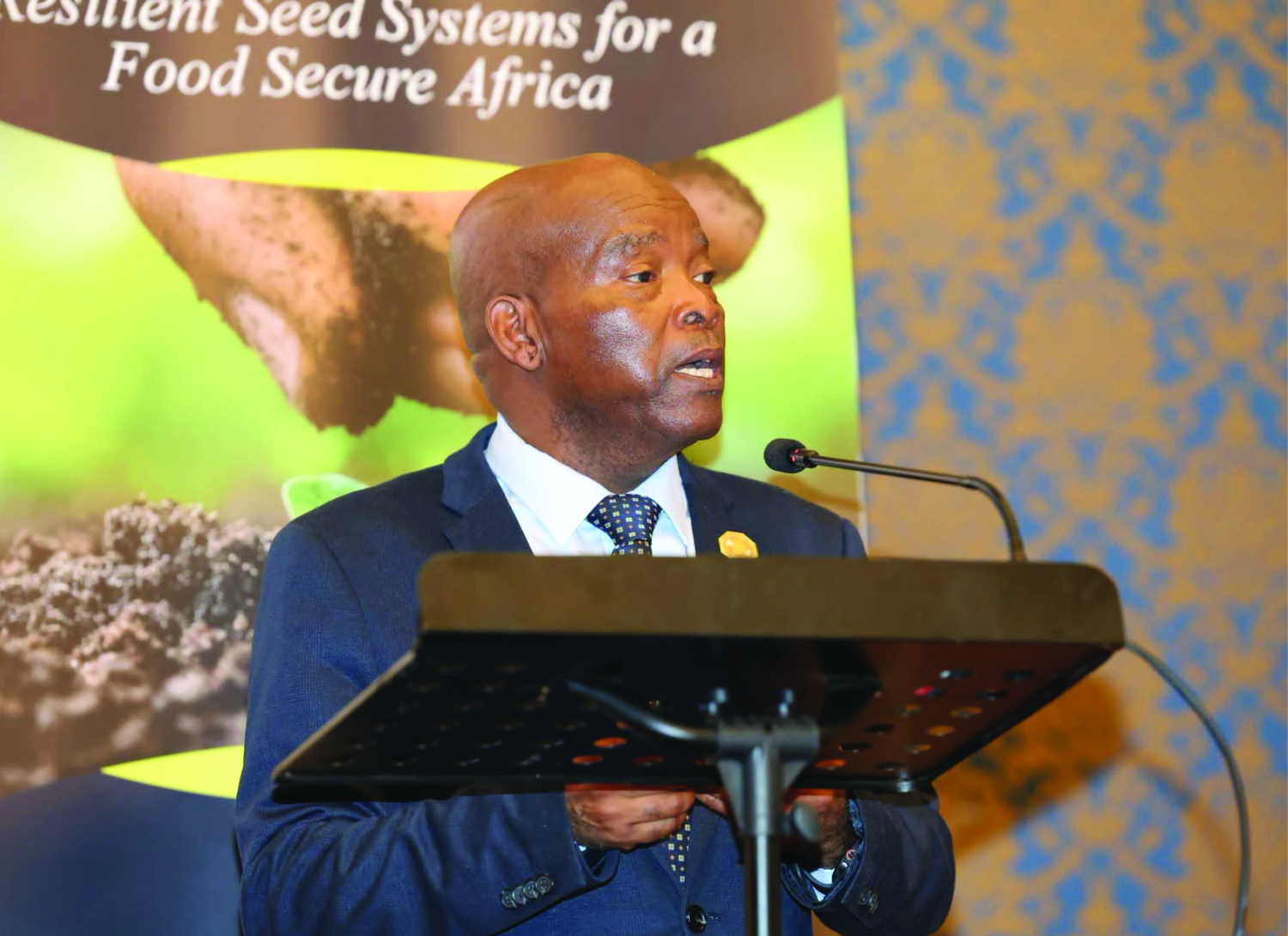
African Union: Continental Seed Bank Initiative Advances Food Security
Summary
- The African Union is advocating for a continental seed and genetic resources bank.
- Commissioner Moses Vilakati supports this initiative to boost agricultural investment, innovation, and resilience.
- The proposed bank will integrate into a broader network of regional and national seed banks.
- This development is expected to shape future Africa seed policy and agricultural intellectual property regulations.
- The initiative aims to enhance food security and attract investment into the continent's agricultural sector.
The Continental Seed Bank Initiative
The establishment of a continental seed bank carries substantial implications for the legal and regulatory landscape governing agricultural intellectual property in Africa.
The African Union (AU) is actively advocating for the establishment of a comprehensive continental seed and genetic resources bank. This significant African Union continental seed bank initiative is envisioned as a cornerstone for enhancing investment, fostering innovation, and building resilience within Africa's vital agriculture sector. The proposal underscores a strategic commitment to safeguarding the continent's biodiversity and ensuring future food security.
Commissioner Moses Vilakati, who oversees Agriculture, Rural Development, Blue Economy and Sustainable Environment for the AU, has publicly supported this ambitious project. He articulated that the proposed AU genetic resources bank would not operate in isolation but would instead integrate into a more extensive, interconnected system. This system is designed to link existing and future regional and national seed banks across the continent, creating a unified and robust network.
Strategic Imperatives for African Agriculture
The drive behind this initiative stems from a recognition of the critical role that diverse and resilient seed varieties play in agricultural productivity and adaptation to climate change. By centralizing and coordinating genetic resources, the AU aims to provide a stable foundation for agricultural development, which is essential for the economic well-being of its member states. This strategic move is poised to influence Africa seed policy development significantly, guiding future frameworks for genetic resource management.
This coordinated approach is also expected to stimulate innovation in crop breeding and cultivation techniques. A robust genetic resource base is fundamental for researchers and farmers to develop new, improved varieties that can withstand environmental pressures and meet the nutritional needs of a growing population. Such an initiative aligns with broader African food security regulations, aiming to create a self-sufficient and sustainable agricultural ecosystem.
Legal and Intellectual Property Considerations
The establishment of a continental seed bank carries substantial implications for the legal and regulatory landscape governing agricultural intellectual property in Africa. As genetic resources become more systematically cataloged and managed, new frameworks for access, benefit-sharing, and intellectual property rights for plant varieties are likely to emerge or be strengthened. This could impact how agricultural businesses and biotech companies operate across the continent.
Companies involved in seed development, distribution, and agricultural biotechnology will need to closely monitor the evolution of these policies. The initiative signals a potential for more harmonized, yet potentially more stringent, regulations concerning the use and commercialization of genetic material. Understanding these evolving legal parameters will be crucial for compliance and for identifying new investment opportunities within the continent's agricultural sector.
Fostering Investment and Resilience
Ultimately, the African Union's push for a continental seed and genetic resources bank is a forward-looking strategy designed to fortify Africa's agricultural future. By securing vital genetic material and promoting its sustainable use, the initiative aims to attract greater investment into the sector, from both public and private sources. This investment is critical for scaling up agricultural innovation and infrastructure.
The long-term vision is to build a more resilient agricultural system capable of withstanding various shocks, from climate variability to market fluctuations. This foundational effort in genetic resource management is seen as indispensable for achieving sustainable development goals and ensuring long-term food security for all African nations.
Practical Implications
This initiative signals potential future regulatory frameworks and intellectual property considerations for agricultural businesses and biotech companies operating across Africa, particularly concerning seed varieties and genetic resource access and benefit-sharing. Lawyers should monitor the development of this bank for new compliance obligations or investment opportunities.
Source
How does this affect you?
Get an AI analysis of this article grounded in your jurisdictions, practice areas, and any policy documents you've uploaded to Wansom.
Finish Reading the Full Story and the Expert Analysis.
Get the latest legal & regulatory intelligence in Eswatini
Wansom is AI and can make mistakes.