
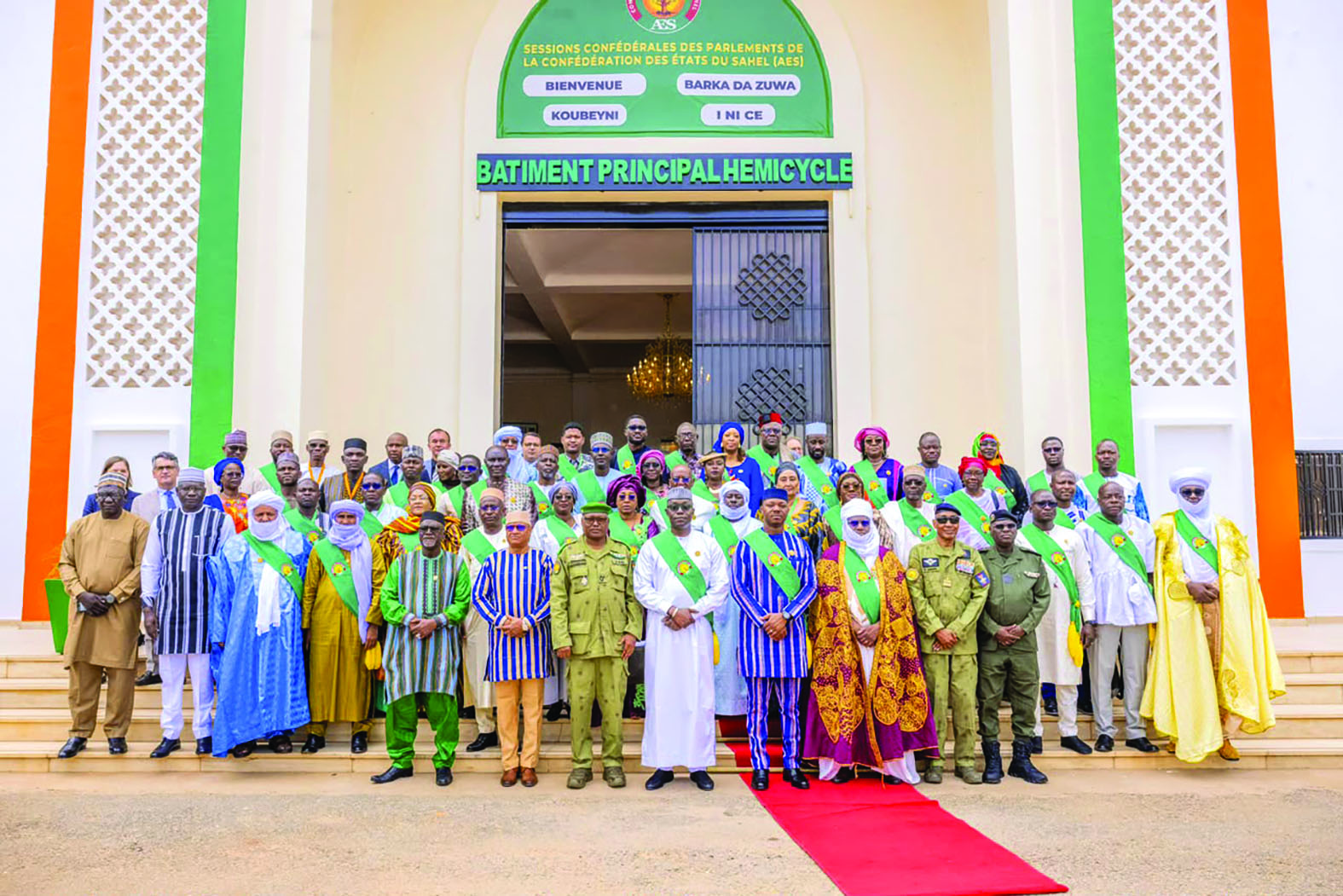
AES Parliaments: First Ordinary Session Convenes In Niamey
Summary
- The first ordinary session of the confederal sessions of the AES Parliaments opened on Wednesday, August 26, 2026.
- The session is taking place in Niamey, within the Mahatma Gandhi International Conference Center.
- Comrade Dr. Ousmane Bougouma, President of the confederal sessions of the AES Parliaments, is presiding over the event.
- This marks a pivotal moment for the Alliance of Sahel States (AES) as its parliamentary representatives gather for their first regular meeting.
Inaugural Ordinary Session Convenes
The convening of the AES Parliaments first ordinary session represents a profoundly crucial and symbolic step in the ongoing operationalization and maturation of this nascent regional legislative assembly.
The confederal sessions of the AES Parliaments officially commenced their inaugural ordinary session on Wednesday, August 26, 2026. This landmark event unfolded in Niamey, the capital city, within the distinguished confines of the Mahatma Gandhi International Conference Center in Niamey. Presiding over the opening ceremonies was Comrade Dr. Ousmane Bougouma, who holds the significant leadership role as President of the confederal sessions of the AES Parliaments. His presence underscored the formal and high-level nature of this gathering.
This marks a truly pivotal moment for the Alliance of Sahel States (AES), as it signifies the first time its parliamentary representatives have convened for a regular, scheduled meeting. The selection of Niamey as the host city, coupled with the use of the Mahatma Gandhi International Conference Center, not only provides a central location but also imbues the proceedings with an air of institutional gravitas. The session, which formally began on August 26, is anticipated to serve as a critical forum for establishing foundational principles and operational frameworks that will guide future collaborative legislative and consultative endeavors among the member states. This initial ordinary session is designed to set a precedent for ongoing parliamentary engagement.
The Framework of Confederal Parliamentarianism
The very existence and convening of the confederal sessions of the AES Parliaments point towards a sophisticated and structured approach to regional governance and the coordination of legislative efforts. A confederal parliamentary body, by its nature, brings together elected representatives from the national parliaments of its constituent member states. Their collective purpose is typically to deliberate on matters of shared regional importance, work towards the harmonization of diverse national policies, and actively foster deeper political and economic integration across the alliance. The leadership role of a designated President, such as Dr. Ousmane Bougouma in this instance, is absolutely central to steering the body's agenda, facilitating constructive debate, and ensuring the efficient and effective conduct of its various sessions.
The specific nomenclature, "confederal sessions," distinctly emphasizes a collaborative framework where inherently sovereign parliamentary entities from different nations choose to unite under a common institutional umbrella. This particular structure is strategically designed to facilitate robust dialogue and collective decision-making processes on a broad spectrum of issues pertinent to the Alliance of Sahel States. It unequivocally reflects a profound commitment to collective action, mutual support, and the pursuit of shared regional objectives among its members. The formalization of these sessions, complete with a clearly defined presidency and a dedicated institutional venue, strongly indicates a progressive move towards a more established and institutionalized form of regional parliamentary cooperation, aiming for sustained impact.
Significance of the First Ordinary Session
The convening of the AES Parliaments first ordinary session represents a profoundly crucial and symbolic step in the ongoing operationalization and maturation of this nascent regional legislative assembly. Unlike an initial, purely inaugural meeting or an extraordinary session called for an urgent, specific purpose, an "ordinary session" inherently implies a definitive transition towards routine functioning, the establishment of predictable parliamentary work cycles, and the adherence to a regularized schedule. This critical shift from initial formation and foundational discussions to systematic, ongoing operation is absolutely vital for any emerging confederal body that aims to build credibility, exert meaningful influence, and ultimately achieve its stated objectives within the regional landscape.
This particular session, which commenced on August 26, 2026, provides an essential and structured platform for the assembled parliamentary representatives to engage in sustained, in-depth discussions. It allows them to thoroughly debate proposed regional initiatives, scrutinize policy frameworks, and potentially adopt significant resolutions or recommendations that could have far-reaching implications for the member states of the AES. The formal and dignified setting in Niamey, under the experienced presidency of Dr. Ousmane Bougouma, further underscores the gravity, seriousness, and unwavering commitment associated with this new and significant phase of regional parliamentary engagement. It unequivocally signals a maturation of the confederal structure, moving decisively beyond preliminary discussions to actively address substantive regional issues through established and respected parliamentary procedures.
Source
How does this affect you?
Get an AI analysis of this article grounded in your jurisdictions, practice areas, and any policy documents you've uploaded to Wansom.
Finish this article free. Just your email for instant unlock.
Wansom is AI and can make mistakes.