
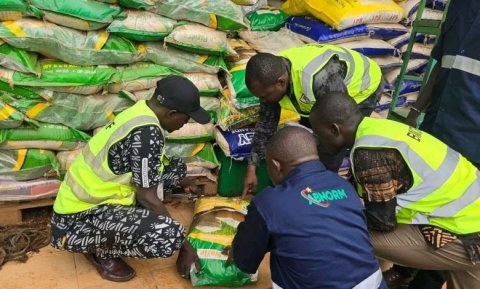
Burkina Faso BMCRF: 100-Tonne Seized Rice Sale at Social Price
Summary
- Burkina Faso's BMCRF announced a sale of 100 tonnes of rice seized due to clandestine storage.
- The sale will be conducted at a social price, with participation requiring prior subscription to the BMCRF.
- The operation is scheduled to begin on Tuesday, September 1, 2026, and will continue until all stock is sold.
- The announcement was made on Thursday, August 27, 2026, via the institution's Facebook page.
BMCRF Announces Seized Rice Sale
This significant operation, announced on Thursday, August 27, 2026, via the institution's official Facebook page, aims to redistribute the seized commodity to the public at a reduced rate, often referred to as a social price.
The Brigade mobile de contrôle économique et de la répression des fraudes (BMCRF) in Burkina Faso has initiated a public sale of 100 tonnes of rice previously confiscated due to clandestine storage. This significant operation, announced on Thursday, August 27, 2026, via the institution's official Facebook page, aims to redistribute the seized commodity to the public at a reduced rate, often referred to as a social price. The sale will be structured according to different categories of rice, ensuring a systematic and organized distribution.
Participation in this special `Burkina Faso BMCRF seized rice sale` requires individuals to complete a prior subscription process directly with the BMCRF. The sale is scheduled to commence on Tuesday, September 1, 2026, and will continue until the entire 100-tonne stock of rice has been fully depleted. This initiative underscores the BMCRF's active role in enforcing economic regulations and addressing illicit commercial practices within the country.
Enforcement Against Clandestine Storage
The confiscation of 100 tonnes of rice for `Burkina Faso clandestine rice storage` highlights the ongoing efforts by the Brigade mobile de contrôle économique et de la répression des fraudes to combat illegal economic activities. Clandestine storage often implies that goods are being held outside official channels, potentially to evade taxes, manipulate market prices, or bypass quality and safety regulations. Such practices can destabilize local markets and deprive consumers of fair access to essential commodities.
This `BMCRF confiscated goods sale` serves as a clear signal to businesses and individuals involved in commodity distribution that regulatory non-compliance carries significant consequences, including the seizure of assets. The BMCRF's mandate includes ensuring economic transparency and consumer protection, making interventions like this crucial for maintaining a fair and regulated marketplace in Burkina Faso. The public disposal of these goods through a `social price rice sale BF` mechanism also ensures that the confiscated items benefit the wider community rather than being wasted.
Implications for Market and Consumers
The decision by the BMCRF to sell the confiscated rice at a social price is a deliberate move designed to benefit consumers directly. By offering essential goods like rice below typical market rates, the government aims to alleviate economic burdens on households, particularly those with limited purchasing power. This approach to `Burkina Faso seized merchandise disposal` not only addresses the issue of illicit storage but also leverages the outcome of enforcement actions for public welfare.
Furthermore, the structured nature of the sale, requiring prior subscription and categorizing the rice, suggests an effort to ensure equitable access and prevent speculative buying. This operation reinforces the message that while regulatory infractions will be met with firm action, the resulting assets can be repurposed to serve the public good. It also demonstrates the state's capacity to intervene in the market to correct imbalances caused by illegal activities and support its citizens.
Practical Implications
This development signals active enforcement by the BMCRF against illicit storage practices in Burkina Faso, highlighting the risk of goods confiscation and subsequent public sale for non-compliance. Lawyers should advise clients involved in commodity storage or distribution to review their compliance protocols to avoid similar seizures and penalties.
Source
Source: Original reporting via {source}
How does this affect you?
Get an AI analysis of this article grounded in your jurisdictions, practice areas, and any policy documents you've uploaded to Wansom.
Finish this article free. Just your email for instant unlock.
Wansom is AI and can make mistakes.