
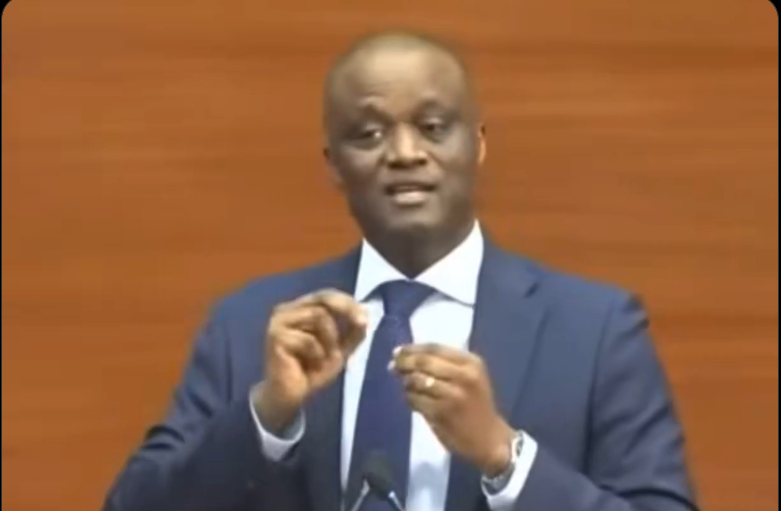
Abdourahmane Sarr: Calls for LFR 2026 Révision Sénégal, Warns of Partisan Trap
Summary
- Abdourahmane Sarr believes Senegal's Loi de Finances Rectificative (LFR) 2026 should not be adopted in its current form.
- He published an article titled "Sortir du piège partisan" advocating for a realistic budget rectificatif.
- Sarr is a former Minister of Economy and an ex-economist for the International Monetary Fund.
- His call emphasizes the need for a "sincere revision" of the LFR 2026 based on accurate estimates.
- This intervention warns against political considerations overriding sound economic principles in budget formulation.
A Call for Fiscal Realism in Senegal's LFR 2026
His expertise provides a credible voice advocating for fiscal discipline, which could significantly influence the legislative debate surrounding the LFR 2026.
Abdourahmane Sarr, a prominent figure with a distinguished background as a former Minister of Economy and an ex-economist for the International Monetary Fund (FMI), has publicly stated that the proposed Loi de Finances Rectificative (LFR) 2026 for Senegal should not be enacted in its current form. His intervention highlights significant concerns regarding the foundational estimates underpinning the budget, urging the government to reconsider its approach. This call for a thorough re-evaluation underscores the critical importance of fiscal prudence and accurate financial planning for the nation's economic stability, particularly as the country navigates its development goals.
Sarr's position was articulated in a publication titled "Sortir du piège partisan," which has been brought to wider attention through reporting by Senego. In this document, he advocates for the government to introduce a revised budget, specifically a budget rectificatif, that is firmly rooted in realistic projections. This plea for a "sincere revision" of the LFR 2026 suggests a belief that the current draft may contain assumptions or allocations that do not align with the country's actual economic landscape or future prospects, potentially leading to future fiscal challenges.
Navigating the "Partisan Trap" in Budgetary Formulation
The core of Abdourahmane Sarr's argument revolves around avoiding what he terms a "piège partisan," or partisan trap, in the formulation of the Loi de Finances Rectificative 2026. This phrase implies a strong warning against political considerations overshadowing sound economic principles and objective data in the budgetary process. His counsel suggests that an LFR 2026 developed under such influences could lead to unsustainable financial policies or misallocation of national resources, ultimately hindering Senegal's long-term development objectives and public welfare.
By advocating for a budget rectificatif based on realistic estimates, Sarr is emphasizing the critical need for transparency and accuracy in public finance management. His extensive experience at the FMI and as a former Minister of Economy lends considerable weight to his assertions about the potential pitfalls of an unrevised LFR 2026. The implication is that a budget not grounded in reality could create significant long-term economic challenges for Senegal, making a "sincere revision" not just advisable, but absolutely essential for the nation's fiscal health and credibility.
Broader Implications for Senegal's Economic Trajectory
The intervention by Abdourahmane Sarr regarding the révision budget 2026 Sénégal carries significant implications for the country's economic trajectory and its financial standing. A Loi de Finances Rectificative is a crucial legislative instrument that adjusts the initial annual budget to reflect new economic realities, unforeseen expenditures, or changes in revenue forecasts. If, as Sarr suggests, the current draft of the LFR 2026 is built on unrealistic premises, its adoption could lead to severe budgetary imbalances, an increase in national debt, or a failure to adequately meet essential public service obligations, impacting citizens directly.
Sarr's call for a realistic budget rectificatif is particularly pertinent for all stakeholders monitoring Senegal's economic policy, including investors and international partners. His expertise provides a credible voice advocating for fiscal discipline, which could significantly influence the legislative debate surrounding the LFR 2026. The outcome of this debate and the eventual shape of the revised budget will be critical in determining the government's financial capacity and its ability to implement its development agenda effectively, thereby impacting various economic sectors and investment climates across the nation for years to come.
Practical Implications
Lawyers and compliance officers in Senegal should closely monitor the legislative process for the LFR 2026, as calls for a 'sincere revision' by influential figures like Abdourahmane Sarr suggest the final text could undergo significant changes, potentially impacting tax regimes, public finance regulations, and economic policy relevant to client operations and investments.
Source
How does this affect you?
Get an AI analysis of this article grounded in your jurisdictions, practice areas, and any policy documents you've uploaded to Wansom.
Finish Reading the Full Story and the Expert Analysis.
Wansom is AI and can make mistakes.