
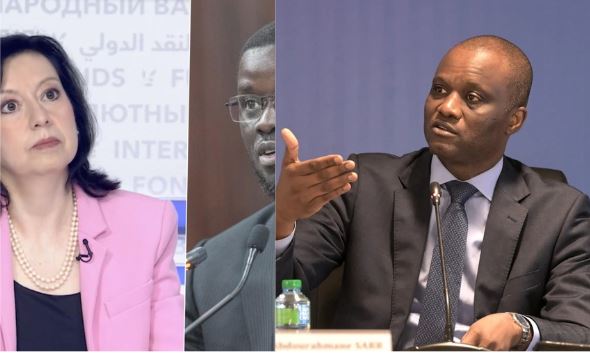
Abdourahmane Sarr: FMI Sénégal Financement Analyses Hinder New Capital
Summary
- Minister Abdourahmane Sarr has urged a re-evaluation of Senegal's agreement with the International Monetary Fund.
- Sarr specifically called for a review of the FMI's debt sustainability analysis for Senegal.
- He believes the FMI's analyses could compromise the nation's refinancing capabilities.
- Sarr also suggested that these analyses might become an obstacle to Senegal's financing alternatives.
A Call for Reassessment in Senegal
Abdourahmane Sarr's critique centers on the potential ramifications of these FMI analyses for Senegal's financial autonomy.
Minister of Economy, Planning and Cooperation, Abdourahmane Sarr, has publicly urged a comprehensive re-evaluation of the existing agreement between Senegal and the International Monetary Fund (FMI). His appeal extends specifically to the FMI's assessment of Senegal's debt sustainability, a critical component of the nation's economic framework.
Sarr conveyed his concerns through a recent publication, where he articulated a belief that the analyses conducted by the FMI could potentially undermine Senegal's capacity to secure new financing. He further suggested that these analyses might evolve into a significant impediment, hindering the country's pursuit of diverse funding avenues.
The FMI's Role and Debt Sustainability
The International Monetary Fund (FMI) plays a pivotal role in global financial stability, often providing financial assistance to member countries facing economic difficulties. Such assistance is typically contingent upon the implementation of specific economic policies and structural reforms, formalized through an agreement. A core element of the FMI's engagement involves a detailed debt sustainability analysis, which evaluates a country's ability to meet its current and future debt obligations without recourse to exceptional financial assistance or default. This analysis is crucial as it informs both the FMI's lending decisions and the perceptions of other international creditors and investors regarding a nation's creditworthiness.
Abdourahmane Sarr's critique centers on the potential ramifications of these FMI analyses for Senegal's financial autonomy. He contends that the Fund's current assessments might inadvertently restrict the nation's options for refinancing its existing debt and securing new capital. This perspective suggests a concern that the FMI's framework, while designed to promote fiscal prudence, could inadvertently narrow the scope for Senegal to explore and leverage alternative financing mechanisms, potentially impacting its developmental trajectory.
The Minister's statement highlights a tension between the FMI's standard analytical approaches and a nation's desire for flexibility in its financial strategy. His call for a re-examination of the FMI accord and the associated debt sustainability analysis underscores a belief that the current parameters may not adequately serve Senegal's long-term financing needs or its ability to attract diverse investment.
Implications for Senegal's Financing Future
The concerns raised by Abdourahmane Sarr carry significant weight for Senegal's economic future, particularly regarding its access to capital markets and its overall financial resilience. If the FMI's analyses are indeed perceived as restrictive, they could deter potential lenders and investors who rely on such assessments to gauge risk. This could lead to higher borrowing costs for Senegal or limit the availability of funds from non-FMI sources, thereby impacting public and private sector projects alike. The ability to pursue alternatives financement Sénégal is crucial for diversified economic growth and reducing reliance on any single financial institution.
Sarr's assertion that the FMI's analyses could become an obstacle points to a broader debate about national sovereignty in economic policy-making versus the conditions often attached to international financial assistance. For a nation like Senegal, maintaining robust possibilités de refinancement du pays is essential for managing its debt profile and funding critical infrastructure and social programs. A perceived blockage of these alternatives could force the country into a more constrained financial position, potentially slowing down economic development and increasing vulnerability to external shocks.
Therefore, the call for a re-evaluation of the FMI agreement and the debt sustainability analysis is not merely an academic exercise. It represents a strategic imperative for Senegal to ensure that its financial partnerships support, rather than hinder, its national development objectives. The outcome of such a re-examination could influence how Senegal structures its future debt, engages with international financial institutions, and ultimately, how it finances its growth.
Practical Implications
Lawyers advising clients on investments or government contracts in Senegal should closely monitor the ongoing discussions regarding the FMI's debt sustainability analysis, as potential restrictions on financing alternatives could impact project viability, government payment capacity, and overall economic stability, necessitating a review of risk assessments and contractual terms.
Source
How does this affect you?
Get an AI analysis of this article grounded in your jurisdictions, practice areas, and any policy documents you've uploaded to Wansom.
Finish Reading the Full Story and the Expert Analysis.
Get the latest legal & regulatory intelligence in Senegal
Wansom is AI and can make mistakes.