
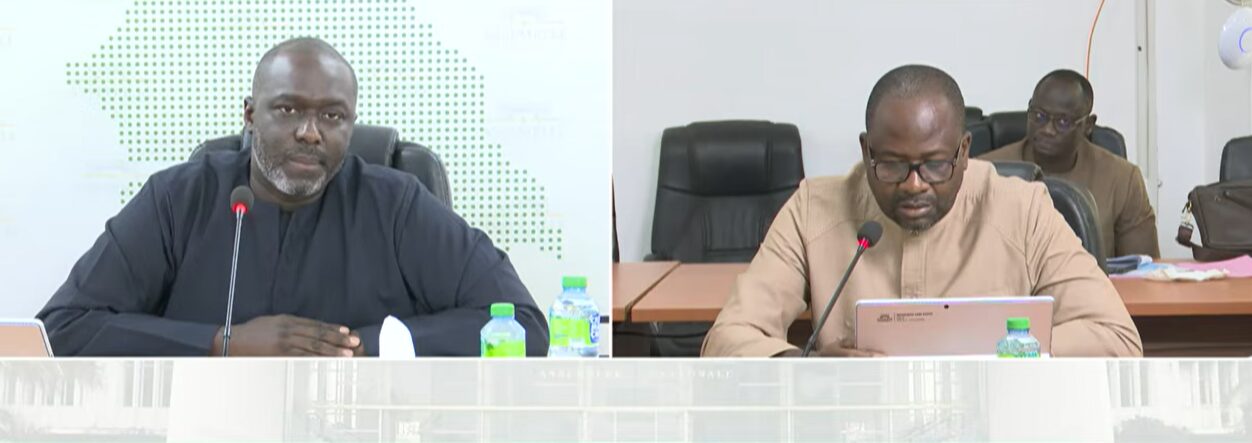
Abdou Karim Fofana: Dénies Family Link in Cité Fayçal Baux Inquiry
Summary
- Abdou Karim Fofana denied any familial connection to a beneficiary of Cité Fayçal leases during his appearance before a parliamentary inquiry.
- Fofana, a former Director General of AGPBE from 2015 to 2019, was questioned about whether the beneficiary was his brother.
- He stated the beneficiary was a Senegalese magistrate initially designated for Cité Fayçal but ultimately not allocated a property there.
- Fofana explained the beneficiary occupied and maintained the property for a long time before receiving a lease, and he never met him.
- The parliamentary commission's inquiry highlights intense scrutiny over public land allocation and potential conflicts of interest.
Parliamentary Inquiry and Official's Testimony
The parliamentary commission's inquiry highlights intense scrutiny over public land allocation and potential conflicts of interest.
Abdou Karim Fofana recently appeared before the Commission d’enquête parlementaire Cité Fayçal, where he addressed questions regarding the allocation of baux immobiliers Cité Fayçal. During his testimony, Fofana explicitly denied any familial relationship with an individual sharing his surname who was a beneficiary of these leases. The parliamentary deputies specifically inquired whether this beneficiary was his brother, a question Fofana stated he had answered on numerous prior occasions.
Fofana, who previously served as the Director General of the former AGPBE from 2015 to 2019, connected the deputies' line of questioning directly to the Cité Fayçal dossier. He clarified that the individual in question was, in his understanding, a Senegalese magistrate who was stationed outside of Senegal at the time. Despite being initially designated for an allocation within Cité Fayçal, this individual ultimately did not receive a property there, a decision Fofana noted many considered unjust. He further explained that this beneficiary had reportedly occupied the house for an extended period and contributed to its upkeep before a lease was eventually granted to him. Fofana maintained that he had never personally met this individual.
Legal and Regulatory Scrutiny
The ongoing inquiry by the Commission d’enquête parlementaire Cité Fayçal underscores a significant focus on transparency and accountability in the management and allocation of public assets, particularly land leases. The detailed questioning of Abdou Karim Fofana, a former high-ranking official, regarding potential conflicts of interest and the integrity of the allocation process for baux immobiliers Cité Fayçal, highlights the rigorous oversight exercised by legislative bodies. This parliamentary scrutiny serves as a critical mechanism to ensure that public resources are distributed fairly and without undue influence.
The commission's investigation into the Cité Fayçal baux reflects a broader commitment to examining how state properties are managed and who benefits from their allocation. Public officials, especially those involved in land allocation, are subject to intense examination to prevent any perception or reality of impropriety. Fofana's démenti regarding a familial link to a beneficiary, coupled with his detailed explanation of the beneficiary's situation, illustrates the level of detail and justification expected from those involved in such processes.
Implications for Public Accountability
The proceedings involving Abdou Karim Fofana and the Cité Fayçal baux are significant for reinforcing the principles of public accountability and ethical governance. The parliamentary commission's persistent questioning, even on matters Fofana claimed to have addressed previously, demonstrates the legislative branch's commitment to thoroughness in its oversight duties. This case sets a precedent for how public officials are expected to respond to inquiries concerning their past actions and decisions, particularly when they pertain to the allocation of valuable state resources.
This level of scrutiny is crucial for maintaining public trust in governmental institutions and processes. It signals to all public officials and entities involved in public land allocation that their decisions will be subject to rigorous review, emphasizing the need for meticulous record-keeping, transparent procedures, and clear justifications for all allocations. The Cité Fayçal inquiry, therefore, serves as a powerful reminder of the continuous demand for integrity and fairness in public administration.
Practical Implications
Lawyers advising public officials or entities involved in public land allocation should note the heightened scrutiny and parliamentary oversight regarding potential conflicts of interest and transparency in lease allocations, as exemplified by the Cité Fayçal inquiry.
Source
Source: Original reporting via Leral
How does this affect you?
Get an AI analysis of this article grounded in your jurisdictions, practice areas, and any policy documents you've uploaded to Wansom.
Finish Reading the Full Story and the Expert Analysis.
Get the latest legal & regulatory intelligence in Senegal
Wansom is AI and can make mistakes.