What is a Legal AI Prompt
A legal AI prompt is a question, command, or statement that a legal professional gives to an AI model to guide it in generating a specific response. The prompt provides the AI with the necessary context or instructions so it can produce output that is relevant to what you are asking or requesting.
Why Prompting Matters
AI quality depends on the precision of instruction. In legal practice, vague prompts produce vague answers and precise prompts produce structured, defensible outputs.
Guide to Legal Prompting
Task + Jurisdiction + Relevant Law + Context ( Facts )+ Format + Constraints
1. Jurisdiction
If you do not specify jurisdiction, the AI may default to foreign authorities.
Examples of a weak prompt:
“Draft a defence for breach of contract.”
Example of a strong prompt:
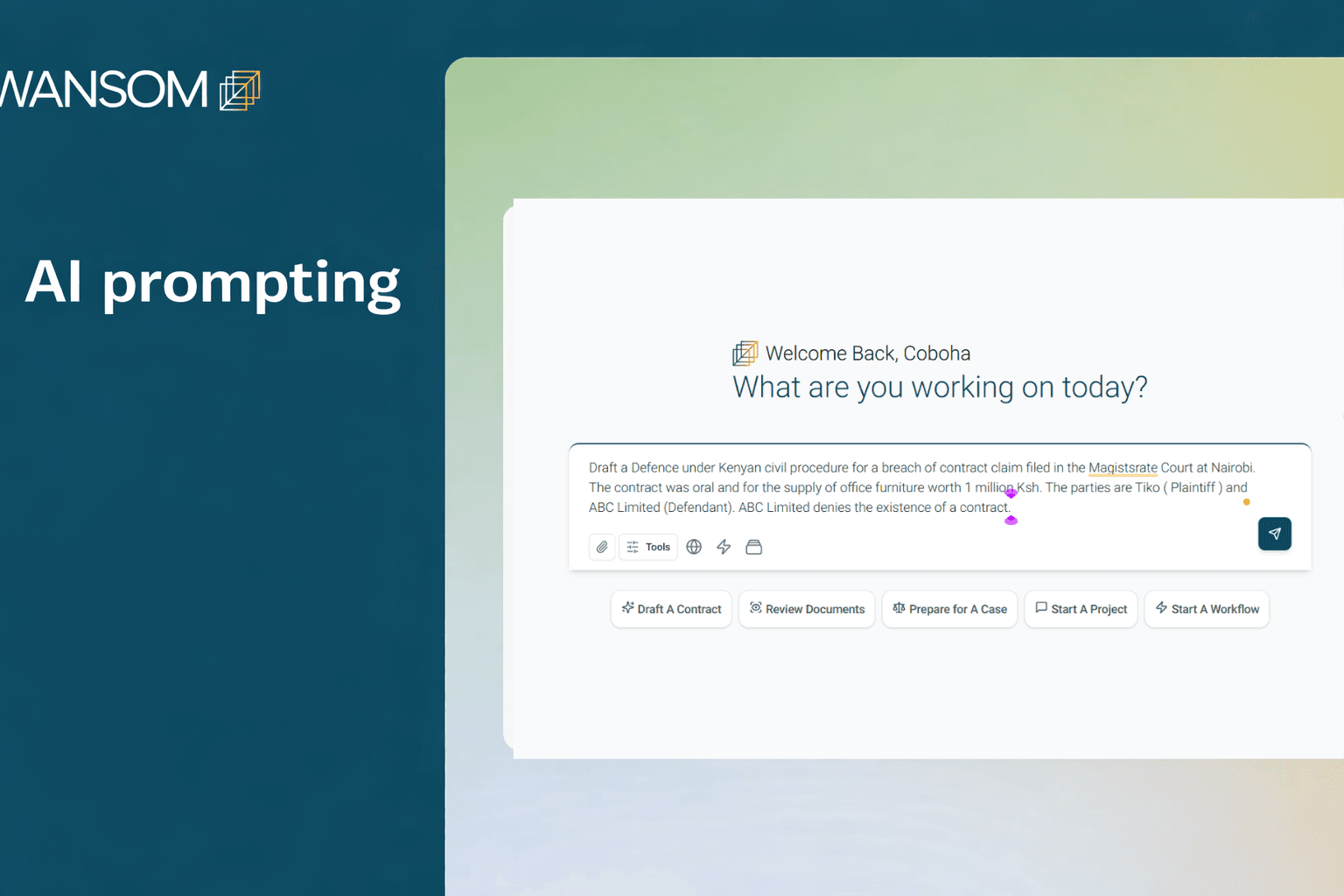
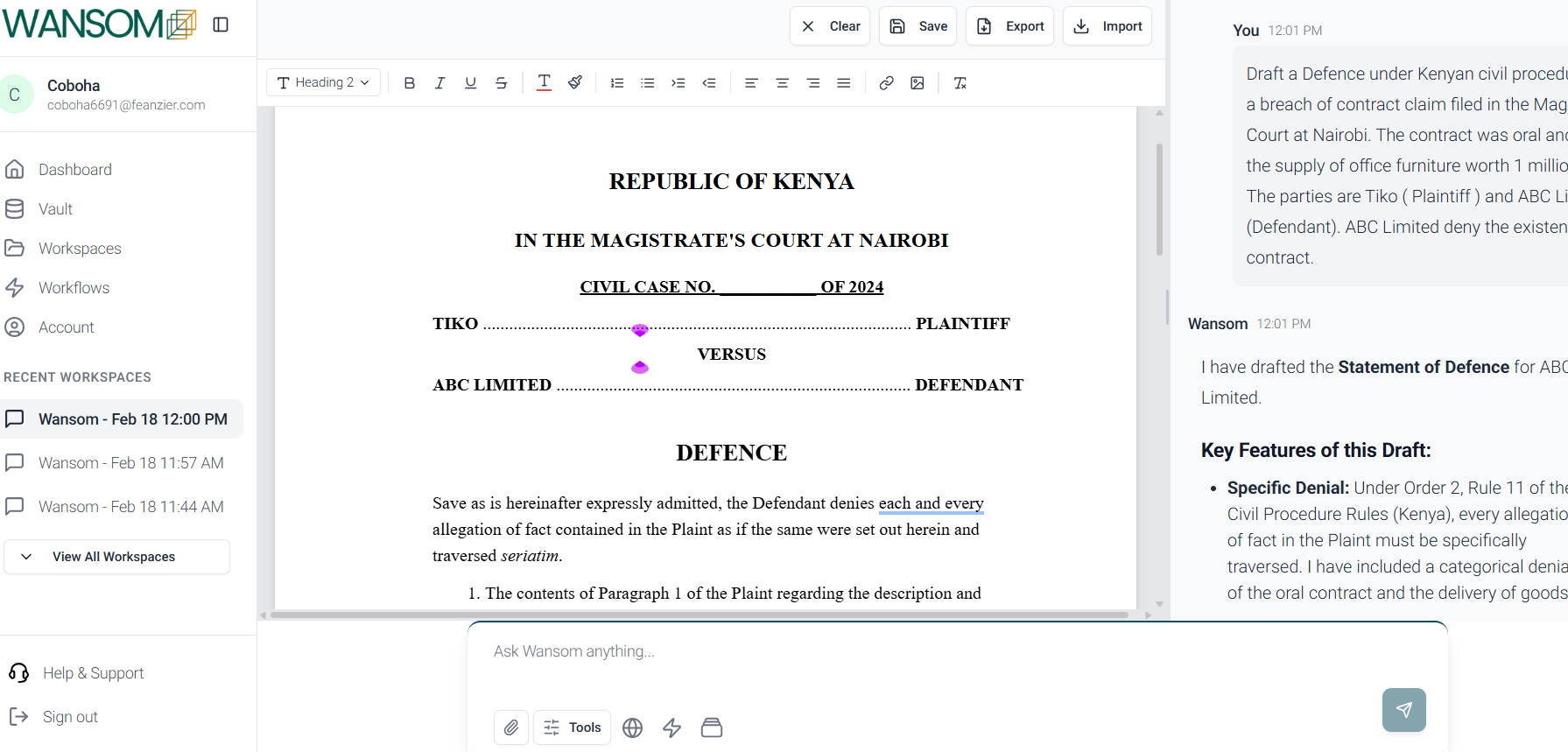
“Draft a Defence under Kenyan civil procedure for a breach of contract claim filed in the Magistsrate Court at Nairobi. The contract was oral and for the supply of office furniture worth 1 million Ksh. The parties are Tiko ( Plaintiff ) and ABC Limited (Defendant). ABC Limited denies the existence of a contract.”
Always specify:
Country (e.g., Kenya, Uganda)
Relevant statute (if known)
Court level ( High Court, Magistrate, Court of Appeal, etc.)
2. Provide Context, Not Just Tasks
AI works best when it understands:
the parties
the transaction type
the legal objective
any constraints
Weak Prompt:
“Draft a sale agreement.”
Strong Prompt:
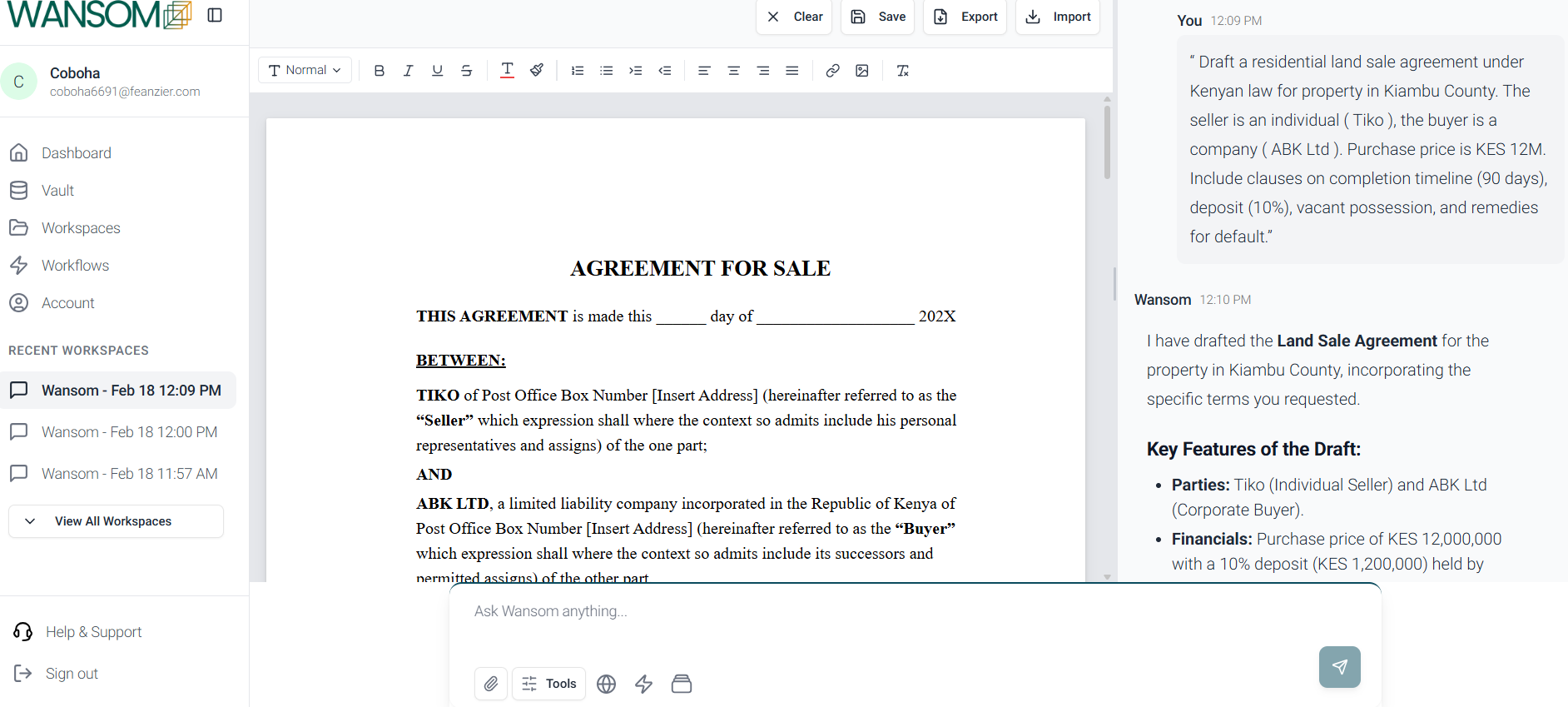
“ Draft a residential land sale agreement under Kenyan law for property in Kiambu County. The seller is an individual ( Tiko ), the buyer is a company ( ABK Ltd ). Purchase price is KES 12M. Include clauses on completion timeline (90 days), deposit (10%), vacant possession, and remedies for default.”
The more context you give, the less editing you’ll need.
3. Tell the AI the Format You Want
Draft Plaint, Defence, Notice of Motion
Identify legal issues
Identify certain clauses ( in case of a contract review), also suggest additional clauses to be included.
Draft submissions
Provide risk analysis
Research
Specify it.
Examples:
“Provide (1) issues for determination, (2) applicable law, (3) risk assessment, (4) draft prayers.”
“Draft a Notice of Motion seeking temporary injunction pending hearing and determination of suit.”
“Provide a concise advisory memo (max 500 words) summarising the risks of constructive dismissal under Kenyan law, citing leading Court of Appeal authorities.”
4. Ask for Authorities (When Needed)
If you’re researching, always ask for:
statutory references
case citations
relevant sections
Example:
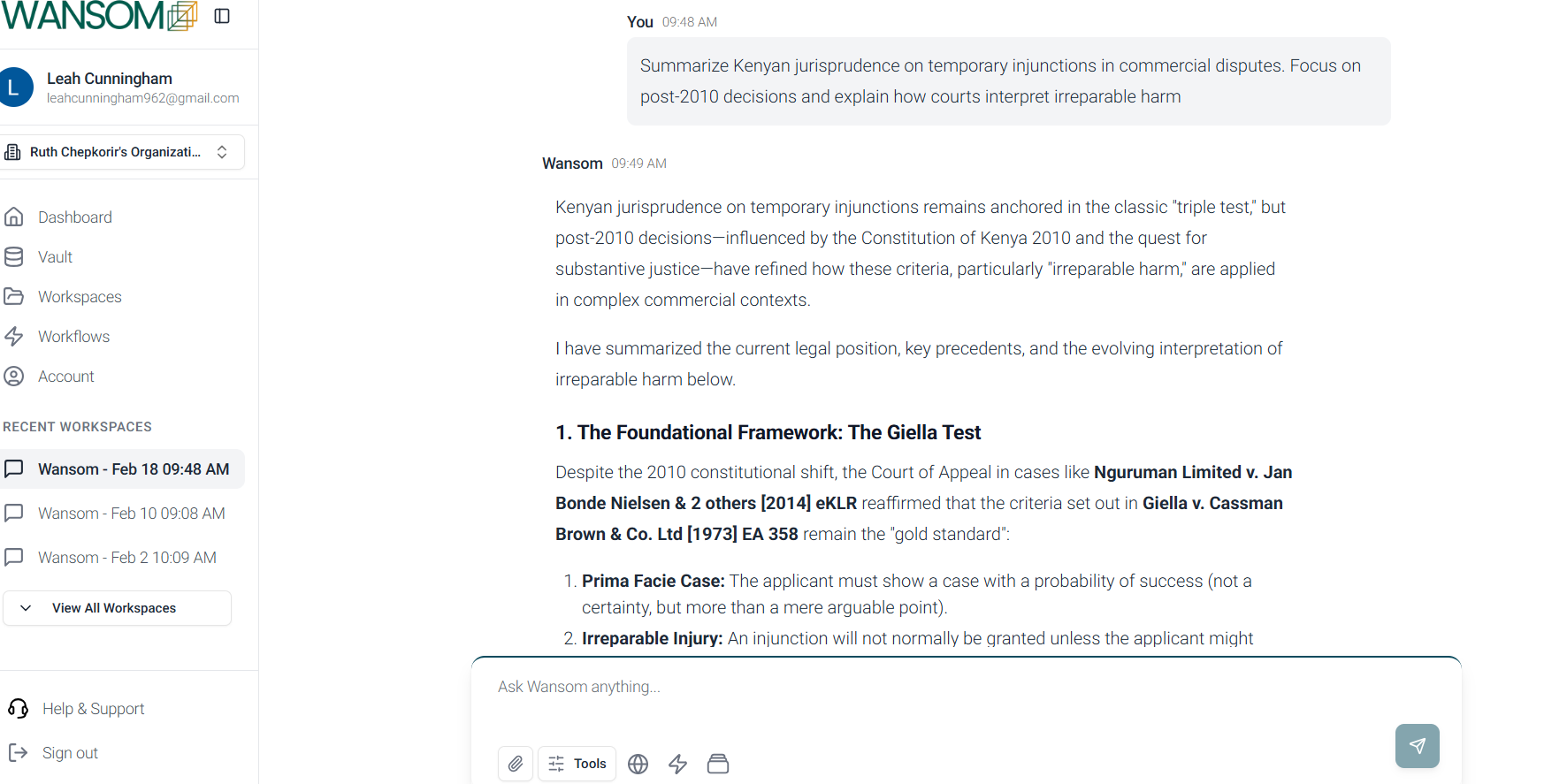
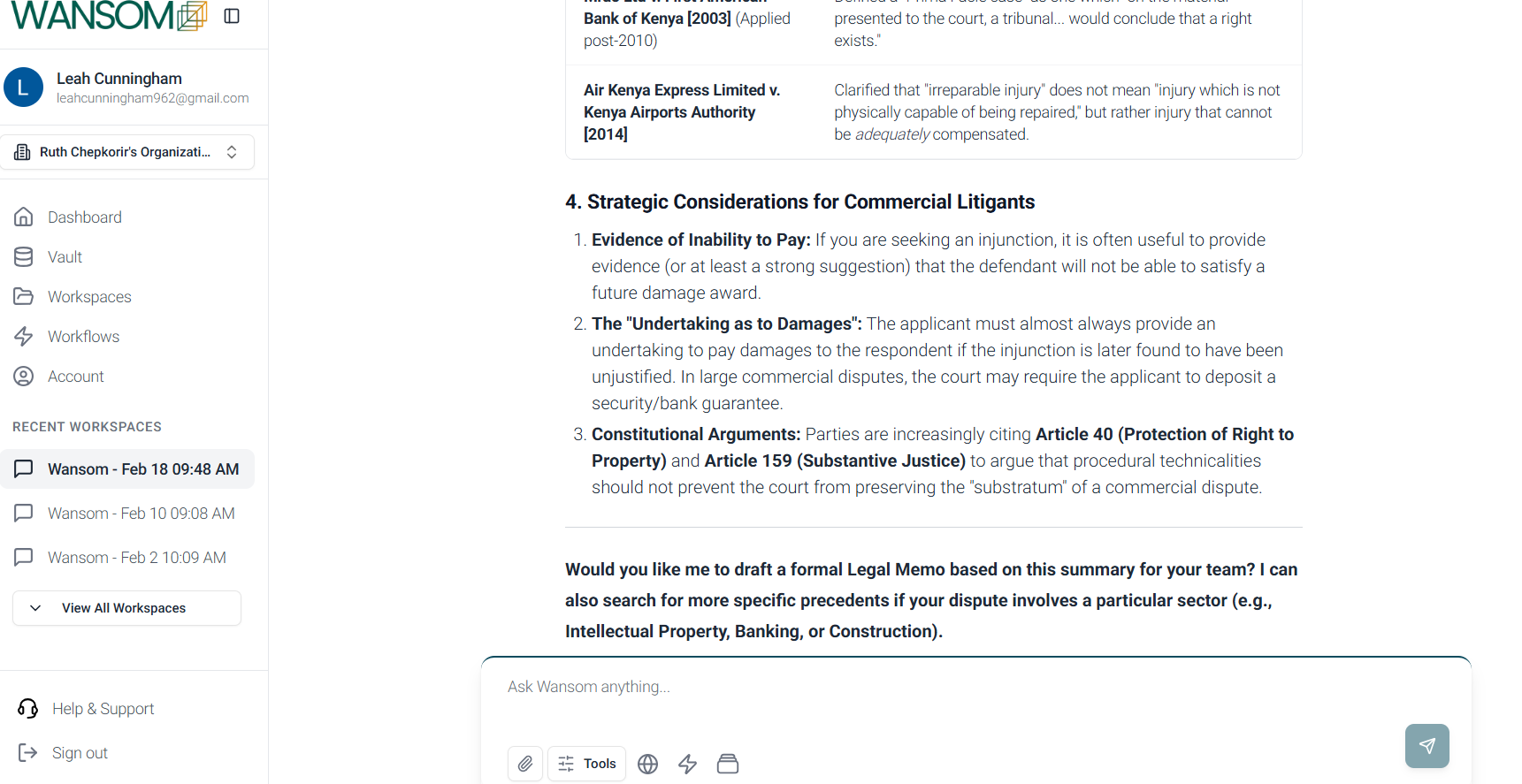
“Summarize Kenyan jurisprudence on temporary injunctions in commercial disputes. Focus on post-2010 decisions and explain how courts interpret irreparable harm.”
Then verify the authorities independently.
Always cross-check citations before relying on them in court.
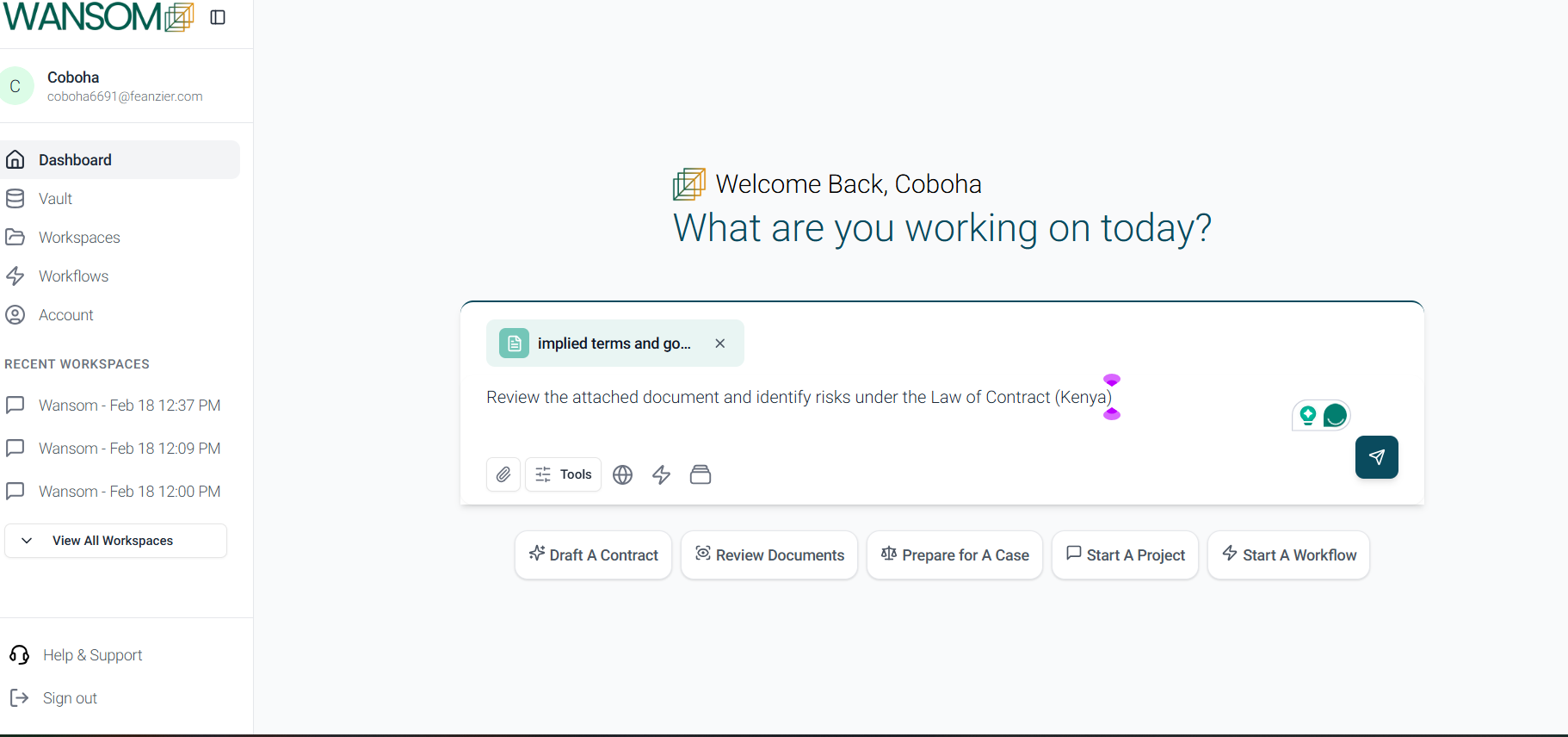
5. Upload and Anchor to Documents
Instead of asking abstract questions, attach or paste relevant documents or templates to make your work simpler. (You can upload a template from your Wansom AI Vault or device and use it as a reference )
Example:
“ Review the attached document and identify risks under the Law of Contract (Kenya) “|.
Anchoring the AI to actual text reduces generic responses.
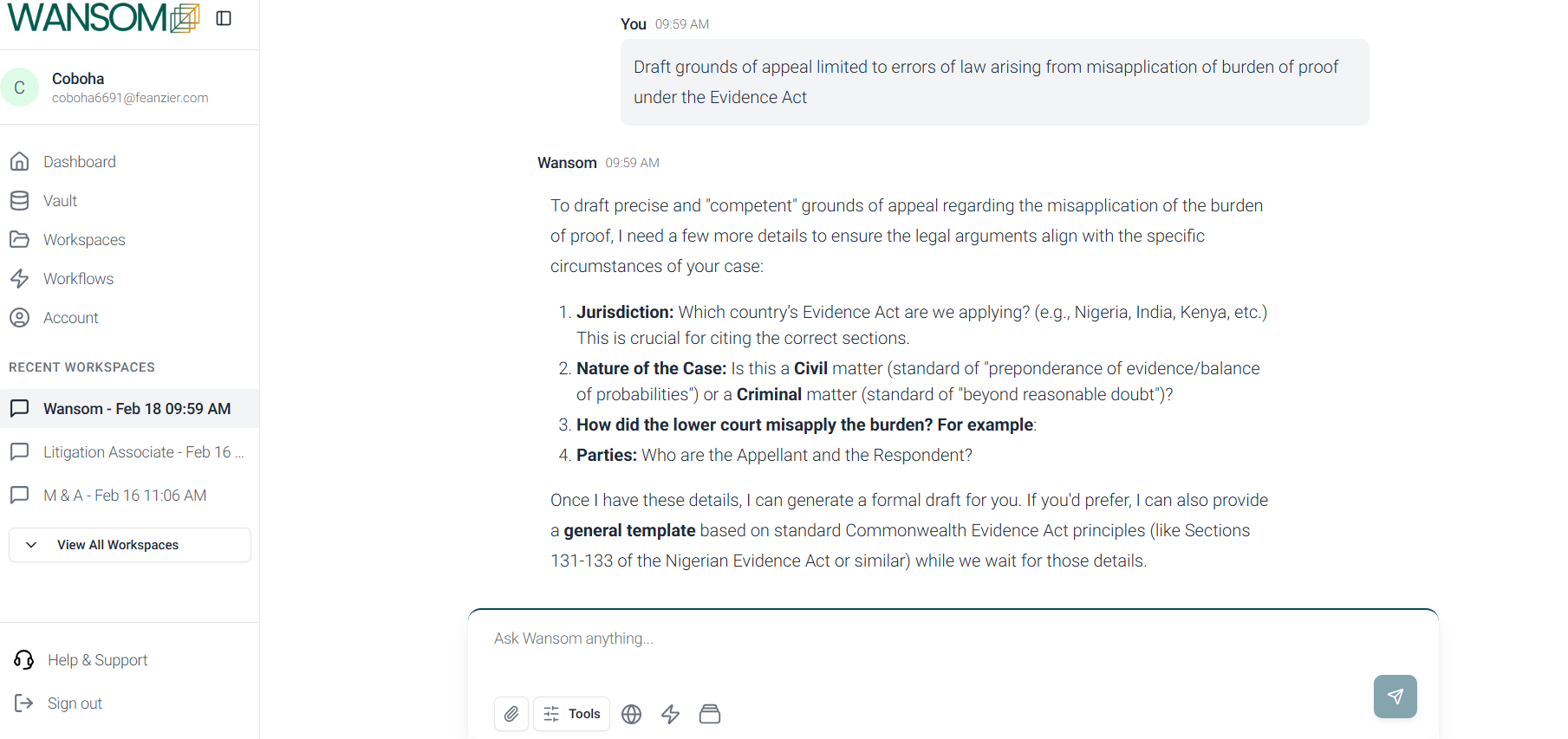
What if I struggle to prompt or am unsure how to maximise my prompt fully?
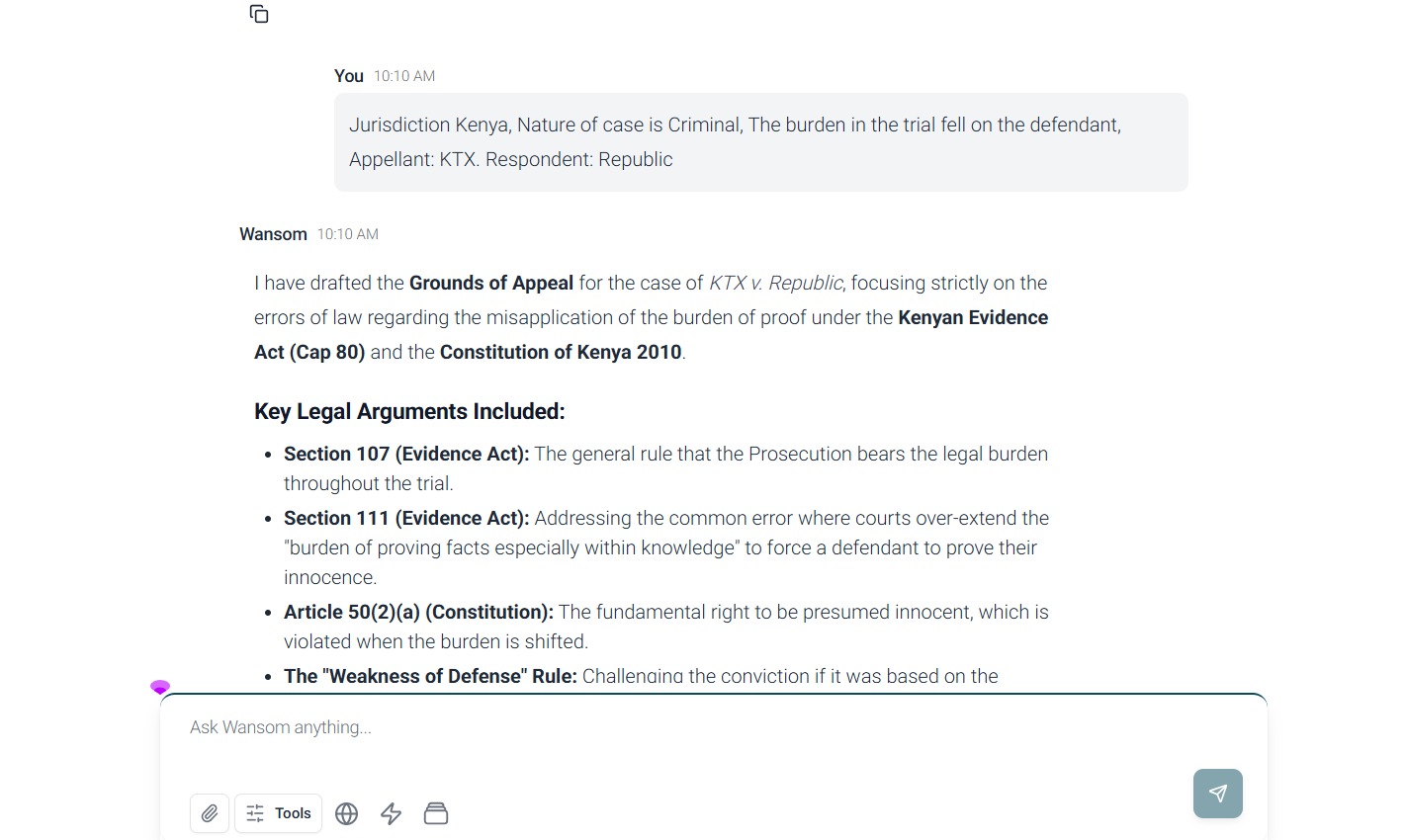
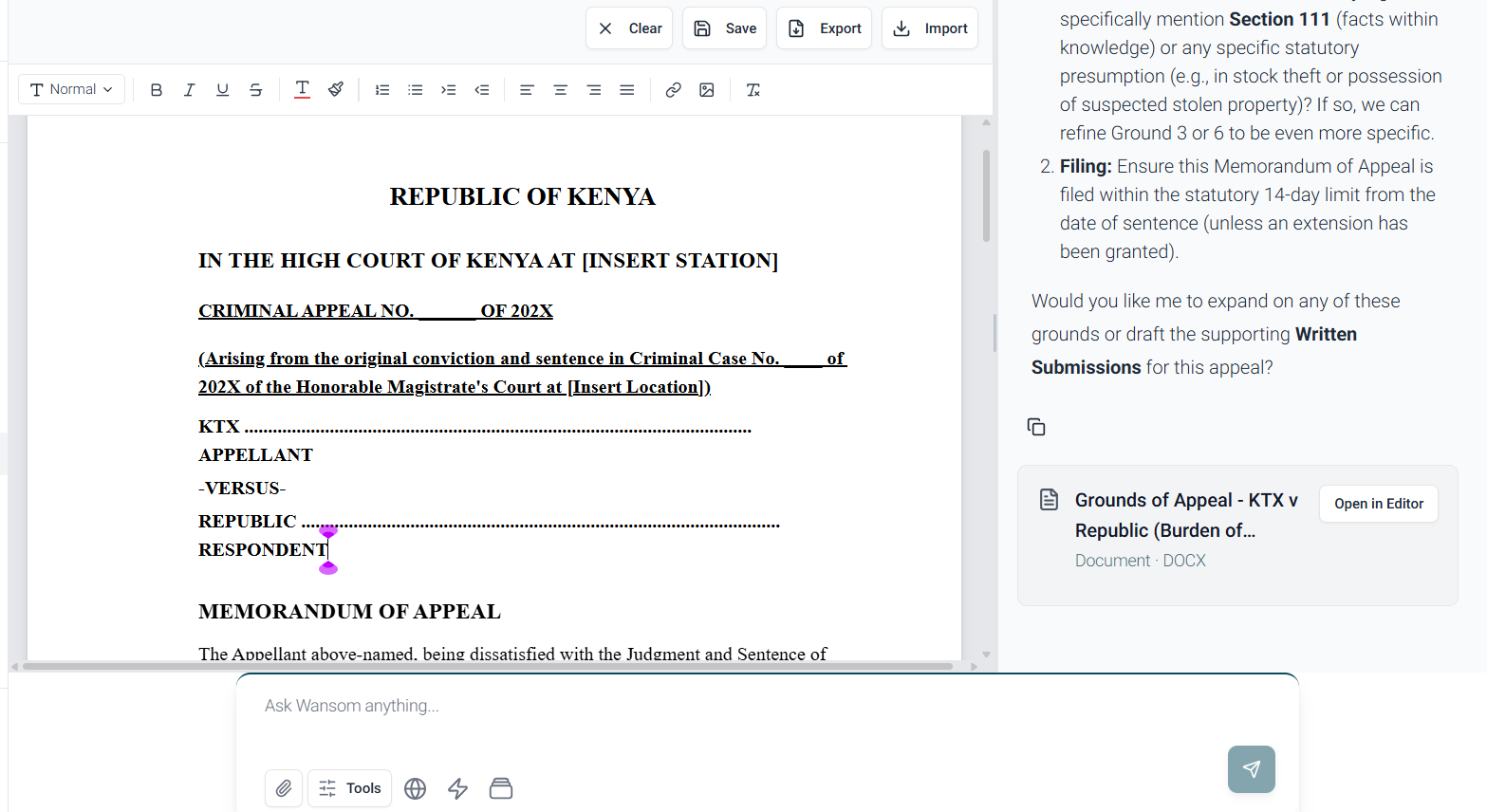
No worries! Even when you don't prompt fully, Wansom AI will guide you to getting your desired outcome.
For example:
“Draft grounds of appeal limited to errors of law arising from misapplication of burden of proof under the Evidence Act.”
COMMON PROMPTING MISTAKES TO AVOID
Failing to specify jurisdiction
Leads to foreign authorities.
Asking for “case law” without jurisdiction restriction
May generate non-Kenyan decisions.
Not stating the court level
High Court vs Magistrates’ Court pleading differences matter.
Mixing pleadings and submissions
Pleadings must not contain arguments.
Not specifying formatting requirements
Kenyan courts expect structured numbering and proper prayers.
Relying on output without verification
Start prompting with Wansom AI and experience how structured AI assistance can transform your research speed, drafting precision, and overall legal productivity.
YOUR NEXT READ: Top 13 AI Prompts Every Legal Professional Should Master