The practice of law has long been defined by the meticulous application of human expertise—hours dedicated to deep research, document drafting, and complex analytical thinking. However, the sheer volume of data, coupled with increasing client demands for efficiency and transparent pricing, has created an unsustainable pressure point.
This pressure primarily falls on the routine, high-volume tasks that consume associates' time but add minimal strategic value.
AI is not just a futuristic concept for Silicon Valley firms; it is a suite of tools currently deployed in law firms of all sizes worldwide, fundamentally reshaping the legal workflow. By taking over the tedious, repetitive, and often error-prone tasks that clog up capacity, AI allows lawyers to shift their focus from information gathering to strategic analysis—the work clients truly value.
Firms that embrace this technological shift are experiencing competitive advantages, reduced costs, and a significant improvement in work quality.
This revolution centers on automation. We are moving past simple digitization and into intelligent workflows powered by machine learning (ML) and natural language processing (NLP). The adoption of sophisticated Legal AI is becoming a matter of survival, not just innovation. It’s about leveraging technology to deliver faster, cheaper, and more accurate legal services.
Key Takeaways
AI as a Co-Pilot: AI automates repetitive, low-value legal tasks like e-discovery and document review, allowing lawyers to focus on high-value strategic analysis and client judgment.
Massive Efficiency Gains: Automation reduces the time and cost associated with high-volume processes like document review and contract triage by up to 80%.
Data-Driven Decision Making: Litigation analytics provide data-driven predictions on case outcomes, judge profiling, and opposing counsel strategy, moving beyond traditional intuition.
Pricing Model Shift: Increased efficiency is forcing a strategic shift away from the traditional billable hour model toward predictable, value-based pricing that rewards results.
Human Oversight is Critical: Successful AI adoption requires rigorous human review, strong data security, and verification checks to prevent 'hallucinations' and maintain ethical compliance.
Is AI Here to Replace the Legal Professional, or Simply Refocus Their Talent?
This is the most common and critical question facing the industry today. The answer is clear: AI is not designed to replace the nuanced judgment, client empathy, or creative argumentation of a seasoned lawyer.
Instead, it is acting as a powerful co-pilot, automating the tasks traditionally performed by junior staff, which previously served as the base of the billable hour pyramid. By eliminating the necessity of countless hours spent on data-intensive processes, AI clears the path for lawyers to dedicate their finite energy to high-value activities: client advisory, complex negotiation, and appellate strategy.
The law firm of the future is not run by AI, but augmented by it. Automation allows firms to invert the traditional 80/20 rule, where 80% of time was spent collecting information and 20% on strategy. Today’s AI-enhanced firms aim to flip those numbers, dedicating the vast majority of time to strategic advice and client relationship building.
10 Everyday Law Firm Tasks That AI Can Automate Immediately
1. Document Review and E-Discovery: Finding the Needle in the Digital Haystack
In litigation, M&A, and regulatory compliance matters, firms often face hundreds of thousands, or even millions, of electronic documents. Manually reviewing these documents to identify relevance, privilege, and key information is a time sink that can dwarf the strategic costs of a case.
How AI Automates It: AI uses machine learning models, trained on millions of legal documents, to quickly categorize, tag, and prioritize documents. After a human lawyer reviews a small seed set, the AI learns what is "hot" (relevant) and applies that learning across the entire corpus with superior speed and consistency.
Impact: Document review time can be reduced by 40% to 80%. AI systems can find relevant files in minutes that would take junior lawyers weeks, significantly cutting client costs and meeting tight discovery deadlines.
2. Legal Research and Case Summarisation: Instant Precedent Analysis
Traditional legal research involves searching large databases and synthesizing complex case law—a process that is both expensive and time-consuming.
How AI Automates It: Generative AI, combined with proprietary legal databases, allows lawyers to ask complex, natural-language questions and receive concise, citable answers grounded directly in case law and statutes. AI can also summarize entire court opinions in seconds, highlighting the key rationale and speeding up the research phase dramatically.
3. Contract Triage, Review, and Negotiation Prep: Risk Identification at Scale
In transactional and in-house practices, lawyers must constantly deal with a high volume of contracts to identify deviations from standard clauses and assess risk.
How AI Automates It: AI Contract Lifecycle Management (CLM) systems:
Triage: Automatically identify the agreement type and extract key metadata.
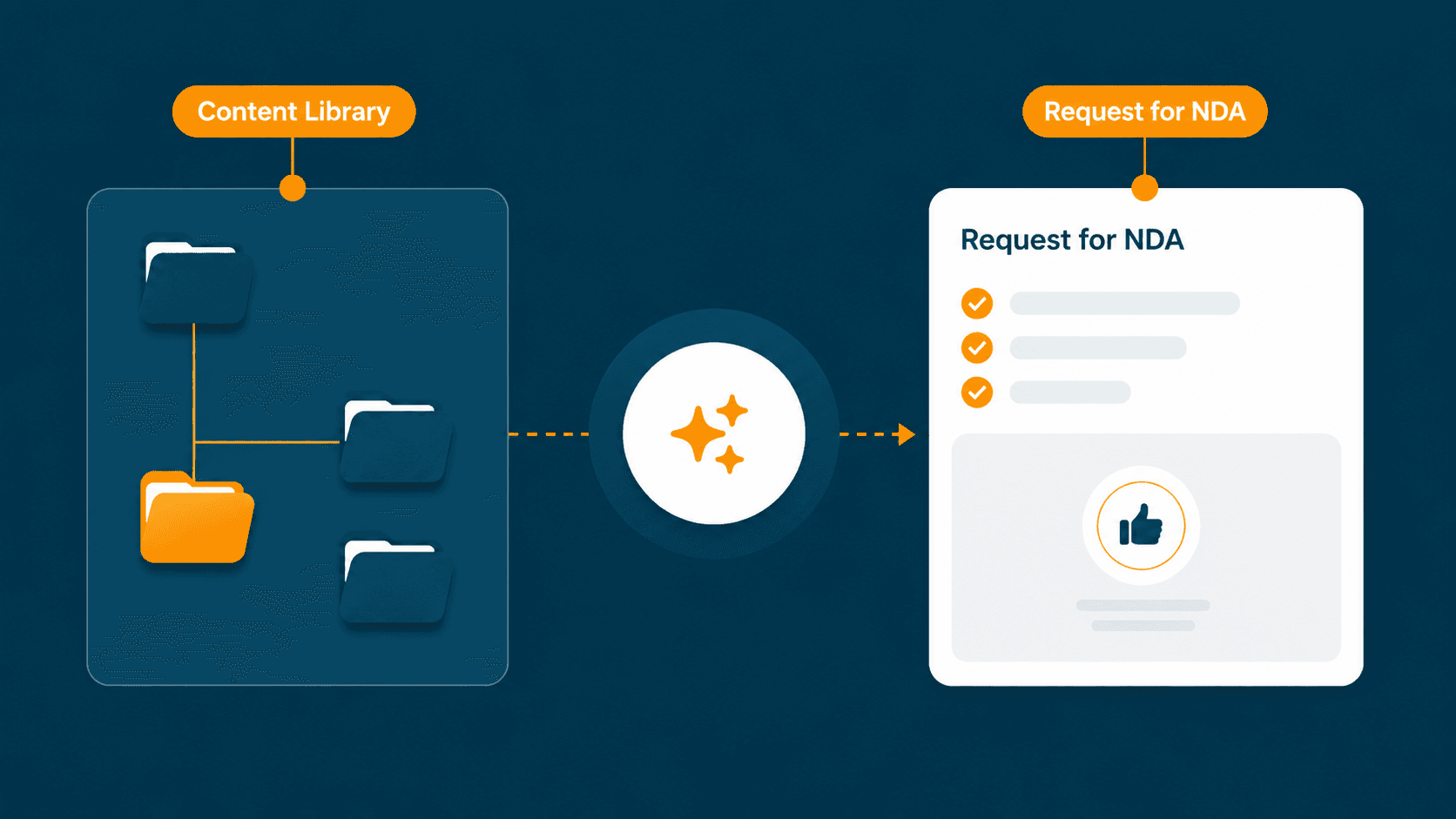
Risk Review: Compare drafts against pre-approved clause libraries and flag non-standard or risky clauses.
Drive Efficiency: Reduce a manual one-hour review to under 5 minutes, focusing the lawyer only on the red flags.
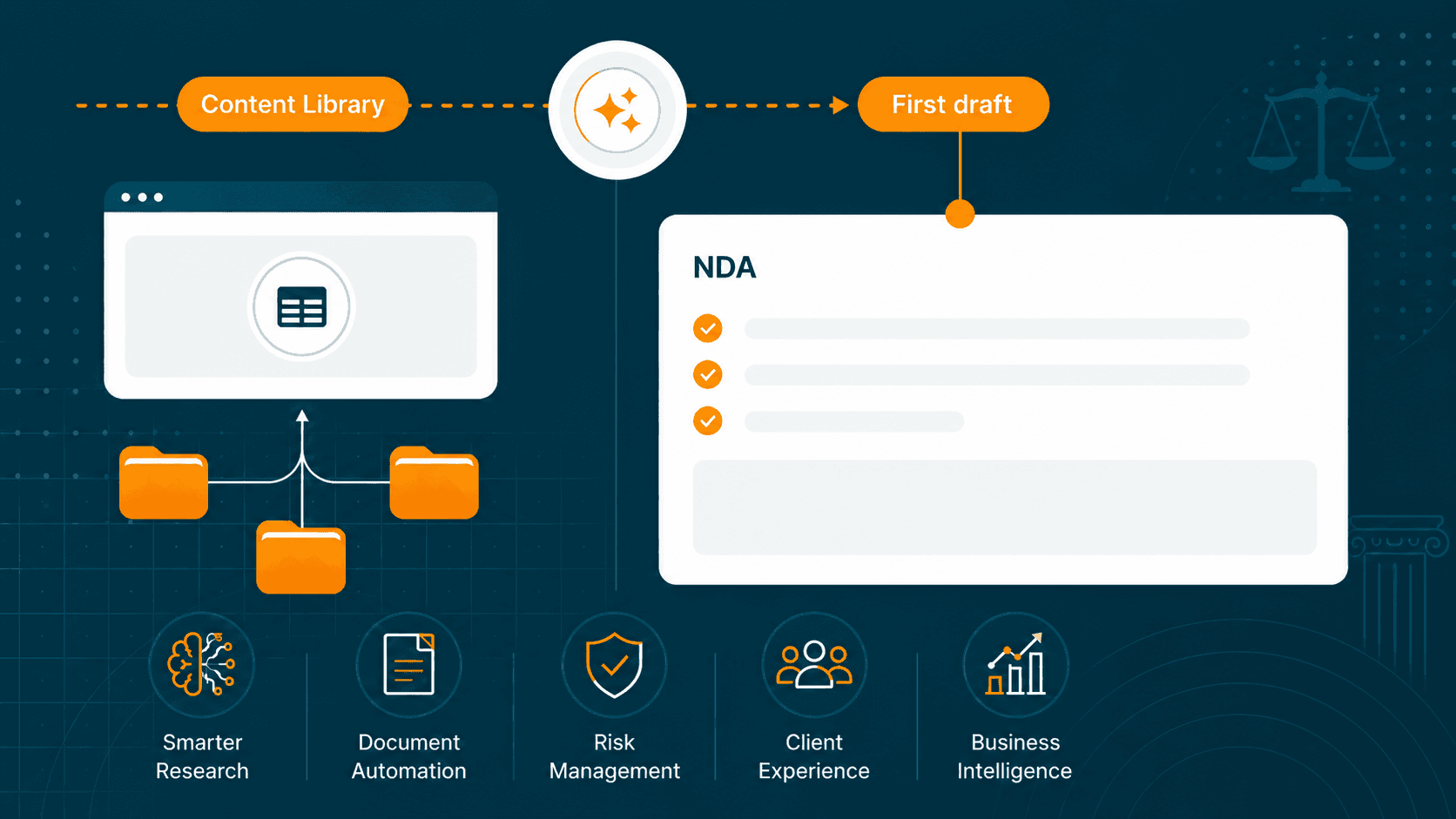
4. Generation of First Drafts and Routine Legal Documents
While no AI should generate a final legal product, it is exceptionally good at creating high-quality, boilerplate first drafts.
How AI Automates It: Using approved firm templates, generative AI can produce drafts of routine correspondence, standard agreements, and internal memos based on user inputs. This allows the lawyer to spend time editing and refining, rather than starting from scratch.
5. Regulatory Monitoring and Compliance Audits: Staying Ahead of the Curve
For practices in regulated industries, keeping up with shifting regulatory landscapes is a colossal administrative burden.
How AI Automates It: AI systems continuously monitor legislative databases. They identify and flag changes relevant to specific clients and can analyze a firm’s contract portfolio against new regulations, highlighting exactly which documents need revision.
6. Due Diligence and Data Classification in M&A
Mergers and Acquisitions due diligence involves reviewing thousands of documents to assess a target company’s risk profile.
How AI Automates It: AI automates the document flow, using machine learning to classify documents into categories (e.g., "Material Contracts," "IP Agreements") and flagging anomalies like contracts lacking proper sign-offs or unusual indemnity clauses.
7. Invoice Review and Billable Hour Compliance: Eliminating Billing Friction
Billing is a major source of tension between law firms and clients, who demand transparent and compliant billing practices.
How AI Automates It: AI tools analyze time entries against pre-agreed billing guidelines, automatically flagging descriptions that are too vague or entries that exceed approved rates. This reduces administrative write-downs and shortens the billing cycle.
8. Litigation Analytics and Predictive Strategy: The Data-Driven Advantage
Lawyers often rely on intuition when advising on settlement or trial strategy. AI introduces quantitative certainty.
How AI Automates It: AI analytics platforms ingest public litigation data to generate predictions:
Judge Profiling: Analyze a judge’s history of ruling on similar motions.
Opposing Counsel Tactics: Profile the tendencies of opposing firms.
Case Outcome Prediction: Provide a statistical probability for success based on similar historical matters.
9. Client Intake and Conflict Checks: Securing the Engagement Faster
The process of bringing a new client into the firm—from initial contact to clearing conflicts—is essential but administratively heavy.
How AI Automates It:
Intelligent Forms: AI-powered forms parse client responses and auto-populate matter management systems.
Conflict Checks: AI rapidly cross-references all related parties against the firm's historical client database, reducing a manual hours-long search to seconds and mitigating ethical risks.
10. Abstracting and Summarizing Depositions and Transcripts
In complex litigation, finding key statements in thousands of transcript pages is tedious and time-intensive.
How AI Automates It: Generative AI tools can:
Extract key facts (dates, names, admissions).
Generate a condensed executive summary of a deposition.
Group related sections of the transcript by topic for easy reference.
Beyond Automation: The Fundamental Revaluation of Legal Service
The automation of these 10 tasks is doing more than just saving time; it is forcing a strategic re-evaluation of what clients are actually purchasing. When machines handle the low-value, repetitive work, the lawyer’s value proposition shifts entirely to judgment, strategy, and empathy.
This fundamental change is driving the inevitable move away from the Billable Hour. As AI compresses task time, the hourly billing model becomes indefensible. Clients increasingly demand predictable, value-based pricing that rewards results and efficiency, not effort.
Managing the Risks: Human Oversight and Ethics
The rapid adoption of AI is not without critical caveats. The legal profession must approach AI with discipline. Every single output from an AI model must be subjected to human review. Firms must invest in:
Data Security: Ensuring client data is protected with bank-grade encryption.
Verification: Preventing "hallucinations" by using trusted legal data sets.
Transparency: Being clear with clients about how AI is used in their matter.
The Time to Act is Now
The era of AI in law is no longer theoretical; it is operational. The firms that are winning—attracting top talent, retaining key clients, and demonstrating superior efficiency—are those that have strategically integrated AI automation into their everyday practice.
By automating routine tasks, law firms are not just streamlining operations; they are maximizing the strategic potential of their most valuable resource: their lawyers. The shift is already underway, and the competitive gap between firms that embrace automation and those that delay will only widen.