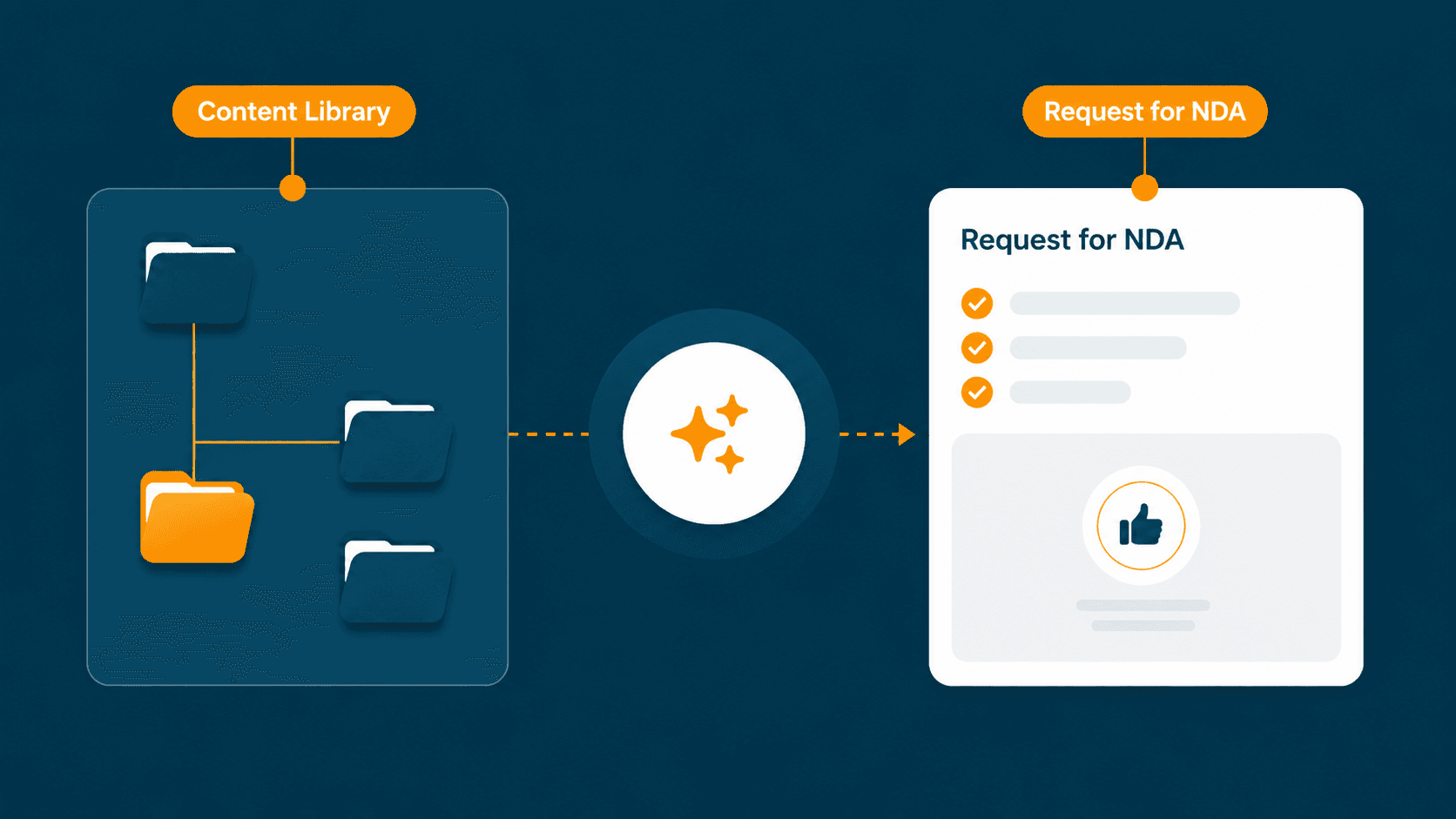
Legal AI refers to software such as wansom.ai that utilizes artificial intelligence to automate and enhance legal work. It helps lawyers and in-house teams by speeding up legal research, drafting documents, contract review, due diligence, and tracking compliance.
The legal profession is experiencing its most profound transformation since the advent of the internet. Artificial intelligence has evolved from a novelty to a practical set of capabilities that reshape daily workflow across law firms, corporate legal teams, and courts. For lawyers today, the central question is how to implement AI securely, strategically, and ethically.
Key Takeaways
Legal AI adoption is accelerating, making enterprise-grade AI a strategic priority. The market is projected to grow to approximately $7.4 billion by 2035.
The lawyer’s primary duty when using AI is verification. Every AI output must be reviewed and validated before use.
Generative AI shifts the lawyer’s role from drafting to editing. Firms can save substantial time on routine tasks, challenging traditional billing models.
Client confidentiality requires enterprise-grade, isolated AI workspaces with guaranteed data non-retention and strong encryption.
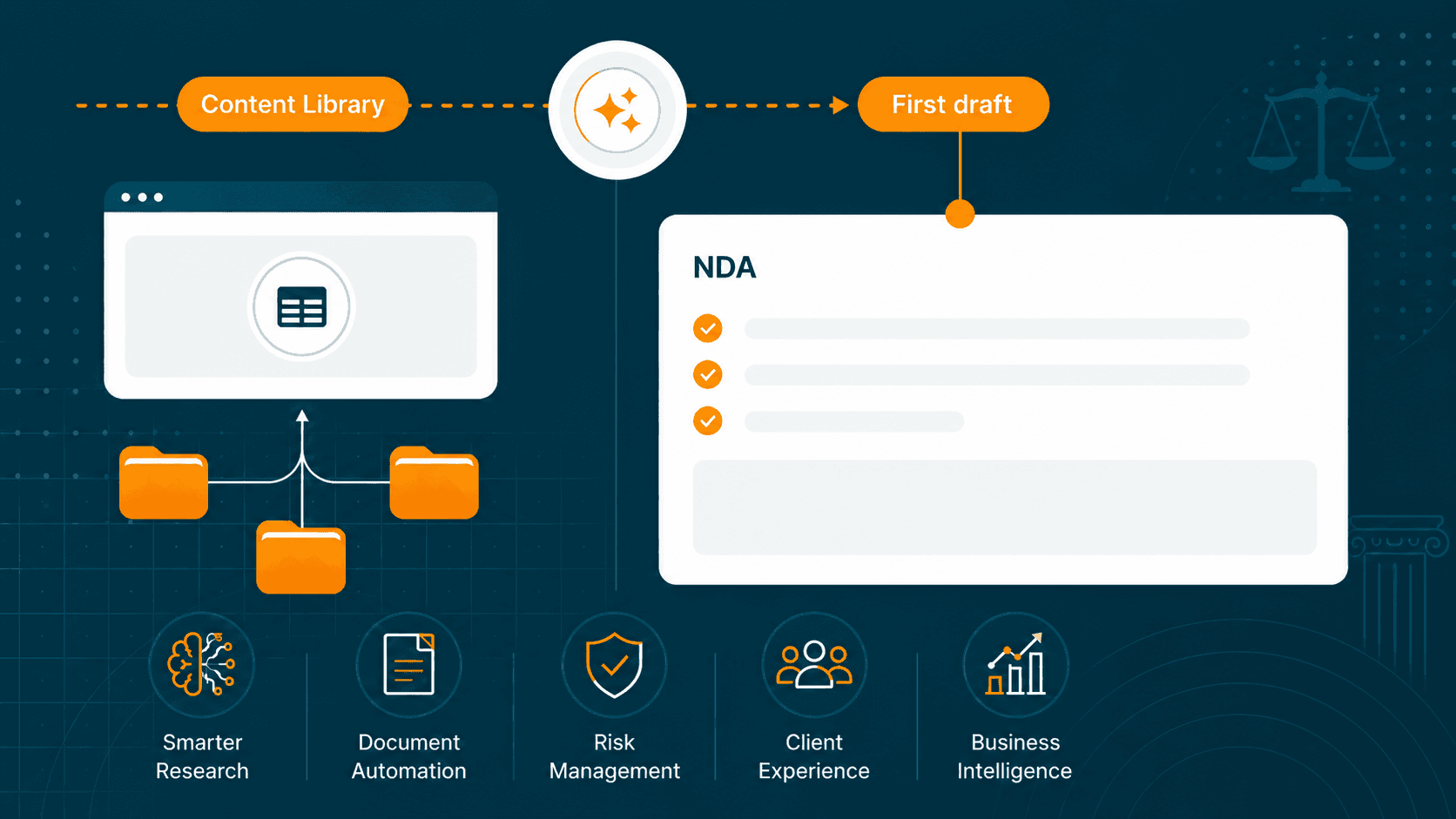
Core applications include automated document review, semantic legal research, first-pass drafting, contract lifecycle management, and centralized knowledge systems.
Defining Legal AI
Legal AI applies machine learning, natural language processing, and large language models to legal tasks. It performs three core functions:
Interpretation: Reading and extracting meaning from legal text such as cases, contracts, and statutes.
Prediction: Using historical data to forecast tendencies, outcomes, or risks.
Generation: Creating legal text such as draft clauses, summaries, or research memos.
Modern Legal AI reasons over context, synthesizes multiple sources, and generates coherent first drafts. It is designed to amplify human judgment, not replace it.
Core Components of Legal AI
Understanding the underlying technology helps set correct expectations and evaluate vendor offerings.
Natural Language Processing (NLP): Enables systems to parse legal sentences, identify parties and obligations, and classify documents by type.
Machine Learning (ML): Identifies patterns in labeled data and improves performance through feedback. In e-discovery, ML learns relevance from human-coded samples and scales that judgment across millions of documents.
Generative AI and Large Language Models (LLMs): Creates new text based on learned patterns. It can draft clauses or summarize opinions. This power introduces the risk of confident but false outputs, known as hallucinations.
High-Impact Use Cases and Measurable Benefits
Successful AI initiatives focus on repeatable, high-volume workflows where precision and speed directly affect outcomes. These categories deliver the strongest return on investment.
1. Document Review and Due Diligence
Use Case: M&A transactions, litigation discovery, regulatory audits.
Technologies: Technology-assisted review, clustering engines, predictive coding.
Value: Reduces review volumes by 50 percent or more while accelerating the identification of critical materials.
Implementation: Combine AI predictions with human sampling and continuous retraining to achieve target accuracy scores.
2. Semantic Legal Research and Analysis
Use Case: Issue spotting, argument refinement, rapid case synthesis.
Technologies: Semantic search, citation graph analysis, automated summarization.
Value: Accelerates access to controlling authorities and strengthens analytical foundations.
Implementation: Always verify AI-generated case citations against trusted primary databases.
3. First-Pass Drafting and Clause Management
Use Case: NDAs, routine commercial agreements, initial drafts of memos.
Technologies: GenAI drafting systems, firm-specific clause libraries.
Value: Shifts lawyer effort from typing to editing, improves consistency, and shortens drafting cycles.
Implementation: Maintain a curated, approved clause library. Configure AI to prioritize firm-preferred language.
4. Contract Lifecycle Management and Monitoring
Use Case: Tracking post-execution obligations, renewals, and compliance requirements.
Technologies: Rule-based engines, obligation extraction models, automated alerts.
Value: Prevents missed deadlines, reduces compliance exposure, and enables automated remediation.
Implementation: Sync outputs with internal calendars or matter management systems to ensure clear ownership of follow-up actions.
5. Knowledge Management and Collaborative AI Workspaces
Use Case: Transforming firm knowledge into a searchable, queryable asset.
Technologies: Private model fine-tuning, secure search layers, structured ingestion pipelines.
Value: Unlocks institutional expertise, reduces individual dependency, and improves work consistency.
Implementation: Retain original documents and metadata during ingestion to maintain auditability and prevent knowledge drift.
Quantifying the Return on Investment
Adopting AI in legal workflows yields three measurable outcomes:
Time Savings: Routine tasks shrink from hours to minutes. Conservative estimates show savings of 240 hours per lawyer annually in high-adoption practices.
Accuracy Gains: Automated clause detection and cross-checking reduce human error in large-scale document reviews.
Strategic Reallocation: Time reclaimed from repetitive work is redeployed to high-value counseling and business development.
Ethical and Security Imperatives
Regulatory and professional obligations place the burden of safe AI use on legal practitioners. Focus on three critical risk areas.
1. Hallucinations and the Duty of Verification Generative models can produce incorrect citations or analyses. The duty to verify is both ethical and practical.
Require human review of all AI outputs before client or court use.
Confirm primary-source citations in an authoritative legal database.
Maintain a mandatory sign-off workflow for any filing or advice based on AI output.
2. Client Confidentiality and Data Security Feeding client data into consumer-grade AI risks exposure and unauthorized retention.
Contractually prohibit vendor data retention or reuse for model training.
Ensure encryption in transit and at rest, with proper key management.
Require SOC 2 or ISO 27001 attestation from vendors.
Prefer data isolation or private model hosting options.
3. Algorithmic Bias and Fairness AI models reflect their training data and can reproduce historical biases.
Require vendors to provide bias testing results and fairness metrics.
Limit use of predictive models in high-stakes contexts without proven equity.
Implement human oversight and appeal pathways for AI-driven decisions.
A Practical Adoption Playbook for Law Firms
Integrating AI is a strategic program, not a simple purchase. This phased plan minimizes risk and maximizes benefit.
Phase 0: Pre-Adoption Assessment
Identify priority use cases with measurable ROI.
Map current workflows and data sources.
Form a cross-functional adoption committee including partners, IT, compliance, and a legal technologist.
Phase 1: Pilot (30 to 90 Days)
Select a single use case (e.g., M&A document review or automated NDAs).
Choose one vendor and one practice team.
Define metrics, success criteria, and a review cadence.
Train staff and document governance protocols.
Phase 2: Scale
Expand to adjacent teams.
Add two to three more use cases.
Build an internal clause library and validated prompt catalog.
Integrate with existing matter management or document systems.
Phase 3: Institutionalize
Incorporate AI use into engagement letters, billing guidelines, and training.
Maintain a vendor review schedule and continuous accuracy audits.
Consider adding AI adoption metrics into relevant performance evaluations.
Prompt Engineering for Lawyers
Structured prompts yield reliable and efficient outputs. They should include context, constraints, and a defined output format.
Example Prompt for a First-Pass NDA: "You are a legal drafting assistant. Using the firm clause library labeled 'Standard NDA v3', draft a one-page mutual nondisclosure agreement for a software licensing negotiation governed by Kenyan law. Include a 60-day term for confidentiality obligations, an exception for compelled disclosure with notice, and an arbitration clause in Nairobi. Provide a short explanation of two primary negotiation risks at the end."
Example Prompt for Case Summarization: "Summarize the provided judgment into a 300-word executive summary. Highlight the facts, the ratio decidendi, any dissenting opinions, and procedural bars. List key citations with paragraph references. Suggest three potential argument angles for the claimant."
Measuring Success and Governing Use
Measure both adoption rates and concrete outcomes. Track these key metrics:
Percentage of matters using AI-enabled workflows.
Average time to first draft.
Error rate in automated clause identification.
Client satisfaction scores on AI-assisted matters.
Cost savings per matter and changes in realization rates.
Number of AI-related incidents or near misses.
Conduct quarterly performance audits and an annual governance review to update policies, training, and vendor agreements.
The Future: New Roles and Competitive Advantage
AI creates new specialties within law, such as legal data scientists, AI compliance managers, and prompt engineers. Firms that invest in these capabilities will be more efficient and better at productizing institutional knowledge. Regionally tuned AI that respects local law, language, and practice patterns will deliver particular value in specific markets.
Conclusion
Legal AI is an infrastructure shift that requires deliberate strategy, secure platforms, and disciplined governance. The path forward is clear: start with a focused pilot, validate rigorously, scale deliberately, and keep professional ethics at the center of every decision.
Immediate Action Plan for the Next 90 Days:
Select one low-risk, high-volume pilot (e.g., document review or NDAs).
Choose a vendor that meets stringent security requirements.
Train one practice team and establish a mandatory verification workflow.
Update retainer templates to include appropriate AI use disclosure.
Measure results, learn, and plan the next phase of expansion.
By following these steps, law firms can safeguard professional responsibility while unlocking the productivity and strategic benefits that will define the next decade of legal practice.




![How to Draft a Legally Sound Insurance Proposal Form [Freee Template]](/_next/image?url=https%3A%2F%2Fcdn.sanity.io%2Fimages%2F21ka7wqa%2Fproduction%2Ffb1e029fa5d661db9a1133ef139062d31e3e6470-5616x3744.jpg&w=3840&q=75)