Artificial intelligence has moved beyond experimentation in the legal profession. In 2026, the conversation is no longer whether law firms should adopt AI, but how they can do so responsibly, securely, and in ways that create measurable value for clients.
Over the past three years, legal AI has evolved from simple drafting assistants into intelligent platforms capable of researching case law, reviewing contracts, organizing firm knowledge, monitoring regulatory changes, and supporting lawyers throughout the lifecycle of a matter.
Yet despite the rapid pace of innovation, many firms remain caught between opportunity and uncertainty. Questions around confidentiality, hallucinations, data privacy, professional ethics, and return on investment continue to influence adoption decisions.
This report explores the most significant legal AI trends shaping 2026. Rather than focusing on hype, it examines the practical developments changing how legal professionals work today and what law firms should be doing to remain competitive over the next five years.
Law firms that embrace these developments are likely to deliver services more efficiently, improve profitability, and strengthen client relationships.
Trend 1: AI Has Become Every Lawyer's First Research Assistant
Legal research remains one of the most time-intensive activities within legal practice. Instead of manually searching multiple databases and reading hundreds of cases, lawyers increasingly begin with an AI-powered research assistant.
Modern legal AI platforms can:
Summarize lengthy judgments
Compare authorities across jurisdictions
Highlight conflicting precedents
Suggest relevant legislation
Explain complex legal concepts in plain language
Identify emerging judicial trends
Importantly, AI has not replaced traditional legal databases. Rather, it acts as an intelligent layer that helps lawyers reach the right authorities faster while allowing them to verify every citation independently.
The firms seeing the greatest productivity gains are those using AI to accelerate research—not eliminate professional judgment.
Trend 2: Public AI Is Giving Way to Private Legal AI
One of the defining shifts of 2026 is the move away from public AI tools for sensitive legal work.
Law firms increasingly recognize that uploading confidential client information into general-purpose AI applications introduces unnecessary risk.
As a result, firms are adopting secure legal AI platforms that provide:
Private document storage
Role-based access controls
Encryption
Audit trails
Matter-specific workspaces
Enterprise governance
Confidentiality has become a competitive differentiator. Clients increasingly expect their legal advisers to demonstrate how AI is used responsibly without compromising privileged information.
Trend 3: Internal Knowledge Is Becoming a Firm's Greatest Competitive Advantage
Many firms possess decades of valuable intellectual property hidden across shared drives, email archives, precedent libraries, and document management systems.
Historically, accessing this knowledge depended on knowing who drafted a document or where it was stored.
AI changes that.
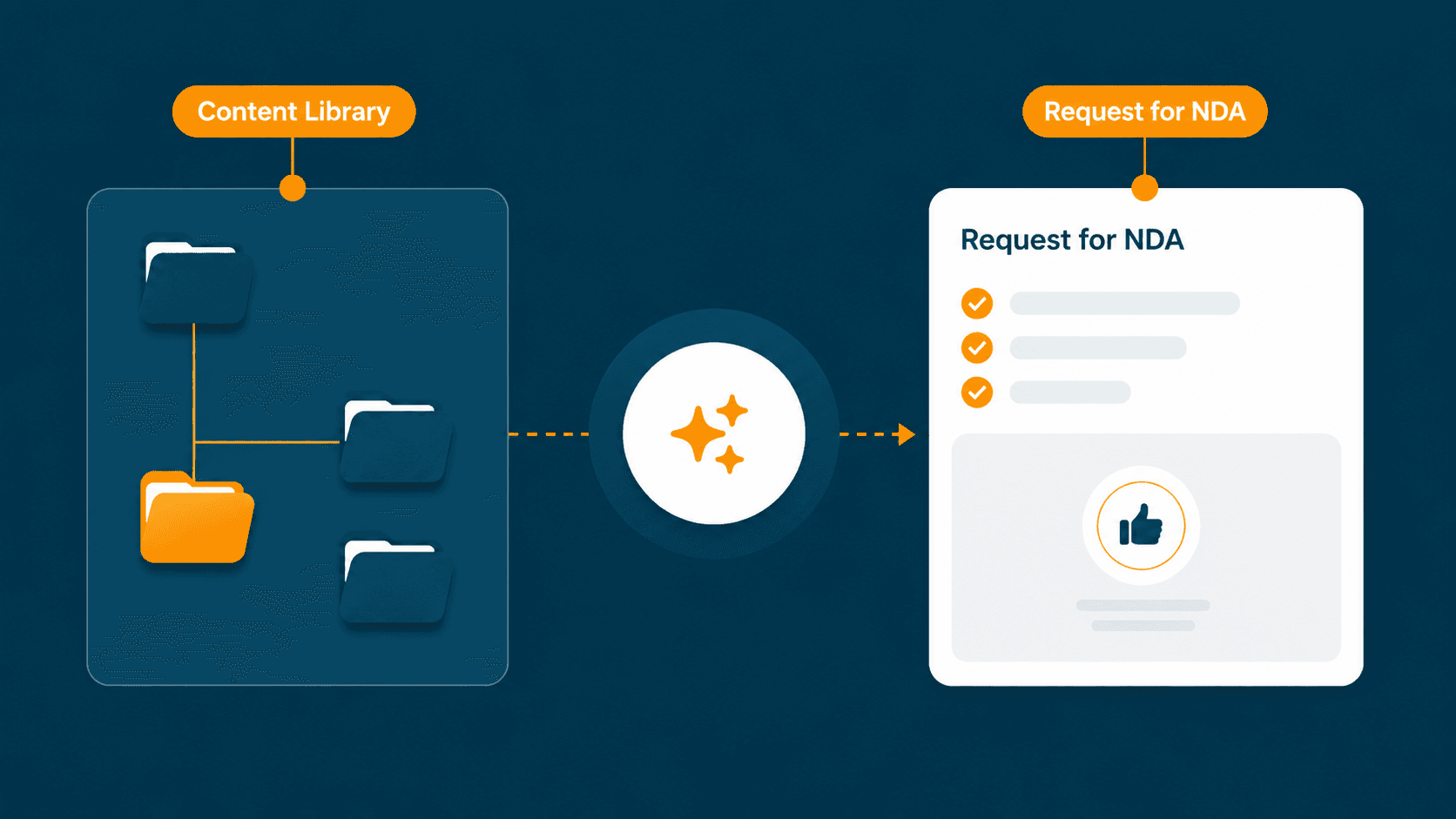
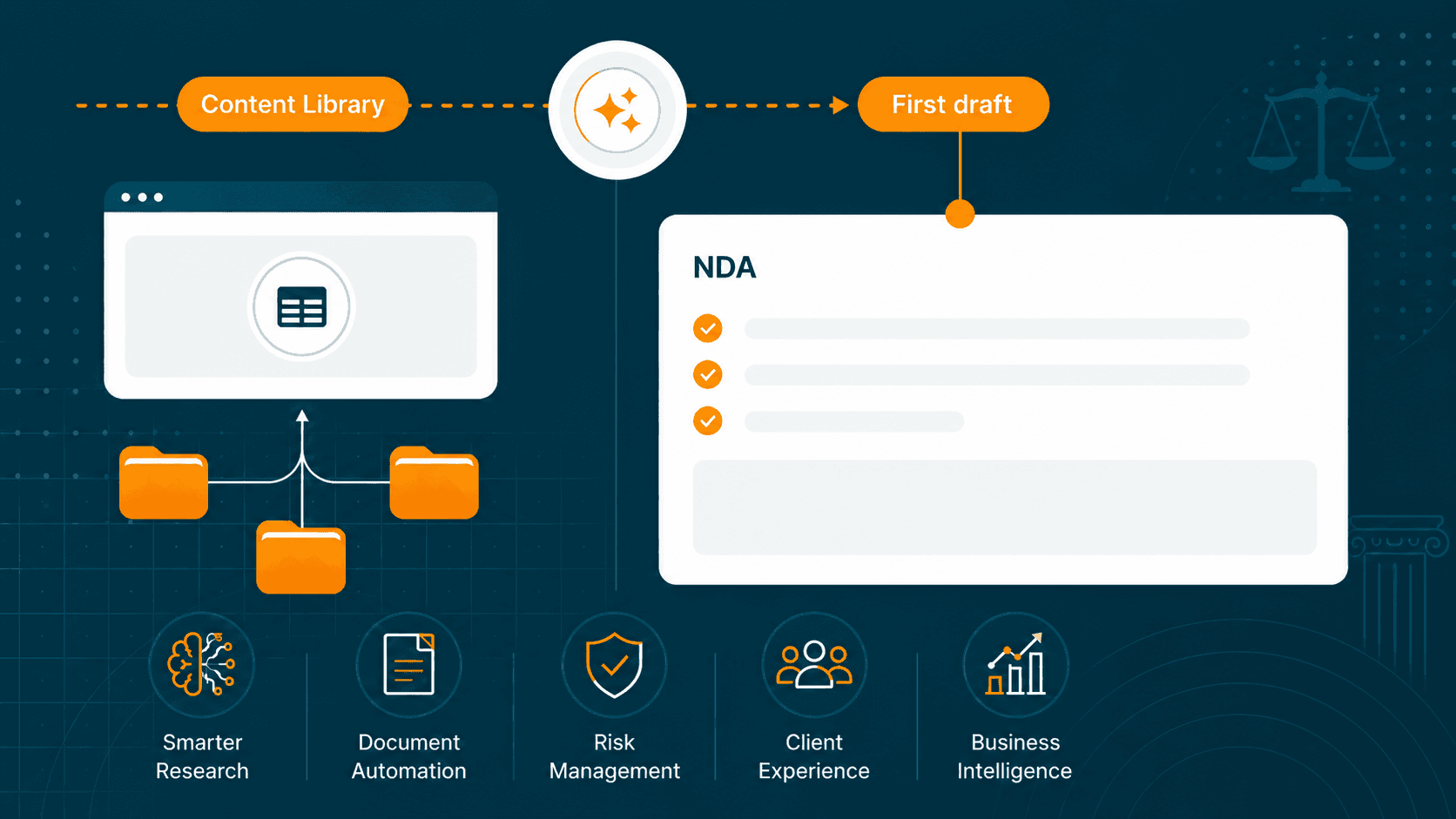
By indexing internal precedents, opinions, contracts, templates, and research memoranda, firms can transform years of accumulated expertise into searchable institutional knowledge.
Instead of recreating work, lawyers can build upon previous experience, improving consistency while significantly reducing drafting time.
Knowledge management is rapidly becoming one of the highest-return AI investments available to law firms.
Trend 4: Drafting Is Becoming AI-Assisted by Default
Legal drafting remains central to legal practice, but repetitive drafting is increasingly automated.
Modern AI assists lawyers by:
Producing first drafts
Suggesting clauses
Improving structure
Detecting inconsistencies
Highlighting missing provisions
Maintaining drafting standards
This does not remove lawyers from the process.
Instead, legal professionals spend more time refining strategy, negotiating commercial outcomes, and exercising legal judgment while AI handles repetitive drafting tasks.
The result is higher quality work delivered in less time.
Trend 5: Litigation Teams Are Using AI Earlier in Every Matter
Litigation has traditionally required extensive document review, chronology building, and legal research.
AI is increasingly supporting litigation teams by:
Organizing evidence
Building timelines
Identifying relevant authorities
Summarizing witness statements
Comparing judicial reasoning
Preparing hearing bundles
Rather than replacing litigators, AI reduces administrative burdens, allowing legal teams to devote more attention to case strategy and advocacy.
Trend 6: Compliance Is Becoming Continuous
Regulatory requirements evolve constantly across industries.
Organizations no longer want compliance reviews conducted once or twice a year. They expect continuous monitoring.
Legal AI now helps organizations:
Monitor legislative amendments
Detect regulatory changes
Compare obligations across jurisdictions
Flag compliance risks
Produce compliance reports automatically
This shift is particularly valuable for multinational organizations operating across multiple legal systems.
Trend 7: AI Agents Are Taking Over Administrative Legal Work
One of the most significant developments of 2026 is the emergence of specialized AI agents.
Unlike traditional chatbots, AI agents can perform multi-step legal tasks such as:
Organizing case files
Scheduling deadlines
Preparing document checklists
Reviewing incoming documents
Monitoring court updates
Managing client onboarding
These digital assistants operate continuously, freeing legal professionals to focus on substantive legal work.
Trend 8: Multi-Jurisdiction Research Is Becoming the New Standard
Businesses increasingly operate across borders.
As a result, law firms must compare legislation from multiple jurisdictions quickly.
AI now enables lawyers to:
Compare statutes across countries
Analyze differing regulatory frameworks
Identify conflicting obligations
Produce comparative legal summaries
This capability is particularly valuable across Africa, where businesses frequently expand into neighboring jurisdictions with distinct legal systems.
Trend 9: Clients Expect Faster Answers
Clients no longer compare law firms only with other firms.
They compare their legal experience with every digital service they use.
Clients increasingly expect:
Faster turnaround
Real-time matter updates
Immediate access to documents
Clear communication
Transparent progress tracking
AI helps firms meet these expectations by reducing delays in research, drafting, and internal collaboration.
Trend 10: AI Governance Is Becoming a Boardroom Issue
Questions surrounding responsible AI use are no longer confined to IT departments.
Firm leadership is increasingly asking:
Which AI tools are approved?
Where is client data stored?
Who has access?
Can outputs be audited?
How are hallucinations identified?
What professional obligations apply?
Developing clear AI governance policies is becoming essential for risk management and client confidence.
Trend 11: Billing Models Are Evolving
As AI reduces the time required for routine legal work, traditional hourly billing faces increasing scrutiny.
Many firms are experimenting with:
Fixed-fee engagements
Subscription legal services
Outcome-based pricing
Value pricing
Hybrid billing structures
Efficiency is shifting from a threat to profitability into an opportunity to improve margins while delivering greater client value.
Trend 12: Smaller Firms Are Competing with Larger Practices
Historically, larger firms benefited from greater research resources, extensive precedent libraries, and specialized departments.
AI is helping level the playing field.
Small and medium-sized firms now have access to sophisticated legal technology that enables them to:
Conduct advanced legal research
Produce high-quality drafting
Improve turnaround times
Deliver enterprise-level client experiences
Technology is reducing traditional barriers to competition.
Trend 13: Explainability Matters More Than Ever
Lawyers cannot rely on answers they cannot explain.
Consequently, leading legal AI platforms increasingly prioritize:
Source citations
Linked authorities
Transparent reasoning
Confidence indicators
Verification workflows
The future of legal AI depends not only on generating answers but also on helping lawyers understand how those answers were reached.
Trend 14: Jurisdiction-Specific AI Is Outperforming Generic Models
General AI models possess impressive language capabilities but often struggle with jurisdiction-specific legal analysis.
This has accelerated demand for legal AI trained using local legislation, court decisions, regulations, and legal practice.
Jurisdiction-aware systems produce more relevant outputs, reduce unnecessary hallucinations, and better reflect the realities of legal practice within individual countries.
For firms operating in Africa, local legal intelligence is increasingly becoming a strategic requirement rather than a convenience.
Trend 15: AI Will Become Invisible
Perhaps the biggest trend of all is that AI itself is disappearing into everyday legal work.
Rather than opening separate AI applications, lawyers increasingly access AI within:
Document management systems
Practice management software
Research platforms
Knowledge bases
Client portals
The most successful legal technology will be the technology lawyers barely notice because it works seamlessly within existing workflows.
Preparing Your Law Firm for the Future
Legal AI adoption is no longer about purchasing software. It requires a thoughtful strategy that aligns technology with professional responsibility and client expectations.
Law firms preparing for the future should:
Develop an AI governance framework that addresses confidentiality, security, and professional obligations.
Invest in a secure knowledge management system so internal precedents and work product become reusable institutional assets.
Introduce AI into research and drafting workflows while maintaining rigorous lawyer review and verification.
Train lawyers and support staff to use AI effectively, emphasizing critical evaluation rather than blind acceptance of outputs.
Prioritize solutions designed for the jurisdictions in which the firm operates, especially where local legislation and case law differ significantly from global datasets.
Measure success using practical indicators such as turnaround time, client satisfaction, realization rates, and profitability—not simply the number of AI tools deployed.
Final Thoughts
The legal profession has entered an era where artificial intelligence is becoming as fundamental as email, online legal databases, and cloud-based document management once were.
The firms that will lead the next decade are unlikely to be those that adopt the most AI tools. Instead, they will be the firms that integrate AI thoughtfully, preserve the highest professional standards, and use technology to amplify—not replace—the expertise of their lawyers.
Success in 2026 and beyond will depend on combining trusted legal judgment with intelligent systems that enhance research, drafting, collaboration, and client service.
For firms willing to embrace this shift, legal AI is no longer a glimpse of the future. It is a practical advantage available today.