
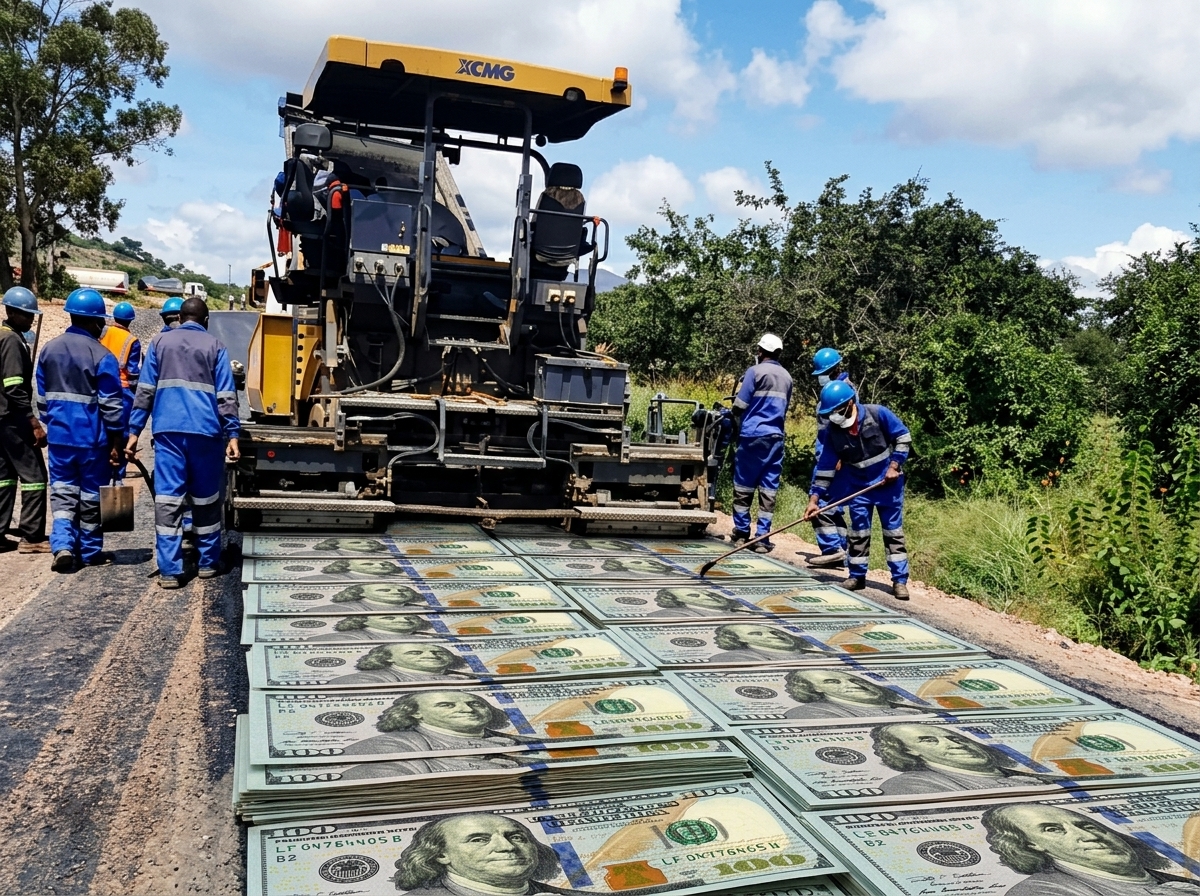
Zimbabwe Councils: ZINARA Unclaimed Road Funds Reach ZWG43.76 Million
Summary
- Twelve Zimbabwean local authorities failed to claim any of their 2026 ZINARA road rehabilitation funds by September 30.
- An additional twenty-five councils used less than 30% of their allocated road maintenance budgets.
- Chitungwiza Municipality had the largest individual unclaimed allocation among the zero-utilization councils, totaling ZWG6,411,972.
- Collectively, the 12 councils with 0% utilization left ZWG43.76 million unclaimed, while the 25 low-utilization councils left ZWG71.3 million untouched.
- The overall ZINARA budget for 2026 had ZWG2.66 billion (27%) undisbursed by the end of the third quarter.
Unclaimed Road Funds Highlight Infrastructure Crisis
The persistent failure of numerous local authorities to access and deploy their allocated ZINARA road rehabilitation funds carries significant legal and public accountability implications.
A recent analysis from the Zimbabwe National Road Administration (ZINARA) has brought to light significant issues regarding the utilization of funds earmarked for road rehabilitation across Zimbabwe. The ZINARA Q3 Disbursement Report, covering the period up to September 30, 2026, revealed that a substantial portion of allocated resources remains unaccessed by local authorities. Specifically, twelve out of the country's ninety-two local councils failed to claim any of their annual allocation for road maintenance, while an additional twenty-five utilized less than 30% of their designated quotas. This means that 37 local authorities, representing over 40% of the total, were at or below this low utilization threshold with a quarter of the year still remaining.
The twelve councils that reported zero utilization collectively left ZWG43.76 million unclaimed for the 2026 fiscal year. Among these, Chitungwiza Municipality in Harare Metropolitan had the largest individual allocation at ZWG6,411,972, nearly double that of many rural district councils. Other notable councils with 0% utilization included Chipinge RDC in Manicaland (ZWG3,508,237), Guruve RDC (ZWG3,332,334) and Rushinga RDC (ZWG3,334,918) in Mashonaland Central, and Hurungwe RDC in Mashonaland West (ZWG3,309,653). In Matabeleland North, Bubi RDC, Kusile RDC, and Tsholotsho Town Council (formerly Tsholotsho RDC) also showed no utilization, with allocations ranging from ZWG3,277,447 to ZWG3,652,334. Beitbridge RDC and Gwanda RDC in Matabeleland South, along with Mberengwa RDC in the Midlands, similarly failed to access their funds.
Beyond those with zero utilization, another twenty-five authorities drew less than half of their allocations. These councils were collectively allocated ZWG100 million but only accessed ZWG28.7 million, leaving ZWG71.3 million untouched. Examples include Makoni RDC (20%) and Chipinge Town (25%) in Manicaland, and several councils in Masvingo province, including Chiredzi, Gutu, Masvingo, Mwenezi, Zaka RDCs, and Masvingo City, all at 30% utilization. Matabeleland North also saw low figures, with Nkayi RDC at 19%, Hwange Town at 23%, and Lupane Town at 26%. This widespread non-utilization of Zimbabwe councils ZINARA unclaimed road funds occurs as much of the national road network is reportedly in a state of disrepair, with many routes becoming nearly impassable, particularly during the rainy seasons.
Legal and Accountability Implications
The persistent failure of numerous local authorities to access and deploy their allocated ZINARA road rehabilitation funds carries significant legal and public accountability implications. With the bulk of the Zimbabwe road network in poor condition, the non-utilization of these funds could expose councils to increased public liability claims arising from accidents or damage caused by hazardous road conditions. This situation raises questions about the diligence of local authorities in fulfilling their mandate to maintain public infrastructure and ensure citizen safety.
Furthermore, the substantial amounts of unclaimed funds could lead to legal challenges regarding financial mismanagement or dereliction of duty by council officials. Compliance officers within these local government bodies must critically review their internal processes for fund application, disbursement, and project implementation to mitigate these risks. The ZINARA Q3 Disbursement Report underscores a systemic issue where critical funding, intended for essential public services, is not reaching its intended purpose, potentially exacerbating the already dire state of the Zimbabwe road network funding issues.
Broader Financial Context and Disparities
The challenges faced by local authorities in accessing their ZINARA allocations are part of a larger pattern of undisbursed funds within the Zimbabwe National Road Administration's overall budget. ZINARA's total budget for 2026 stood at ZWG9.83 billion, but by September 30, only ZWG7.17 billion (73%) had been disbursed. This left a substantial undisbursed balance of ZWG2,659,145,777, or 27% of the total, with a quarter of the year remaining. While the councils' share of this undisbursed amount is approximately ZWG221 million (8.3%), significant sums also remain in other centrally managed lines, including ZWG1.26 billion in Treasury incremental revenue and ZWG228 million for tollgate infrastructure, which was only 25% utilized.
Provincial utilization rates reveal stark disparities, with Mashonaland East leading the country at 80% utilization, followed by Mashonaland West at 70% and Mashonaland Central at 62%. In contrast, Matabeleland North reported the lowest overall utilization at 34%, closely followed by Matabeleland South at 37% and Masvingo at 38%. Harare Metropolitan and Bulawayo Metropolitan both stood at 41%. Notably, major urban centers like Harare Municipality and Bulawayo City also lagged, having drawn only 42% (ZWG31.5 million of ZWG75.7 million) and 41% (ZWG10.8 million of ZWG26.7 million) of their respective allocations, with both cities accessing these funds entirely in the third quarter. These figures highlight a critical bottleneck in the flow of funds intended for vital infrastructure projects across the nation.
Practical Implications
Lawyers advising Zimbabwean local authorities should note the significant non-utilization of ZINARA road rehabilitation funds, which could expose councils to increased public liability claims due to poor infrastructure and potential legal challenges regarding financial mismanagement or dereliction of duty. Compliance officers must review internal processes for fund application and disbursement to mitigate these risks.
Source
How does this affect you?
Get an AI analysis of this article grounded in your jurisdictions, practice areas, and any policy documents you've uploaded to Wansom.
Finish Reading the Full Story and the Expert Analysis.
Get the latest legal & regulatory intelligence in Zimbabwe
Wansom is AI and can make mistakes.