
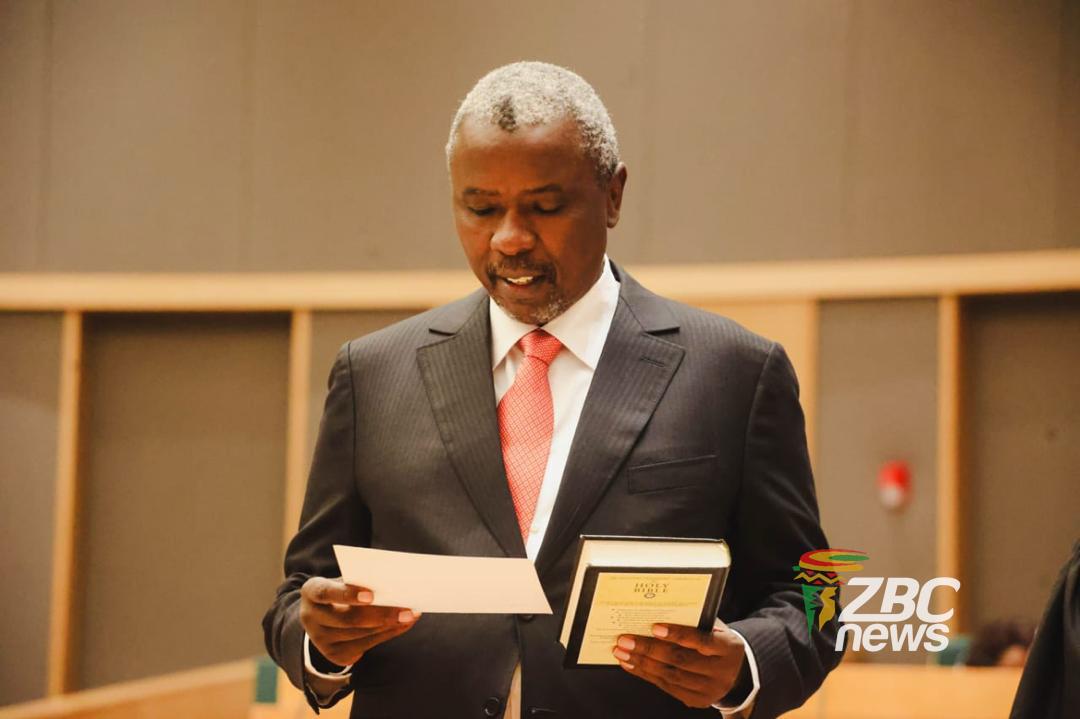
Zimbabwe ConCourt: Reserves Judgment on Tagwirei Senatorial Appointment Legality
Summary
- Zimbabwe's Constitutional Court has reserved judgment in a case challenging the appointment of 10 senators by President Emmerson Mnangagwa.
- Applicants Thamsanqa Ncube and Ibhetshu Likazulu argue the appointments, including Kudakwashe Tagwirei's, violated constitutional requirements for consultation and professional skills.
- Kudakwashe Tagwirei's recent appointment as Minister of Economic Development and Investment Promotion is directly tied to his senatorial position.
- If the Senate appointment is invalidated, Tagwirei would be required to relinquish his cabinet post.
- The case hinges on the interpretation of Section 120(1)(e) of the Constitution of Zimbabwe Amendment (No. 3) Act, 2026, concerning presidential appointment procedures.
Constitutional Challenge to Senatorial Appointments
This legal battle, therefore, extends beyond the composition of the Senate, potentially influencing the legitimacy of cabinet positions and setting a crucial benchmark for future challenges to government appointments.
Zimbabwe's Constitutional Court has reserved judgment in a significant case that could impact the validity of several senatorial appointments, including that of Kudakwashe Tagwirei, who recently assumed a ministerial portfolio. The full bench of the court heard arguments on November 4 concerning an application filed by Thamsanqa Ncube and Ibhetshu Likazulu. Their challenge targets President Emmerson Mnangagwa's appointment of ten additional senators, contending that these appointments did not adhere to constitutional mandates.
The applicants assert that the President failed to meet specific criteria governing the selection of these senators, notably the requirement to base choices on professional skills and competencies, and to consult with the National Assembly. Advocate Tazorora Musarurwa, representing the applicants and instructed by Sithole Law Chambers, presented these arguments. The court has not yet indicated when its decision will be delivered, reserving judgment indefinitely.
Legal Framework and Disputed Procedures
At the heart of the legal dispute is the interpretation of Section 120(1)(e) of the Constitution of Zimbabwe Amendment (No. 3) Act, 2026. This provision outlines the framework for the President to appoint ten additional senators, stipulating that such selections must be made based on individuals' professional skills and other competencies, following consultation with the National Assembly. The applicants specifically argue that the National Assembly was not furnished with adequate information regarding the nominees' qualifications, thereby preventing it from making meaningful recommendations before the appointments were finalized.
The application seeks an order to nullify the appointments of all ten senators. These individuals include Kudakwashe Tagwirei, Godwills Masimirembwa, Jabulani Sibanda, Makhosini Hlongwane, Mary Mliswa, Nokuthula Matsikenyere, Lucy Chitaga, Gibson Mashingaidze, Brilliant Dube, and Irene Mutumbwa. Conversely, the respondents have opposed the application, presenting arguments that the matter is premature and has become moot since the appointments have already been concluded.
Broader Implications for Public Office
The case carries significant weight due to its potential to establish a precedent regarding presidential appointment powers under the Constitution of Zimbabwe Amendment (No. 3) Act, 2026. Kudakwashe Tagwirei's appointment as Minister of Economic Development and Investment Promotion in October, barely five weeks after his senatorial oath, adds a critical dimension to the proceedings. His cabinet position is contingent upon his parliamentary status, meaning that if his Senate appointment is invalidated, he would be required to vacate his ministerial role.
While the applicants have explicitly stated they are not directly challenging Tagwirei's ministerial appointment and seek no relief concerning it, they have emphasized its relevance. They argue that the ministerial appointment underscores the practical consequences of the court's eventual ruling and is pertinent to determining appropriate relief. This legal battle, therefore, extends beyond the composition of the Senate, potentially influencing the legitimacy of cabinet positions and setting a crucial benchmark for future challenges to government appointments. The Constitutional Court's decision could have far-reaching consequences, particularly for the procedural soundness of presidential appointments.
Practical Implications
This case could establish a significant precedent regarding the interpretation of presidential appointment powers under the Constitution of Zimbabwe Amendment (No. 3) Act, 2026, specifically concerning the procedural requirements for senatorial appointments. Lawyers should closely monitor the Constitutional Court's judgment as it may impact the validity of other presidential appointments and inform future challenges to government positions, requiring a review of the procedural soundness of such appointments for clients in or considering public office.
Source
How does this affect you?
Get an AI analysis of this article grounded in your jurisdictions, practice areas, and any policy documents you've uploaded to Wansom.
Finish Reading the Full Story and the Expert Analysis.
Get the latest legal & regulatory intelligence in Zimbabwe
Wansom is AI and can make mistakes.