
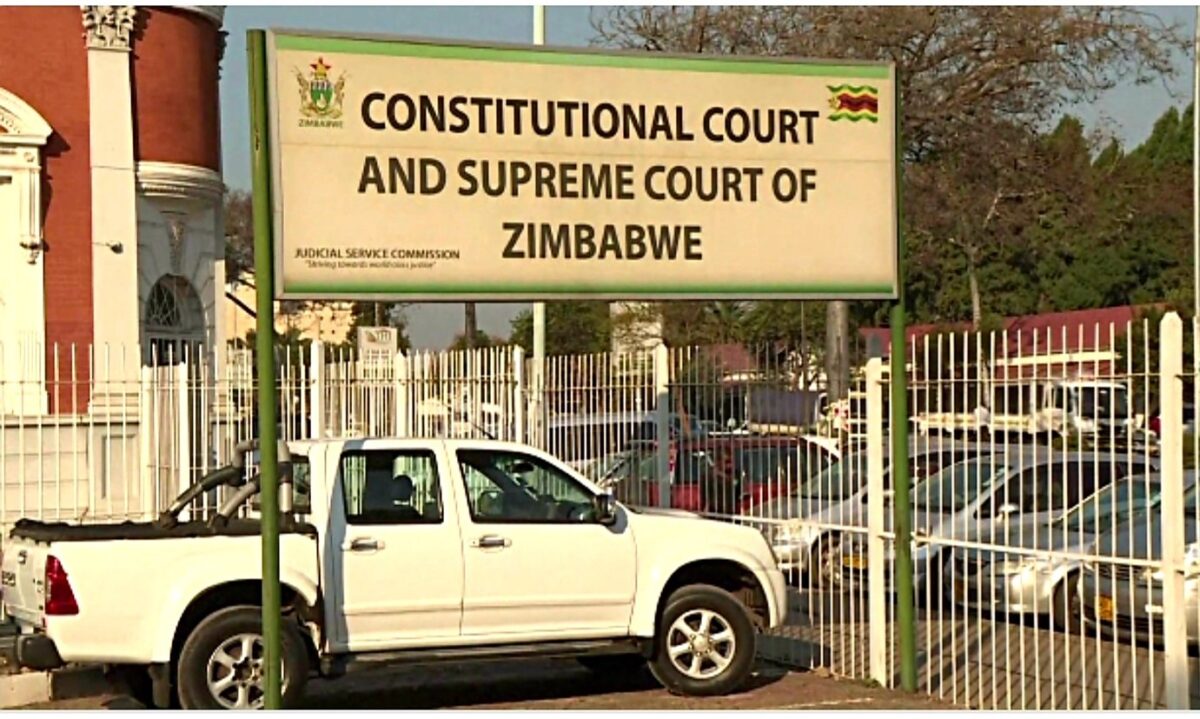
Zimbabwe Constitutional Court: Reserves Judgment in Kawa Machingura CAB3 Challenge
Summary
- Eliphas Kawa and Hazvineyi Machingura have launched a Constitutional Court challenge against Zimbabwe's recently enacted constitutional amendments, with the court having reserved judgment.
- The amendments, now Act No. 6 of 2026, extend President Mnangagwa's term by two years to 2030 and eliminate the direct election of a president.
- Applicants argue the changes unlawfully remove the right to elect a president without a referendum and that senatorial appointments undermine the constitution's basic structure.
- The Constitution Defenders Forum has urged public attendance at the court hearing, emphasizing the importance of defending constitutionalism.
- This case is one of several challenges, including a separate MDC application scheduled for November 25, 2026, questioning the legal validity of the amendments and their application without a national referendum.
The Constitutional Court Showdown
The outcome of this significant Zimbabwe Constitutional Court challenge will establish critical precedents regarding constitutional amendment processes, presidential term limits, and electoral law in Zimbabwe, directly impacting future governance and legal interpretations.
A pivotal legal confrontation unfolded at the Constitutional Court in Harare, where a challenge to recently enacted constitutional amendments was heard. The Constitution Defenders Forum (CDF) has issued a public appeal, urging citizens, human rights advocates, and civic organizations to gather at the court on Monday at 9:30 AM, demonstrating collective support for constitutional principles. This public assembly underscored the profound national interest in the Kawa Machingura Zimbabwe CAB3 challenge, which seeks to contest the legality of significant changes to the nation's foundational document. The Constitutional Court of Zimbabwe has reserved judgment in the challenge brought by Eliphas Kawa and Hazvineyi Machingura.
The case, initiated by Eliphas Kawa and Hazvineyi Machingura, names several high-profile respondents, including the Minister of Justice, Legal and Parliamentary Affairs, the Parliament, the President, and the Attorney General. While primarily an application for direct access to the Constitutional Court, the CDF emphasizes that this Zimbabwe Constitutional Court challenge addresses a crucial constitutional question concerning the accessibility of constitutional remedies and the right to seek a declaration of constitutional invalidity from the highest court. The outcome is keenly awaited by legal professionals and the public alike, as it will shape the future interpretation of constitutional law in Zimbabwe.
Core Legal Contentions
The applicants, Kawa and Machingura, present compelling arguments against the amendments. A central contention is that the legislative changes unlawfully strip citizens of their fundamental right to elect a president of their choice, as guaranteed by Section 67 of the Constitution, without the prerequisite of a national referendum. This argument highlights a potential overreach of parliamentary power into the direct democratic rights of the populace.
Furthermore, the challenge asserts that the President's authority to appoint ten senators fundamentally undermines the basic structure and integrity of the Constitution. This specific claim points to concerns about the separation of powers and the potential for executive influence to distort the legislative balance. The CDF has articulated that while the Constitution of Zimbabwe Amendment No. 3 may have been formally signed into law, the legal battle to uphold constitutionalism is far from concluded, signaling a sustained commitment to judicial oversight.
Unpacking Act No. 6 of 2026
The contested legislation, now formalized as Act No. 6 of 2026, stems from the Constitution of Zimbabwe Amendment (No. 3) Bill, which President Emmerson Mnangagwa signed into law on July 7, 2026. This Act introduces several far-reaching changes, most notably extending President Mnangagwa's current term by two years, pushing it to 2030. Concurrently, it postpones the next general election from its original schedule in 2028 to 2030, effectively lengthening the presidential election cycle from five to seven years.
Beyond the Zimbabwe presidential term extension, the amendments also eliminate the direct election of a president, a change that has drawn significant scrutiny. When the Bill was initially presented in the National Assembly, it garnered 216 votes, exceeding the required two-thirds majority by 29 votes, despite 42 members of the Citizens Coalition for Change (CCC) voting against it. The legal community has raised questions regarding the Act No. 6 of 2026 validity, particularly whether these amendments can legitimately apply to President Mnangagwa without first securing approval through a national referendum.
A Precedent-Setting Challenge
The Kawa Machingura Zimbabwe CAB3 challenge is not an isolated incident; it represents one of several legal actions currently pending before the courts that contest the constitutional amendments. For instance, the Movement for Democratic Change (MDC) has independently filed an urgent application with the Constitutional Court, arguing that Section 328(6) of the Constitution explicitly mandated a referendum before the President could assent to the Bill. This MDC application is scheduled to be heard on November 25, 2026. This highlights a broader concern among political and legal stakeholders regarding the proper procedure for constitutional alterations.
The outcome of this significant Zimbabwe Constitutional Court challenge will establish critical precedents regarding constitutional amendment processes, presidential term limits, and electoral law in Zimbabwe, directly impacting future governance and legal interpretations. Lawyers and compliance officers should closely monitor this Mnangagwa term limit legal challenge, as the ruling will not only determine the legal validity of the Constitution of Zimbabwe Amendment (No. 3) Bill but also set a crucial benchmark for the nation's constitutional framework and democratic practices.
Practical Implications
Lawyers and compliance officers should closely monitor the outcome of this Constitutional Court challenge, as it will determine the legal validity of the Constitution of Zimbabwe Amendment (No. 3) Bill. The ruling will establish critical precedents regarding constitutional amendment processes, presidential term limits, and electoral law in Zimbabwe, directly impacting future governance and legal interpretations.
Source
Source: Original reporting via LHARARE
How does this affect you?
Get an AI analysis of this article grounded in your jurisdictions, practice areas, and any policy documents you've uploaded to Wansom.
Wansom is AI and can make mistakes.