
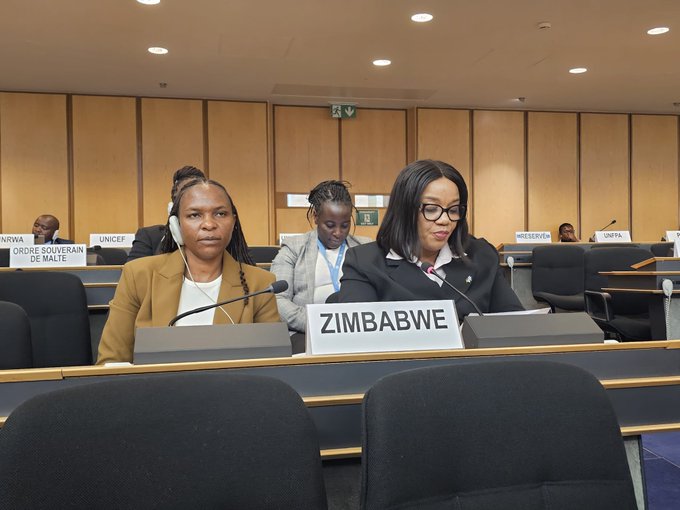
Zimbabwe: Renews Sanctions Removal UNHRC Call Amidst UN Reform Push
Summary
- Zimbabwe renewed its calls for the removal of international sanctions and for comprehensive UN reform.
- These statements were made during a UN Human Rights Council session held in Geneva from September 7 to October 7.
- The session focused on a report by Independent Expert George Katrougalos titled "Embedded Multipolarity in a Polarized World."
- Zimbabwe's advocacy represents a political statement rather than an immediate change in sanctions policy.
Diplomatic Overtures in Geneva
It is crucial to understand that such pronouncements, while impactful in the diplomatic sphere, do not constitute an immediate legal development or an alteration in existing sanctions policy.
Zimbabwe recently reiterated its long-standing appeals for the removal of international sanctions and for a comprehensive overhaul of the United Nations system. These significant diplomatic pronouncements were made during a session of the UN Human Rights Council, an influential international body, which convened in Geneva. The session spanned a considerable period, running from September 7 through October 7, providing an extended platform for member states to address a wide array of global human rights issues and international relations.
The renewal of these calls signals Zimbabwe's consistent diplomatic strategy to challenge existing global frameworks and advocate for changes it deems essential for its national development and sovereignty, leveraging the visibility of the UN Human Rights Council Zimbabwe forum.
Global Governance and Sanctions Discourse
The specific session of the UN Human Rights Council where Zimbabwe made its statements was notably structured around a pivotal report. This document, authored by Independent Expert George Katrougalos, bore the title "Embedded Multipolarity in a Polarized World." The report's central theme, exploring the complexities and implications of a global order characterized by multiple centers of power and divergent interests, inherently provided a fertile ground for discussions surrounding the efficacy and fairness of international law sanctions.
In such a context, calls for UN reform Zimbabwe and a re-evaluation of existing international legal instruments become particularly pertinent. The report's focus on a "polarized world" naturally frames debates on the application of unilateral coercive measures and the need for a more equitable and representative global governance structure, aligning with the broader arguments often put forth by nations advocating for sanctions removal and a more balanced international legal landscape.
The Enduring Debate on Zimbabwe Sanctions
Zimbabwe's consistent advocacy at international forums like the UN Human Rights Council underscores the enduring nature of the debate surrounding Zimbabwe international sanctions. While the council itself is primarily focused on human rights, its sessions offer a prominent stage for member states to articulate broader foreign policy concerns, including those related to economic measures and international justice. The call for Zimbabwe sanctions removal UNHRC made by the nation, therefore, serves as a significant political statement, signaling the country's ongoing diplomatic efforts to influence international opinion and policy.
It is crucial to understand that such pronouncements, while impactful in the diplomatic sphere, do not constitute an immediate legal development or an alteration in existing sanctions policy. Instead, they contribute to a continuous dialogue within the international community regarding the principles of multilateralism, national sovereignty, and the future direction of global governance, including the imperative for UN reform. The repeated emphasis on these issues highlights Zimbabwe's strategic use of international platforms to advance its agenda and challenge the status quo, aiming to garner support for its position on the global stage.
Practical Implications
This article reports a political statement rather than a new legal development or change in sanctions policy. While it signals Zimbabwe's ongoing diplomatic efforts, it does not present an immediate actionable item for lawyers or compliance officers, beyond monitoring for any future changes in sanctions or UN resolutions.
Source
Source: Original reporting via Newsday.
How does this affect you?
Get an AI analysis of this article grounded in your jurisdictions, practice areas, and any policy documents you've uploaded to Wansom.
Finish Reading the Full Story and the Expert Analysis.
Wansom is AI and can make mistakes.