
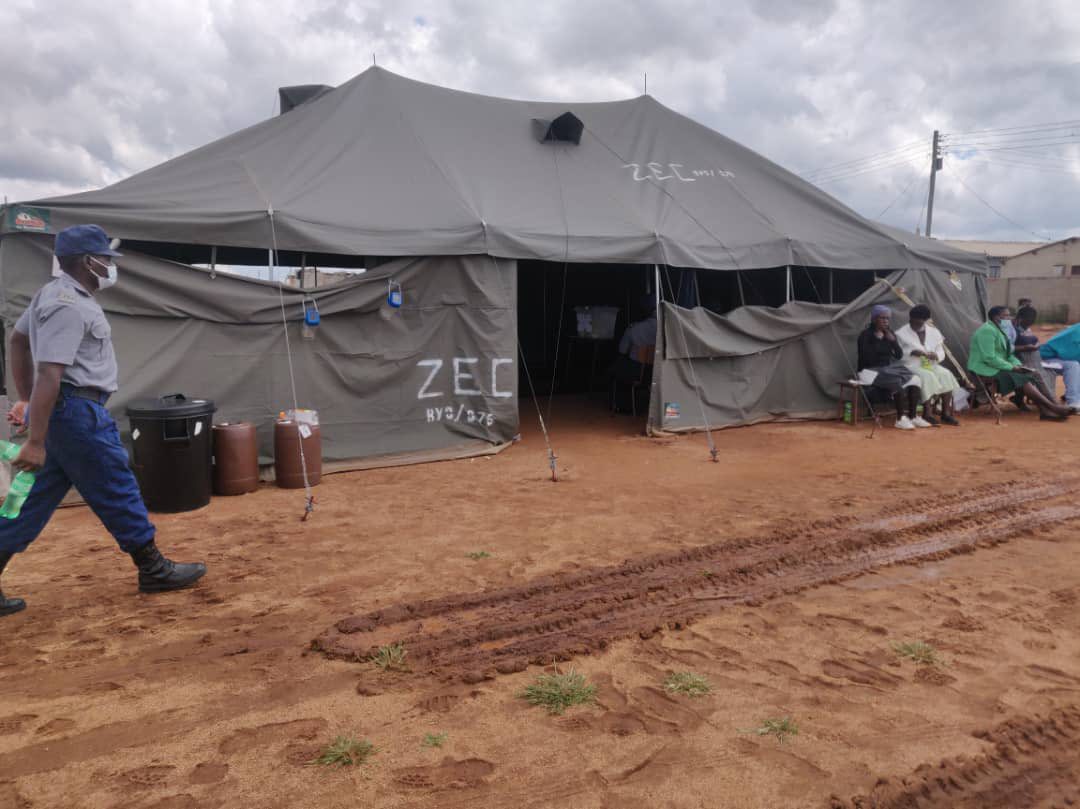
ERC: Zimbabwe CAA3 Voter Registration Transfer Lacks Public Awareness
Summary
- The Election Resource Centre identified significant public awareness gaps regarding recent electoral reforms in Zimbabwe.
- Constitutional Amendment Act No. 3 transferred voter registration responsibilities from ZEC to the Registrar-General's Office.
- Uncertainty persists among the public and stakeholders about whether the new voter registration function is currently operational.
- This transfer reverses a 2013 reform that had moved voter registration to ZEC to enhance electoral independence.
- The ERC plans to publish a final report detailing its findings and recommendations before the Christmas break.
Public Confusion Over Electoral Reforms
Many attendees admitted they were unclear on the new procedures for registering to vote, underscoring a critical gap in public information.
The Election Resource Centre (ERC) recently convened a stakeholder validation workshop to review the findings of an assessment focused on the implementation of electoral reforms. These reforms were recommended by observer missions following Zimbabwe's 2023 harmonized elections, with the aim of enhancing the credibility, inclusivity, transparency, and overall effectiveness of the nation's electoral processes. A primary concern emerging from the discussions was the significant lack of public awareness surrounding the changes introduced by Constitutional Amendment Act No. 3 (CAA3), particularly regarding the **Zimbabwe CAA3 voter registration transfer**.
Dr. Babra Ontibile Bhebe, the Executive Director of the ERC, highlighted that the workshop served to validate a draft report based on extensive research conducted between June and July of this year. This research involved key informant interviews, focus group discussions, detailed reviews of relevant legislation, policies, and official reports, as well as broad stakeholder consultations. Participants, including civil society organizations and the Zimbabwe Gender Commission, expressed considerable uncertainty about the implications of the new legislation, specifically questioning whether the transferred voter registration function was even operational yet. Many attendees admitted they were unclear on the new procedures for registering to vote, underscoring a critical gap in public information.
Legal Framework and Shifting Responsibilities
Constitutional Amendment Act No. 3 Zimbabwe, signed into law by President Emmerson Mnangagwa in July 2026, introduced several pivotal changes to the country's electoral and governance framework. A central provision of CAA3 is the transfer of responsibility for voter registration, the compilation of the voters' roll, and its subsequent custody and maintenance from the Zimbabwe Electoral Commission (ZEC) to the Registrar-General's Office. This amendment specifically inserted a new Section 43A into the Constitution, formally assigning these critical electoral functions to the Registrar-General.
Historically, prior to the adoption of the 2013 Constitution, the Registrar-General's Office was indeed responsible for voter registration and managing the voters' roll. However, these responsibilities were later shifted to ZEC as part of broader reforms designed to bolster the independence of electoral administration. The new constitutional amendment also established a separate Delimitation Commission, taking over the determination of constituency and ward boundaries, a task previously handled by ZEC. While ZEC retains its mandate for preparing, conducting, and supervising elections and referendums, as well as voter education and ensuring free, fair, and transparent electoral processes, the transfer of voter registration responsibilities represents a significant structural alteration.
Implications for Electoral Integrity and Public Access
The observed public awareness gaps surrounding the **Zimbabwe CAA3 voter registration transfer** raise serious questions about how citizens will access essential voter registration services and obtain accurate, up-to-date information on these fundamental changes to electoral administration. The confusion over whether the Registrar-General's Office voter registration ZW function is fully operational creates a barrier to participation and trust in the electoral system.
Electoral stakeholders have voiced concerns not only about the lack of Zim electoral reform public awareness but also about the administrative arrangements and the broader implications for the overall management of the electoral process. The ERC is currently incorporating contributions and recommendations gathered from the validation workshop into its final report, which is anticipated to be published before the Christmas break. This forthcoming report from the Election Resource Centre Zimbabwe is expected to provide further insights into these critical issues, offering a clearer picture of the challenges and potential solutions for ensuring an informed and engaged electorate.
Practical Implications
Lawyers advising on electoral matters or public education campaigns in Zimbabwe must be aware of the significant public awareness gaps and operational uncertainty surrounding the transfer of voter registration responsibilities from ZEC to the Registrar-General's Office under Constitutional Amendment Act No. 3. It is crucial to monitor official pronouncements and the forthcoming ERC report to provide accurate guidance on current voter registration procedures and compliance requirements, especially given the confusion over whether the new function is fully operational.
Source
How does this affect you?
Get an AI analysis of this article grounded in your jurisdictions, practice areas, and any policy documents you've uploaded to Wansom.
Finish Reading the Full Story and the Expert Analysis.
Get the latest legal & regulatory intelligence in Zimbabwe
Wansom is AI and can make mistakes.