
Zimbabwe 2027 Budget Tax Changes: Mnangagwa Presents ZiG358.3 Billion Plan
Summary
- Zimbabwe's 2027 National Budget projects a fiscal deficit of ZiG8.8 billion, or 0.5% of GDP, from ZiG358.3 billion in expenditure and ZiG349.5 billion in revenue.
- Economic growth is forecast to moderate to 3.5% in 2027, primarily due to anticipated El Niño effects and drought risks.
- The personal income tax-free threshold will increase from US$100 to US$150 per month, or its ZiG equivalent, providing an estimated US$81 million in taxpayer relief.
- Intermediated Money Transfer Tax (IMTT) rates will be reduced for both local and foreign currency transactions, aiming to encourage formal financial channels.
- The government plans significant investments in agriculture and infrastructure, increasing capital expenditure to 3.8% of GDP, and has allocated ZiG10.9 billion for contingencies.
Zimbabwe's 2027 Fiscal Framework Unveiled
The Finance Minister has put forth a plan to increase the personal income tax-free threshold from US$100 to US$150 per month, or its equivalent in ZiG.
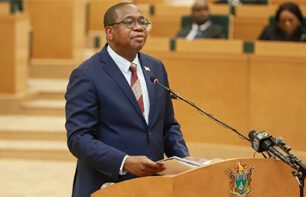
Zimbabwe's Finance Minister, David Kudakwaswa Mnangagwa, recently presented the 2027 National Budget to Parliament, outlining a comprehensive fiscal plan under the theme “Accelerating Economic Transformation and Building Resilience to Climate and Global Shocks.” The proposed budget projects total government expenditure to reach ZiG358.3 billion, equivalent to approximately $12.8 billion. This spending is set against an anticipated revenue collection of ZiG349.5 billion, or $12.5 billion, resulting in a projected fiscal deficit of ZiG8.8 billion.
This deficit, which represents 0.5% of the nation's gross domestic product, is described by the minister as a deliberate strategic choice. It aims to facilitate increased investment in critical areas while simultaneously upholding fiscal discipline. The government intends to finance this shortfall by raising ZiG21.5 billion from the domestic capital market through a combination of Treasury bills and loans, demonstrating a commitment to managing its financial obligations.
Economic Outlook and Resilience Strategies
The 2027 budget anticipates a moderation in economic growth, projecting a rate of 3.5%. This slowdown is primarily attributed to mounting external and domestic risks, particularly the expected impact of a super El Niño weather phenomenon and its associated drought risks. The budget statement further details potential growth scenarios, indicating that under a severe El Niño, economic expansion could fall to between 1.2% and 2.5%, contrasting with a more optimistic 3.7% to 5% under a mild scenario.
In response to these challenges, the government has outlined several measures to bolster economic resilience, particularly within the agricultural sector. Plans include expanding strategic grain reserves to 600,000 tonnes by August 2027, a significant increase from the 365,000 tonnes recorded at the end of October this year. Furthermore, ZiG27.6 billion has been allocated to the Ministry of Agriculture, Mechanisation and Water Resources Development, with an additional ZiG8.4 billion earmarked for the Pfumvudza/Intwasa programme for the 2026/27 agricultural season. Broader initiatives encompass expanding irrigation infrastructure, promoting drought-tolerant crops, and strengthening financial support for farmers to mitigate the anticipated dry conditions.
Key 2027 Budget Tax Changes
Among the most significant proposals within the Zimbabwe 2027 budget are adjustments to the tax regime, designed to enhance disposable incomes and streamline financial transactions. The Finance Minister has put forth a plan to increase the personal income tax-free threshold from US$100 to US$150 per month, or its equivalent in ZiG. Concurrently, the upper limit for tax bands will be adjusted to US$3,000, with income exceeding this amount subject to a marginal tax rate of 40%. These Zimbabwe 2027 budget tax changes are projected to provide taxpayers with an estimated relief of US$81 million.
Further reforms target the Intermediated Money Transfer Tax (IMTT), with proposed reductions aimed at encouraging formal financial activity. The IMTT rate on local currency transactions is set to decrease from 1.5% to 1.25%, while the rate for foreign currency transactions will fall from 2% to 1.75%. While these Zimbabwe IMTT reduction measures are expected to result in a revenue loss of approximately US$100 million, the Treasury anticipates that lower transaction costs will incentivize greater use of formal financial channels. These adjustments, part of the broader Zimbabwe national budget proposals, are intended to reinforce the use of local currency and reduce the overall cost of electronic financial transactions, a key objective articulated by David Kudakwaswa Mnangagwa in his 2027 budget presentation.
Fiscal Allocations and Debt Management
The total projected expenditure of ZiG358.3 billion for 2027 is divided into ZiG284.7 billion for recurrent spending and ZiG73.6 billion for capital expenditure. Notably, capital expenditure is slated to increase to 3.8% of GDP in 2027, up from 2.3% this year, reflecting the government's strategic intent to channel more resources into infrastructure and development projects. This emphasis on capital investment is a cornerstone of the government's economic transformation agenda.
In terms of financial prudence, the budget includes a contingency provision of ZiG10.9 billion, or $400 million, specifically allocated to respond to potential economic shocks, particularly the anticipated drought. The government has also budgeted ZiG31.2 billion for debt servicing, which comprises ZiG22.3 billion for principal repayments and ZiG8.9 billion for interest payments. As of the end of September 2026, the public and publicly guaranteed debt stood at an estimated ZiG594.1 billion, with external debt constituting 55.7% of this total.
Practical Implications
Lawyers and compliance officers in Zimbabwe must update their understanding of the proposed personal income tax-free threshold increase and Intermediated Money Transfer Tax (IMTT) rate reductions from the 2027 budget. This is crucial for advising clients on payroll adjustments, financial transaction costs, and ensuring compliance with the new tax regime, particularly regarding the ZiG equivalent calculations.
Source
Source: Original reporting via {source}
How does this affect you?
Get an AI analysis of this article grounded in your jurisdictions, practice areas, and any policy documents you've uploaded to Wansom.
Finish Reading the Full Story and the Expert Analysis.
Get the latest legal & regulatory intelligence in Zimbabwe
Wansom is AI and can make mistakes.