
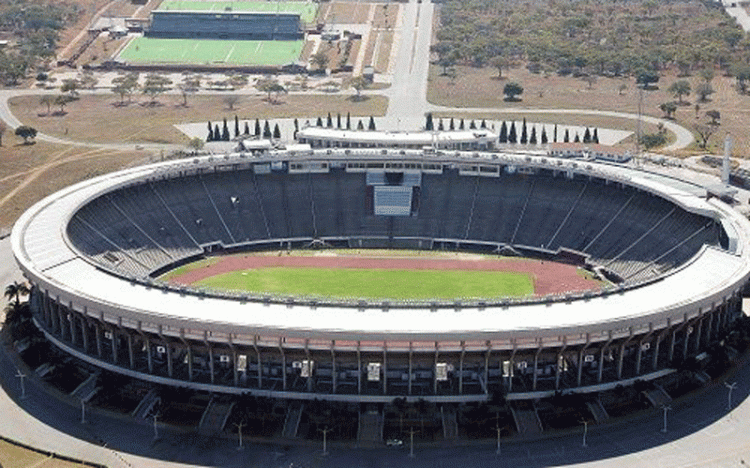
Zifa: Bans Harare City Parking NSS Operations for Safety
Summary
- The Zimbabwe Football Association (Zifa) has banned Harare City Parking from operating at the National Sports Stadium (NSS).
- This ban specifically prohibits the collection of parking fees by the municipal entity at the venue.
- The measure is part of a series of emergency protocols implemented by Zifa.
- The primary goal of these emergency measures is to ensure the safe passage of supporters.
- The ban was enacted for an Under-23 Africa Cup of Nations qualifier between Zimbabwe and Mauritius scheduled for the evening.
Operational Shift at National Sports Stadium
Lawyers advising municipal entities or event organizers should critically assess the legal basis and contractual implications of unilateral operational bans at public venues, such as the one imposed by Zifa.
The Zimbabwe Football Association (Zifa) has implemented a significant operational change at the National Sports Stadium (NSS), issuing a directive that effectively bans Harare City Parking from conducting its usual operations at the venue. This measure specifically targets the collection of parking fees by the municipal entity, marking a direct intervention by Zifa regarding access and revenue generation at the stadium.
This immediate Zifa ban on Harare City Parking NSS operations means that, for the duration of the specified event, the municipal body is prohibited from charging for parking services. Such a unilateral decision by a sports governing body over a municipal service at a public venue highlights potential areas of friction regarding jurisdiction and established operational agreements. The directive was put into effect without prior public notice of any dispute or negotiation, suggesting an urgent response to an immediate concern.
Emergency Measures for Spectator Safety
The prohibition on Harare City Parking's operations forms part of a broader series of emergency measures introduced by the Zimbabwe Football Association. These protocols were enacted with the explicit aim of ensuring the safe passage of supporters attending a critical football fixture. The primary objective behind these Zifa emergency measures NSS was to mitigate potential crowd management issues and enhance the overall safety environment for attendees.
Specifically, these emergency protocols were put in place for an Under-23 Africa Cup of Nations qualifier. The match featured the national teams of Zimbabwe and Mauritius and was scheduled to take place on the evening of the announcement. The decision to implement a Zimbabwe Football Association parking ban was directly linked to facilitating a smoother and safer experience for fans arriving at and departing from the stadium for this particular event.
Legal and Financial Implications for Public Venues
Lawyers advising municipal entities or event organizers should critically assess the legal basis and contractual implications of unilateral operational bans at public venues, such as the one imposed by Zifa. A sudden directive like the Zifa bans Harare City Parking NSS raises significant questions about existing agreements between sports associations, venue management, and municipal service providers. The immediate cessation of parking fee collection directly impacts Harare City Parking's revenue streams, potentially leading to financial losses and contractual disputes.
This incident underscores the importance of clearly defined NSS parking regulations Zifa and other stakeholders must adhere to, particularly concerning emergency powers. The imposition of new Zimbabwe sports venue parking rules without apparent prior consultation could challenge established regulatory compliance frameworks and operational protocols. Such actions highlight the need for robust legal frameworks that delineate responsibilities and powers among various entities operating at public facilities, ensuring that emergency measures do not inadvertently create legal or financial liabilities for any party involved. The situation serves as a case study for how event organizers might exert control over venue operations, potentially impacting municipal revenue and established operational procedures.
Practical Implications
Lawyers advising municipal entities or event organizers should assess the legal basis and contractual implications of unilateral operational bans at public venues, particularly concerning revenue streams and regulatory compliance.
Source
Source: Original reporting via Newsday
How does this affect you?
Get an AI analysis of this article grounded in your jurisdictions, practice areas, and any policy documents you've uploaded to Wansom.
Finish Reading the Full Story and the Expert Analysis.
Get the latest legal & regulatory intelligence in Zimbabwe
Wansom is AI and can make mistakes.