
Zambian Opposition Leader in Police Custody - State Media
Summary
- Zambian opposition leader Brian Mundubile and his running mate, Makebi Zulu, are in police custody after surrendering for questioning.
- Mundubile, who intended to challenge the recent presidential election results, faces government accusations of national security offenses and plotting an insurgency.
- His surrender follows police raids and arrests the day after the August 13 election, during which a former cabinet minister was killed.
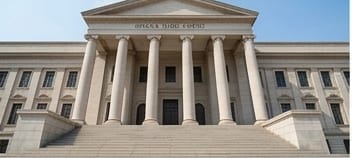
- The judiciary in Zambia closed on Monday, citing "security reasons," precisely on the legal deadline for filing election challenges.
- This situation has drawn criticism from legal and rights groups, raising concerns about Zambia's democratic stability and judicial independence.
What Happened
The arrest of a prominent opposition leader on national security allegations, coupled with the closure of the judiciary on the deadline for election challenges, signals a significant deterioration of the rule of law and judicial independence in the nation.
Brian Mundubile, a prominent Zambian opposition leader and presidential election runner-up, is currently in police custody, having surrendered to authorities for questioning. His running mate, Makebi Zulu, also voluntarily presented himself to law enforcement and is undergoing an interview process. State broadcaster ZNBC confirmed on Thursday that Mundubile, who had been the runner-up in the recent presidential contest, was being interrogated. This development follows a contentious presidential election held two weeks prior, which, despite being largely peaceful, saw incumbent Hakainde Hichilema officially declared the victor.
Mundubile had remained out of public view since police operations and arrests occurred the day after the election, a period during which he asserted his intention to legally contest the results. Concurrently, the government leveled serious accusations against him, including national security offenses and orchestrating an insurgency. Police had issued a summons for his questioning the previous week. According to ZNBC, police spokesman Godfrey Chilabi confirmed that both opposition figures were undergoing interviews with a team of law enforcement officers, with their legal counsel present.
Chilabi further indicated that an official statement would be released upon the completion of the interview process. Prior to their surrender, the broadcaster also reported that Mundubile and Zulu had been under the protection of the United Nations within the capital city of Lusaka. Earlier in the week, police had stated that Mundubile was seeking refuge with an unspecified "international organization." Authorities expressed their intent to question the opposition candidate and his running mate to uncover potential connections to "various alarming activities" that could "threaten or undermine national security."
Legal and Political Crossroads
The recent presidential election, held on August 13, was widely anticipated by observers to result in a clear mandate for incumbent President Hakainde Hichilema to secure a second term. Despite these expectations, Mundubile briefly claimed victory on election night, while Hichilema urged the public to await the official vote count and formal results. The counting process experienced a temporary halt amidst allegations of attacks targeting election officials. Ultimately, the electoral commission announced Hichilema as the winner, securing approximately 60% of the vote, though Mundubile's performance exceeded initial predictions.
Shortly before the polls, Hichilema had raised concerns about plots that he alleged threatened national security. The day following the election, police conducted raids on Mundubile's residence and other opposition locations, leading to the arrest of 11 individuals. During one such operation, former cabinet minister Mutotwe Kafwaya was tragically killed in a gunfire exchange. It was in the aftermath of these raids that Mundubile went into hiding.
Mundubile, who leads the National Reconciliation Party for Unity and Prosperity (NRPUP)—a party founded in 2026—has consistently maintained that the election was marred by irregularities and has dismissed the national security allegations against him as fabricated. This development coincided with the judiciary's closure on Monday, the very day legal challenges to election results were due. The judiciary cited "security reasons" for its closure, a move that immediately drew sharp criticism from various legal and human rights organizations.
Implications for Rule of Law
Zambia has historically enjoyed a reputation as one of Africa's more politically stable democracies. However, the events surrounding this month's election and its subsequent fallout have not reinforced this image. The arrest of a prominent opposition leader on national security allegations, coupled with the closure of the judiciary on the deadline for election challenges, signals a significant deterioration of the rule of law and judicial independence in the nation.
This confluence of events raises serious questions about the accessibility of justice and the fairness of political processes in Zambia. With Hakainde Hichilema scheduled to be sworn in for his second term next week, on September 1, the political landscape remains tense. The actions taken by authorities, particularly the timing of the judiciary's closure, are likely to be scrutinized by international observers and could have lasting implications for Zambia's democratic standing and its commitment to legal principles.
Practical Implications
The arrest of a prominent opposition leader on national security allegations, coinciding with the closure of the judiciary on the deadline for election challenges, signals a significant deterioration of the rule of law and judicial independence in Zambia. Lawyers and compliance officers should assess heightened political risk, potential for arbitrary legal actions, and challenges to accessing justice, especially concerning politically sensitive matters or human rights.
Source
How does this affect you?
Get an AI analysis of this article grounded in your jurisdictions, practice areas, and any policy documents you've uploaded to Wansom.
Finish Reading the Full Expert Analysis.
Wansom is AI and can make mistakes.