
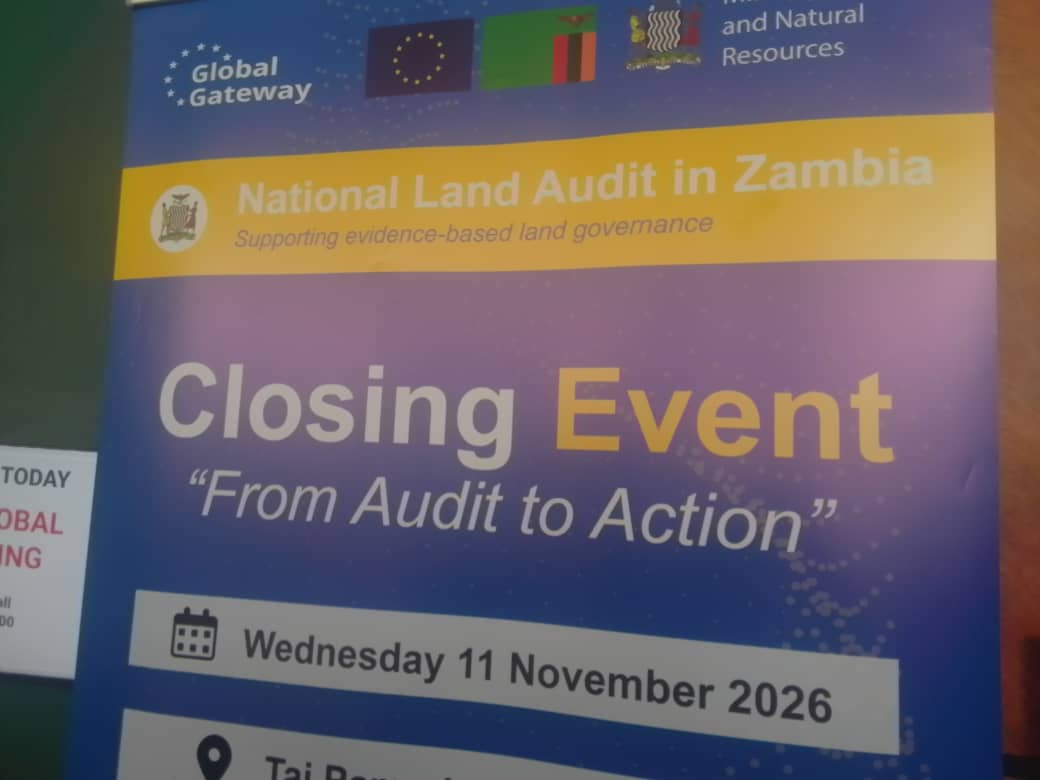
Zambia Land Audit Findings: Widespread Informal Ownership Revealed
Summary
- A land audit in 22 Zambian districts revealed that most people own land without formal documentation.
- National Land Audit Coordinator Gerald Musonda presented these findings on Wednesday.
- The audit reviewed records from the Ministry of Lands and Natural Resources, local councils, and other ministries.
- This widespread informal ownership creates significant challenges for land tenure security in Zambia.
What the Audit Revealed
The widespread absence of formal documentation, as revealed by the Gerald Musonda National Land Audit, presents substantial hurdles for achieving robust land tenure security in Zambia.
A comprehensive land audit, recently concluded across 22 districts in Zambia, has uncovered a significant and widespread issue: the majority of landholders operate without formal documentation. This critical insight into Zambian informal land ownership was presented by Gerald Musonda, the National Land Audit Coordinator, during a public briefing held on Wednesday. The audit's extensive reach across a substantial portion of the country aimed to provide a clear picture of existing land administration practices and ownership patterns.
The findings indicate a pronounced disparity between the actual occupation and use of land by citizens and the official recognition of their property rights. This fundamental disconnect between de facto possession and legally recognized titles creates a complex landscape for land management and individual security. The audit was specifically designed to quantify the prevalence of this informal status, offering a crucial data point for future policy considerations and reforms in the land sector.
Informal Ownership and Record Discrepancies
The central revelation from the Zambia land audit findings is the pervasive nature of informal land ownership. This means that while countless individuals and communities utilize and develop land, they frequently lack the necessary legal instruments, such as title deeds or certificates of occupancy, to formally prove their ownership. This absence of formal documentation places landholders in a vulnerable position, susceptible to disputes, arbitrary claims, and potential displacement, thereby undermining their land tenure security.
In his presentation, Coordinator Gerald Musonda detailed that the audit process involved a thorough review of existing governmental records. This included scrutinizing data from the Ministry of Lands and Natural Resources records, alongside information gathered from local councils and other pertinent ministries. The audit's conclusions suggest a notable divergence between these official governmental databases and the actual, on-the-ground realities of land ownership and occupation throughout the surveyed districts.
Challenges to Land Tenure Security
The widespread prevalence of informal land ownership, as highlighted by the Gerald Musonda National Land Audit, poses substantial and multifaceted challenges to establishing robust land tenure security across Zambia. Without formal titles, individuals are severely limited in their ability to assert their property rights, engage in legal land transactions, or leverage their land as collateral for accessing credit and other economic opportunities. This informal status can significantly impede personal wealth creation and broader economic development, as the legal certainty often required for investment and growth is absent.
The implications of these findings extend far beyond individual landholders, impacting national development goals, urban planning, and the overall effectiveness of the rule of law. Addressing this systemic issue will necessitate carefully crafted policy interventions, potentially involving large-scale regularization programs designed to formalize existing informal holdings. Furthermore, there is a clear need to streamline and simplify the processes for obtaining formal documentation in the future, ensuring greater transparency and accessibility for all Zambian citizens. The audit's comprehensive findings provide an essential foundation for understanding the magnitude of this challenge and guiding future efforts to strengthen land administration and guarantee more secure land rights for everyone in the nation.
Practical Implications
Lawyers and compliance officers should note the significant legal risks associated with land transactions in Zambia, given the widespread lack of formal documentation revealed by the audit. This necessitates heightened due diligence for clients acquiring or developing land, and potential advisory on regularization processes to mitigate future disputes or challenges to ownership.
Source
How does this affect you?
Get an AI analysis of this article grounded in your jurisdictions, practice areas, and any policy documents you've uploaded to Wansom.
Finish Reading the Full Story and the Expert Analysis.
Get the latest legal & regulatory intelligence in Zambia
Wansom is AI and can make mistakes.