
Zambia Courts Closed as Opposition Faces Election Challenge Deadline
Excerpt
Zambia's top courts were closed on the final day available for opposition leader Brian Mundubile to challenge the country's disputed presidential election results. The closure, reportedly ordered for security reasons, has raised concerns over whether the opposition can access the Constitutional Court before the filing deadline expires.
Summary
Zambia's top courts were closed on the final day available for opposition leader Brian Mundubile to challenge the country's disputed presidential election results. The closure, reportedly ordered for security reasons, has raised concerns over whether the opposition can access the Constitutional Court before the filing deadline expires.
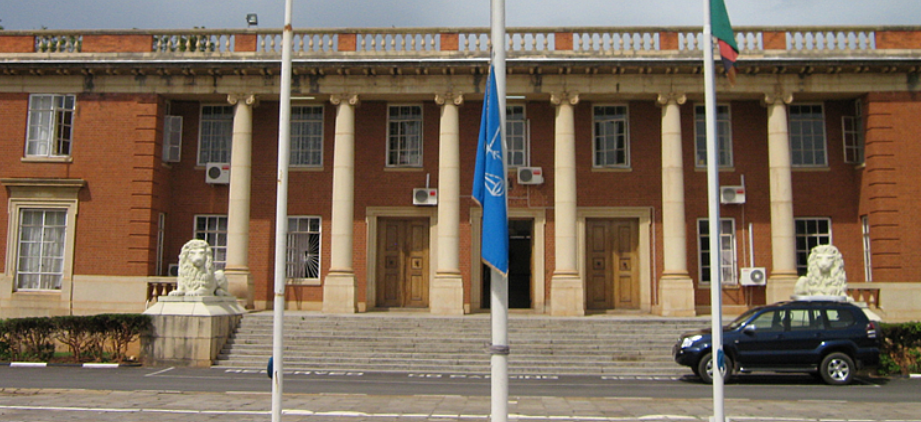
Zambian authorities closed the country's Supreme Court and Constitutional Court premises in Lusaka on Monday, preventing normal access to the courts as opposition leader Brian Mundubile sought to file a petition challenging the August 13 presidential election results.
Mundubile, who finished second to President Hakainde Hichilema, had indicated that he intended to contest the result. Hichilema won with approximately 60% of the vote and has denied allegations of electoral fraud.
The court closure occurred on the final day of the applicable seven-day filing period. The judiciary cited security concerns, while police said security assessments were ongoing.
The development has raised questions about access to justice and whether an election challenger can be expected to comply with a statutory filing deadline when the relevant court is inaccessible.
What Happened
Opposition leader Brian Mundubile, who finished second in the August 13 presidential election, had said he intended to petition the Constitutional Court over the results.
President Hakainde Hichilema was declared the winner with approximately 60% of the vote. Mundubile and members of his opposition alliance have disputed the result and raised concerns about the conduct and counting of the election.
Two independent observer reports have reportedly raised concerns about indications that Hichilema's vote count may have been inflated. Hichilema has denied allegations of electoral fraud.
The court closure came at a critical point because the deadline for filing an election petition was due to expire in the early hours of Tuesday.
Who Is Involved
The dispute centres on Brian Mundubile, the opposition leader who has indicated that he intends to challenge the election outcome.
President Hakainde Hichilema, the declared winner of the election, has rejected allegations of electoral fraud.
The Constitutional Court of Zambia is the institution expected to consider a presidential election petition. The judiciary and Zambian security authorities are also involved because the court premises were closed citing security considerations.
Mundubile has also faced police questioning in connection with alleged national security threats. He has rejected the allegations, describing them as fabricated.
Chishala Kateka, president of the New Heritage Party and a member of Mundubile's opposition alliance, said the opposition was still attempting to ensure that the petition was filed.
"We are trying our best to ensure that the petition is filed but we will see how it goes."
When Did This Happen
The court closure occurred on Monday, the final day of the period in which Mundubile could file his election challenge.
The election was held on August 13, with Hichilema subsequently declared the winner. Under the applicable election-petition timeline cited in the report, a challenge had to be filed within seven days of the announcement of the results.
That made Monday's court closure particularly significant, as the filing window was approaching its expiration in the early hours of Tuesday.
Where Did This Happen
The disruption occurred in Lusaka, Zambia, at the premises of the Supreme Court, which also houses the Constitutional Court.
The gates to the court complex were closed and police were reportedly present inside the compound.
Why Does The Court Closure Matter
The closure raises a fundamental legal question: can an election challenger be deprived of access to the court because the court itself is closed for security reasons?
Analysts and human rights lawyers reportedly expressed concern that Mundubile could be prevented from filing his petition within the statutory deadline.
The situation is particularly significant because election disputes are subject to strict procedural deadlines. If a petition is not filed within the prescribed period, the challenger could face a preliminary legal obstacle to having the election result reviewed.
Mundubile's opposition alliance said it was nevertheless attempting to file the petition.
Hichilema's party, meanwhile, has maintained that Mundubile remains free to pursue the legal avenues available to him.
Legal Context
The dispute falls within election litigation and constitutional law, with the Constitutional Court playing a central role in determining whether an election challenge can proceed.
Election petitions are generally governed by strict statutory and constitutional timelines because courts need to resolve electoral disputes within a defined period and provide legal certainty around the outcome of an election.
In this case, the reported seven-day filing period means that access to the court on the final day could become legally significant.
The key legal issues may include whether Mundubile successfully lodged a petition within the prescribed period, whether alternative mechanisms were available for filing while the court premises were closed, and whether a court could extend or otherwise address the deadline where access to the judicial system was impeded by circumstances outside the petitioner's control.
The closure also raises questions about access to justice, procedural fairness and the constitutional right to challenge an election through the courts.
Any eventual ruling would need to address the applicable constitutional and electoral provisions, the circumstances surrounding the court closure and whether the opposition took reasonable steps to comply with the filing requirements.
Practical Implications
The court closure could have immediate consequences for the opposition's ability to challenge the election result. If Mundubile's legal team is unable to access the Constitutional Court before the filing deadline, the dispute may shift from the substance of the election allegations to the procedural question of whether the petition can be accepted despite the court being inaccessible.
The development may also test how Zambia's electoral laws deal with circumstances beyond a petitioner's control. If the opposition can demonstrate that it was ready and attempting to file the petition but was prevented from doing so by the court's closure, the court may be asked to consider whether the circumstances justify accepting a late filing or recognising an alternative method of submission.
For the judiciary, the situation creates a difficult balance between security considerations and the principle of access to justice. Any decision about the validity of the petition could have implications beyond this election, potentially influencing how future election disputes are handled when courts, public institutions or other filing mechanisms become inaccessible.
For political parties and election candidates, the episode also highlights the importance of preparing for strict filing deadlines and having contingency mechanisms for submitting urgent legal documents. The outcome could ultimately affect both the immediate dispute over the election result and broader confidence in Zambia's electoral and judicial processes.
Finish Reading the Full Story and Expert Analysis.
Get the latest legal & regulatory intelligence in Zambia
Wansom is AI and can make mistakes.