
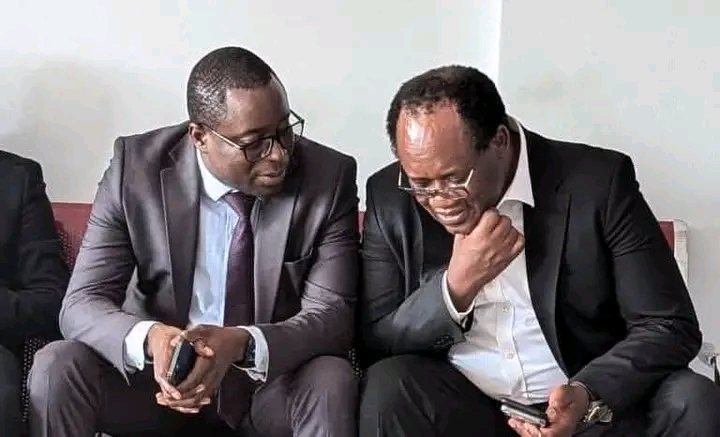
Zambia Church: Clarifies UN Mundubile Zulu Handover Role
Summary
- The Eight Church Mother Bodies in Zambia clarified their role in the handover of opposition leaders Brian Mundubile and Makebi Zulu.
- These leaders had previously stayed at the United Nations premises in Lusaka before their handover.
- The religious collective also clarified the United Nations' involvement in the situation.
- Crucially, the Church Mother Bodies explicitly ruled out any political deal related to the handover of Mr. Mundubile and Mr. Zulu.
What Happened
A central point of their clarification was the emphatic denial of any political deal underpinning the entire sequence of events, seeking to assure the public of the integrity of the process.
The Eight Church Mother Bodies in Zambia recently issued a public statement to clarify their involvement and the circumstances surrounding the handover of opposition leaders Brian Mundubile and Makebi Zulu. This clarification became necessary following the leaders' temporary stay at the United Nations premises located in Lusaka. The religious collective aimed to address any potential ambiguities or speculation arising from the event.
In their official communication, the Church Mother Bodies specifically detailed their role in the process that led to the handover of Mr. Mundubile and Mr. Zulu. They also provided insights into the United Nations' involvement, particularly concerning the leaders' presence at the international body's facilities. A central point of their clarification was the emphatic denial of any political deal underpinning the entire sequence of events, seeking to assure the public of the integrity of the process.
Context of the Statement
The decision by the Eight Church Mother Bodies to issue such a comprehensive clarification underscores the significant role religious institutions often play in Zambia's public and political discourse. Their collective voice carries considerable moral authority, frequently intervening in matters of national interest to promote peace, transparency, and accountability. The presence of opposition figures, Brian Mundubile and Makebi Zulu, at a neutral diplomatic location like the United Nations premises in Lusaka, naturally drew public attention and likely fueled various interpretations regarding the nature of their stay and subsequent handover.
Such circumstances often lead to widespread speculation, particularly in a politically charged environment. The Church Mother Bodies' proactive stance suggests an effort to preempt or counter narratives that might misrepresent the facts or imply clandestine political maneuvering. By clarifying their own involvement and that of the UN, they aimed to provide an authoritative account, thereby managing public perception and reinforcing their position as impartial custodians of national welfare. This intervention highlights the expectation within Zambian society for religious leaders to offer guidance and clarity during sensitive political moments.
Significance for Zambian Politics
The explicit ruling out of a "political deal" by the Eight Church Mother Bodies holds particular weight in the Zambian political landscape. This declaration serves to dispel any suggestions of secret agreements or compromises that might have influenced the handover of Brian Mundubile and Makebi Zulu. In a context where political trust can be fragile, such an assurance from a respected collective of religious organizations is crucial for maintaining public confidence in the fairness and transparency of political processes.
Furthermore, the clarification regarding the UN's role reinforces the principle of diplomatic neutrality and the humanitarian function that international bodies often provide. It helps to delineate the boundaries of engagement for such organizations, ensuring that their facilities are not perceived as venues for partisan political negotiations. The collective statement by the Zambia Church Mother Bodies thus contributes to shaping the narrative around the Mundubile Zulu handover, emphasizing integrity and non-partisanship, and underscoring the enduring influence of religious institutions in mediating and interpreting key national events.
Source
How does this affect you?
Get an AI analysis of this article grounded in your jurisdictions, practice areas, and any policy documents you've uploaded to Wansom.
Finish Reading the Full Expert Analysis.
Wansom is AI and can make mistakes.