
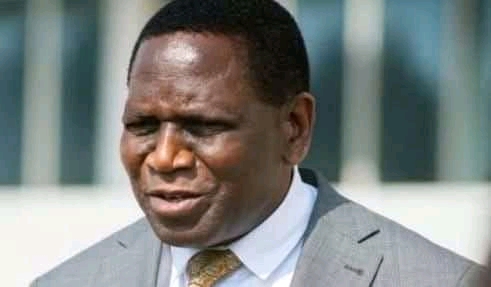
Zambia AG Kabesha: HH Not Involved In Criminal Cases
Summary
- Attorney-General Mulilo Kabesha urged individuals facing criminal charges to stop accusing President Hakainde Hichilema of persecution.
- Kabesha clarified that criminal cases are managed by investigative agencies, prosecutors, and the courts, not the head of state.
- He emphasized that the President should not be blamed for verdicts delivered by the judiciary.
- The statement underscores the separation of powers within Zambia's criminal justice system.
Attorney General Clarifies Criminal Justice Process
The Attorney-General's remarks underscore a fundamental principle of the Zambian legal system, emphasizing that the Head of State is not involved in the initiation or progression of criminal proceedings.
Zambia's Attorney-General, Mulilo Kabesha, has issued a definitive statement urging individuals currently facing criminal charges to cease attributing their legal predicaments to President Hakainde Hichilema. The Attorney-General's remarks underscore a fundamental principle of the Zambian legal system, emphasizing that the Head of State is not involved in the initiation or progression of criminal proceedings.
Mr. Kabesha clarified that the responsibility for handling criminal cases rests squarely with specific institutions within the justice framework. He explicitly stated that investigative agencies are tasked with gathering evidence, while prosecutors are responsible for bringing charges, and the courts ultimately adjudicate these matters. This delineation aims to dispel any public misconception regarding executive interference in the judicial process, particularly concerning "HH Hichilema criminal charges" as politically motivated.
Upholding Judicial Independence and Separation of Powers
The Attorney-General's statement serves as a crucial reminder of the separation of powers inherent in Zambia's governance structure. By asserting that criminal cases are handled by independent bodies and not the President, Mr. Kabesha reinforces the principle of judicial autonomy and the independence of Zambia's criminal prosecution. This stance is vital for maintaining public trust in the legal system and ensuring that justice is perceived as impartial.
Furthermore, Mulilo Kabesha stressed that President Hichilema should not be held accountable for the verdicts handed down by the courts. This clarification directly addresses concerns about "Zambian courts executive interference" and highlights that judicial decisions are the sole prerogative of the judiciary, free from executive influence. The "Kabesha statement criminal justice" aims to solidify the understanding that the President's role does not extend to dictating judicial outcomes or influencing the course of criminal proceedings.
Implications for Accused Individuals and Legal Strategy
The Attorney-General's pronouncement carries significant implications for those accused of crimes and their legal representation in Zambia. It effectively dismisses the narrative that criminal charges are a form of political persecution orchestrated by the Head of State. This official clarification from the Attorney-General's office suggests that arguments centered on presidential interference in criminal cases are unlikely to find traction within the established legal framework.
Consequently, individuals facing criminal charges and their legal counsel are implicitly guided to focus their defense strategies on the merits of the case within the judicial process, rather than on claims of executive persecution. The statement reinforces the notion that the proper forum for addressing criminal accusations is through the courts, with due process administered by the designated investigative and prosecutorial bodies, thereby upholding the integrity of Zambia's criminal justice system.
Practical Implications
This statement from the Attorney-General clarifies the official stance on the separation of powers in Zambian criminal proceedings, indicating that political interference claims against the President in court are unlikely to hold sway. Lawyers defending clients in Zambian criminal cases should therefore focus on legal arguments within the established judicial process, rather than attributing persecution to the Head of State.
Source
How does this affect you?
Get an AI analysis of this article grounded in your jurisdictions, practice areas, and any policy documents you've uploaded to Wansom.
Finish Reading the Full Story and the Expert Analysis.
Get the latest legal & regulatory intelligence in Zambia
Wansom is AI and can make mistakes.