
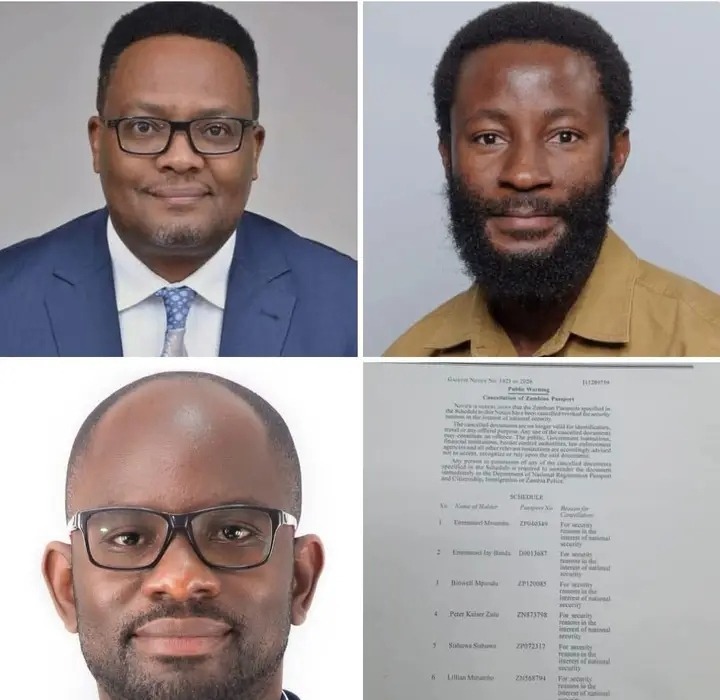
Hopewell Chinono: Zambian Passport a Human Right, Not Privilege
Summary
- Zimbabwean journalist Hopewell Chinono has engaged in a public debate in Zambia concerning passport access.
- Chinono challenges the view held by some Zambians that a passport is a political privilege, not a human right.
- He argues that access to a passport is an integral part of exercising a human right, not a reward for loyalty or good behavior.
- The journalist's intervention highlights the importance of freedom of movement as a fundamental right for Zambian citizens.
The Zambian Passport Debate
He contends that classifying passport access as a political privilege, granted based on allegiance or conduct, fundamentally misunderstands its role in modern society.
A significant public discussion has emerged in Zambia concerning the fundamental nature of passport access, spurred by comments from Zimbabwean journalist Hopewell Chinono. Chinono intervened in a debate where a segment of the Zambian populace expressed the view that obtaining a passport is not an inherent human right but rather a political privilege. This perspective suggests that such access might be contingent upon an individual's good behavior or their loyalty to the incumbent government.
Chinono directly challenged this interpretation, asserting that the ability to secure a passport is intrinsically linked to the exercise of a human right. His intervention highlights a crucial divergence in understanding the entitlements associated with Zambian citizenship passport rights, particularly regarding international human rights passport principles. The journalist's stance underscores the idea that freedom of movement Zambia, facilitated by a passport, should not be subject to political discretion.
Human Right vs. Political Privilege
The core of Hopewell Chinono's argument centers on reframing the prevailing narrative among some Zambians. He contends that classifying passport access as a political privilege, granted based on allegiance or conduct, fundamentally misunderstands its role in modern society. Instead, Chinono posits that access to a passport is a vital component of exercising broader human rights, particularly the right to freedom of movement.
This perspective aligns with international legal frameworks that often recognize the right to leave and return to one's country as a fundamental human right, necessitating the provision of travel documents like passports. By emphasizing that a passport is not a reward for loyalty, Hopewell Chinono challenges the notion that the state can arbitrarily withhold this document, thereby influencing the discourse around Zambia passport access human right.
Implications for Freedom of Movement
The debate ignited by Hopewell Chinono regarding the Zambian passport human right carries substantial implications for citizens' freedom of movement. If passport issuance is perceived as a political privilege, it could potentially lead to arbitrary denials, creating barriers for individuals seeking to travel internationally for various reasons, including work, education, or personal matters. Such a perception could also foster an environment where citizens feel compelled to demonstrate political alignment to secure essential travel documents.
Chinono's advocacy for viewing passport access as a human right aims to safeguard individuals against such potential abuses. His position reinforces the principle that all citizens, regardless of their political leanings or perceived behavior, should have equal access to the documents necessary to exercise their fundamental right to travel. This ongoing discussion is crucial for shaping public understanding and potentially influencing future policy and legal interpretations concerning passport issuance in Zambia.
Practical Implications
This article highlights a significant public debate in Zambia regarding whether passport access is a human right or a political privilege. Lawyers should be aware of this discourse as it informs potential future constitutional challenges, administrative law disputes concerning passport issuance, and broader human rights advocacy related to freedom of movement.
Source
How does this affect you?
Get an AI analysis of this article grounded in your jurisdictions, practice areas, and any policy documents you've uploaded to Wansom.
Finish Reading the Full Story and the Expert Analysis.
Get the latest legal & regulatory intelligence in Zambia
Wansom is AI and can make mistakes.